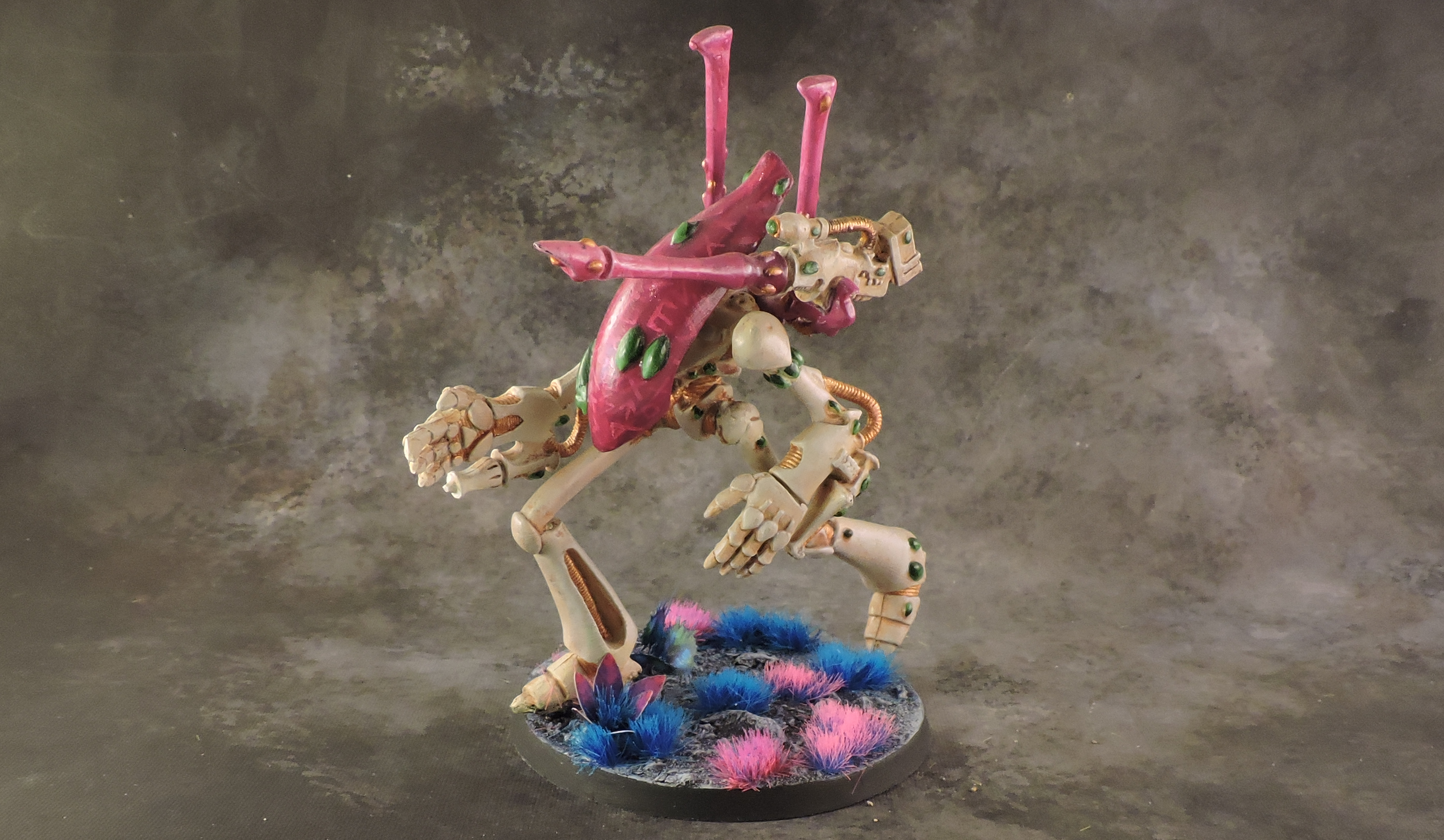
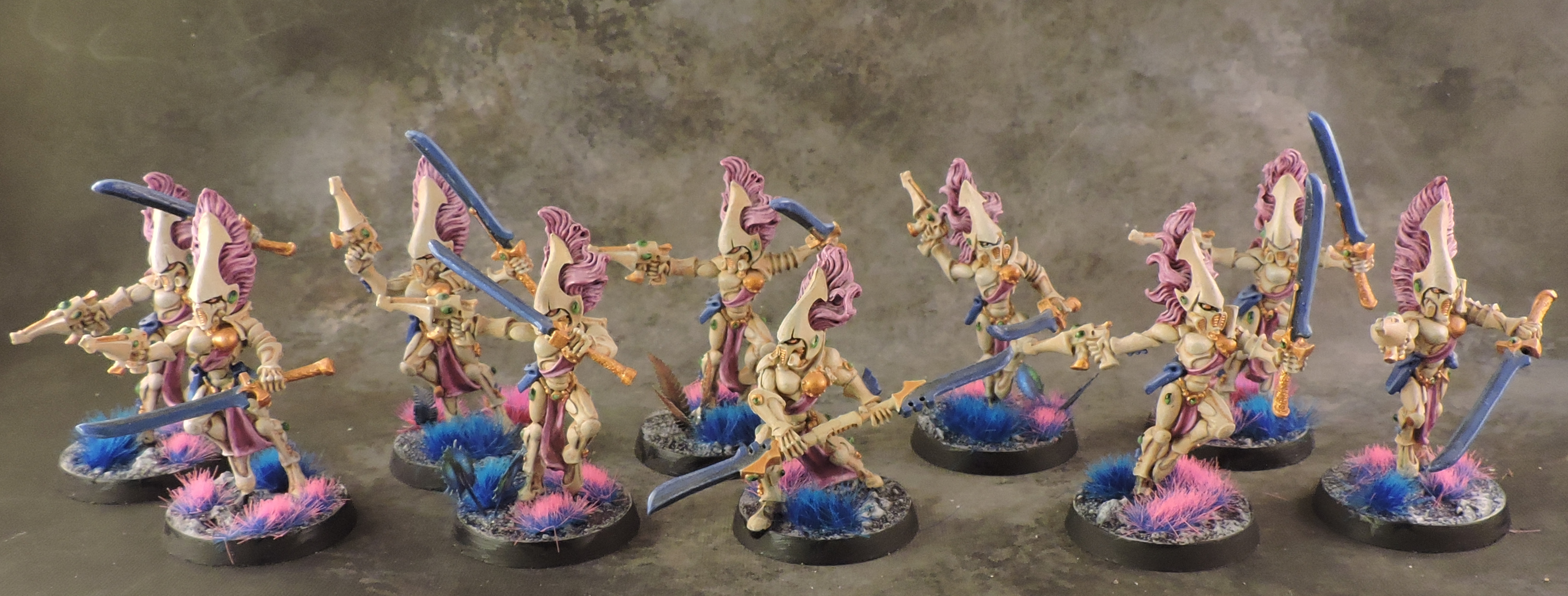
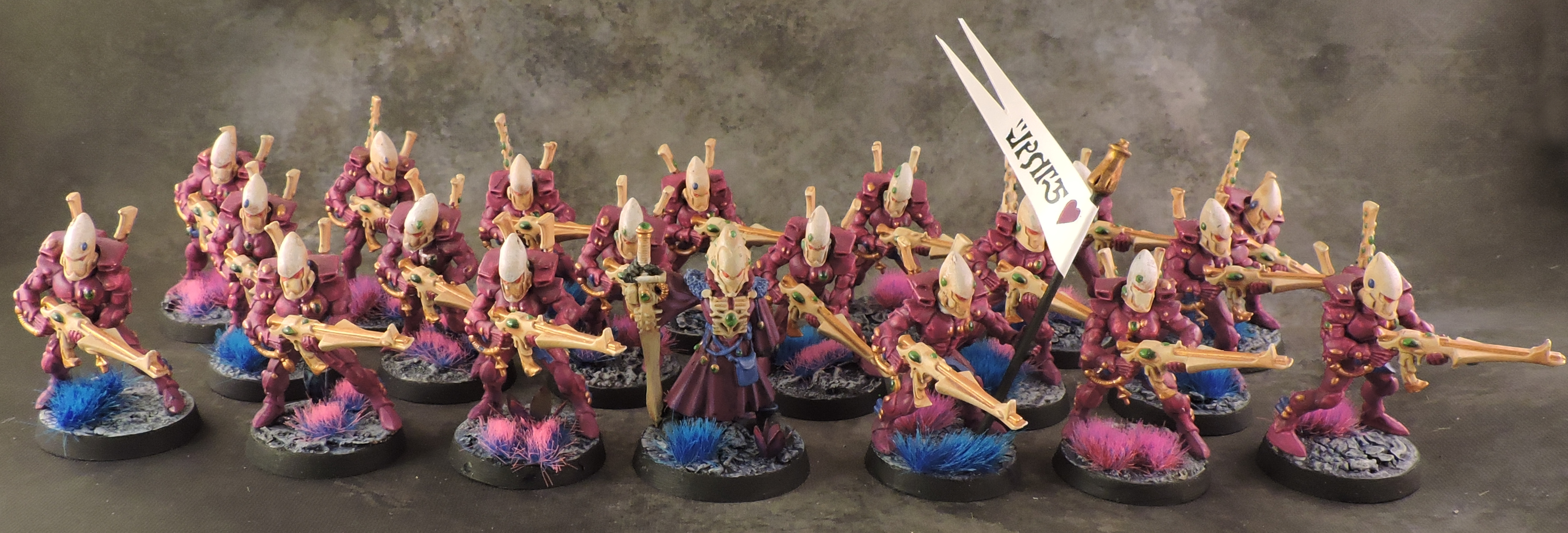
A bit of photography work to finally bring some of my older armies onto this site, or update their photos in some cases. The Man-o-War fleets have all been re-shot and so have the 40k Blood Angels. The new addition are my old 40k Eldar which got funky new bases some years ago. Vehicles still need to be touched up and photographed then. Some samples below but click the links for the whole lot.




4 replies on “Some old armies”
I have just discovered your article on wargaming and your Netherlands army. A magnificent collection that must be the envy of many. I have assembled and painted a few thousand French and British figures myself, so I offer my congratulations as a fellow enthusiast.
A few observations regarding certain units, however:
– The British cavalry left their standards and guidons back in Great Britain for fear the French might capture them (I left mine off too; it looks better that way).
– The Dutch units did not receive their emblems (flags and standards) until after the Belgian campaign (I gave mine theirs in advance, too—it looks better).
– Kudos for the 71st’s distinctive shako (I faced the same issue and did exactly what you did).
– Top marks for the helmet of the 2nd Belgian Carabiniers (not an easy one to find).
– I am less convinced by the shako on the 28th; at Waterloo, they were still wearing the “stovepipe” style with the small diamond-shaped plate at the back (a legacy of the Egyptian campaign).
– The main issue lies with the fusilier battalions. Initially tasked with defending artillery pieces, they were the first to be issued muskets, as the proximity of gunpowder barrels made the use of earlier firearms (like arquebuses) risky. Considered elite units, ALL their companies wore “wings” on their shoulders (rest assured, I made the same mistake myself and reassigned my figures to the 1st Royal Scots before repainting three battalions representing the 7th, 21st, and 28th Fusiliers).
You will find confirmation of what I am writing to you on the “Cent Jours Mont-Saint-Jean” website, which you are already familiar with.
Have a good day Sir.
Thank you for all your comments and kind words. The ahistorical addition of flags is a deliberate choice in all cases. I simply want my units to have flags, so they do. It’s even more egregious in the Prussian collection where I have deliberately put wrong or fictional flags onto units that definitely didn’t have any at Waterloo. My armies have flags :).
The 28th is wearing stovepipe shakos so that should be correct.
Where you definitely got me at the fusiliers. I think the 23rd is the only regiment at Waterloo that was classed as fusiliers and I did indeep mess that one up. Adding wings to them will be on my far future corrective list, if I ever run out of new stuff to paint :).
Thank you for replying so quickly to my message.
Regarding the emblems (flags, standards, or guidons), we made the same choice, as it is always easier to identify battalions when there are many of them on the battlefield. The only unit I left without an emblem is the “British Chasseurs.” As a French retired officer and a republican, I painted it with a certain distaste, so you know the reason why!
There is a debate surrounding the shako worn at Waterloo by the 28th Regiment of Foot, stemming from Lady Butler’s painting.
https://upload.wikimedia.org/wikipedia/commons/6/69/Butler_Lady_Quatre_Bras_1815.jpg utm_source=commons.wikimedia.org&utm_campaign=index&utm_content=original
A pencil sketch by Captain Jones (an eyewitness to the battle) suggests that the “Slashers” had retained the “stovepipe” shako with the rear badge, which they had acquired in 1801 at the Battle of Alexandria. I am more inclined to believe this version; in this regard, Giuseppe Rava’s drawing seems more accurate to me.
However, some hypothesize that only the flank companies wore that style, while the center companies wore the “Belgic shako.” I chose to paint my North Gloucestershire Regiment just as your compatriot did.
https://britisharmywaterloo.blogspot.com/2015/03/28th-north-gloucestershire-foot-complete.html
Regarding the composition of this regiment and its involvement in the Belgian campaign, I recommend this site if you aren’t already familiar with it. It is packed with fascinating details and anecdotes.
Thank you for the links. You have a gorgeous blog. 1:1 representation of units is a whole other level of ambition!