The Prussian army of 1815 was a well-oiled machine. Gone were the bumbling days of outdated tactics at the start of the Napoleonic Wars. Prussia had reformed, refined and grown used to victory. And despite their earlier defeat at Ligny, the Prussians arrived on the field at Waterloo as a motivated force. But they arrived late in the day and only made contact a small portion of their overall army. My collection is based on these engaged units. The core is Bülow’s IV Corps which led the advance into Plancenoit. Three brigades from I and II Corps arrived later and are included mainly because of the more colourful nature of their regiments. As always, visual appeal trumps historical accuracy!
The figures are based and painted in my standard Napoleonic approach: Wraithbone beige undercoat, GW Contrast Paints, AK Interactive Matt Varnish, and based with Geek Gaming Scenics BaseReady mix. I am using a dull, grey-blue tone for most of the uniforms. Prussian line battalions were composed of four companies with distinct sword-knot colours. I modelled this as one base per company. Large battalions of six based have a second base for the first and third company so that companies remain consistent in line or attack column formation. The flags are historical where information exists and otherwise made up with suitable regional heraldry. Many units wouldn’t have carried flags during the actual battle, but what would Napoleonics be without plenty of colourful flags?
The collection is based and organized in the same way as all my Napoleonic forces which is described in more detail here. Most historical orders of battle document the size of the Prussian army at the start of the 100 Days campaign but the Prussians fought a major engagement at Ligny before Waterloo. To arrive at unit strength at Waterloo, I used an old German book from the late 19th century which showed regimental-level casualty figures at Ligny. Subtracting those from the starting order of battle gave me a reasonable indication for regimental strength at Waterloo. Despite a normal strength of 800 men per battalions, most of the Prussian units has been reduced to 400-600 men which nicely fit my typical range for “Standard” units of four bases. The exception to this were the regiments of IV Korps which had not been engaged at Ligny and thus featured several full-sized regiments with 700-800 men classed as “Large”. I have indicated my estimated regimental headcount at Waterloo for each unit.
The Prussian army also had some unique features compared to its Allied and French counterparts, which I had to represent in the collection.
1. General Staff: Prussia had developed the (then) unique General Staff system which would eventually be adopted by all major armies. The General Staff was a parallel command organisation focused on strategic planning, training, logistics, and intelligence matters. This left field commanders to focus on battlefield execution. General Staff officers were attached at all levels of senior command.
2. Feldjäger Korps: Another example of Prussian professionalism was the Feldjäger Korps. These were senior non-commissioned officers specially trained for communication and police tasks. They served as messengers on the battlefield similar to Adjutants in other armies.
3. Integrated Brigades: A Prussian brigade was a large combined-arms formation comparable to a division in other forces. It typically contained three regiments – each of three battalions – plus attached artillery and often integrated cavalry as well. A Korps had four such brigades and no divisional structure at all.
4. Reserve System: The Prussian army of 1815 was in transformation. After the disastrous defeats in earlier years, the French imposed restrictions on Prussia’s total manpower. In response, the Prussians developed a three tier organizational level which allowed them to train and maintain a much larger force than the tiny authorized army. Each administrative region of Prussia raised one or more formal regiments – up the limit imposed by the French – composed of two musketeer and one fusilier (light) battalion. Attached to this parent regiment where one or more Landwehr regiments of local militia. Finally, discharged soldiers were organized into Reserve regiments which maintained a periodic training program with the parent regiment. After Napoleon’s defeat and the removal of these restrictions, Prussia started transforming this three tier system into a fully professional force. This change wasn’t completed when the Hundred Days Campaign started, so the Prussian infantry at Waterloo was an eclectic mix of merged line, reserve and Landwehr battalions. I have used the new regimental names for each formation but included the old designation in brackets.
5. Jäger: Most Prussian regiments had special Jäger light infantry units attached. These were typically Landwehr members who, in their daily lives, worked as hunters or similar professions (“Jäger” meaning “Hunter” in German). I am representing these as skirmish bases attached to each regiment with base count matching the variable unit strength at Waterloo ranging from just a few men to hundreds in dedicated formations. Additionally, each fusilier battalions has three skirmish bases covering the regiment.
I have incorporated these unique elements into my collection without departing from the basing system of my other Napoleonic forces:
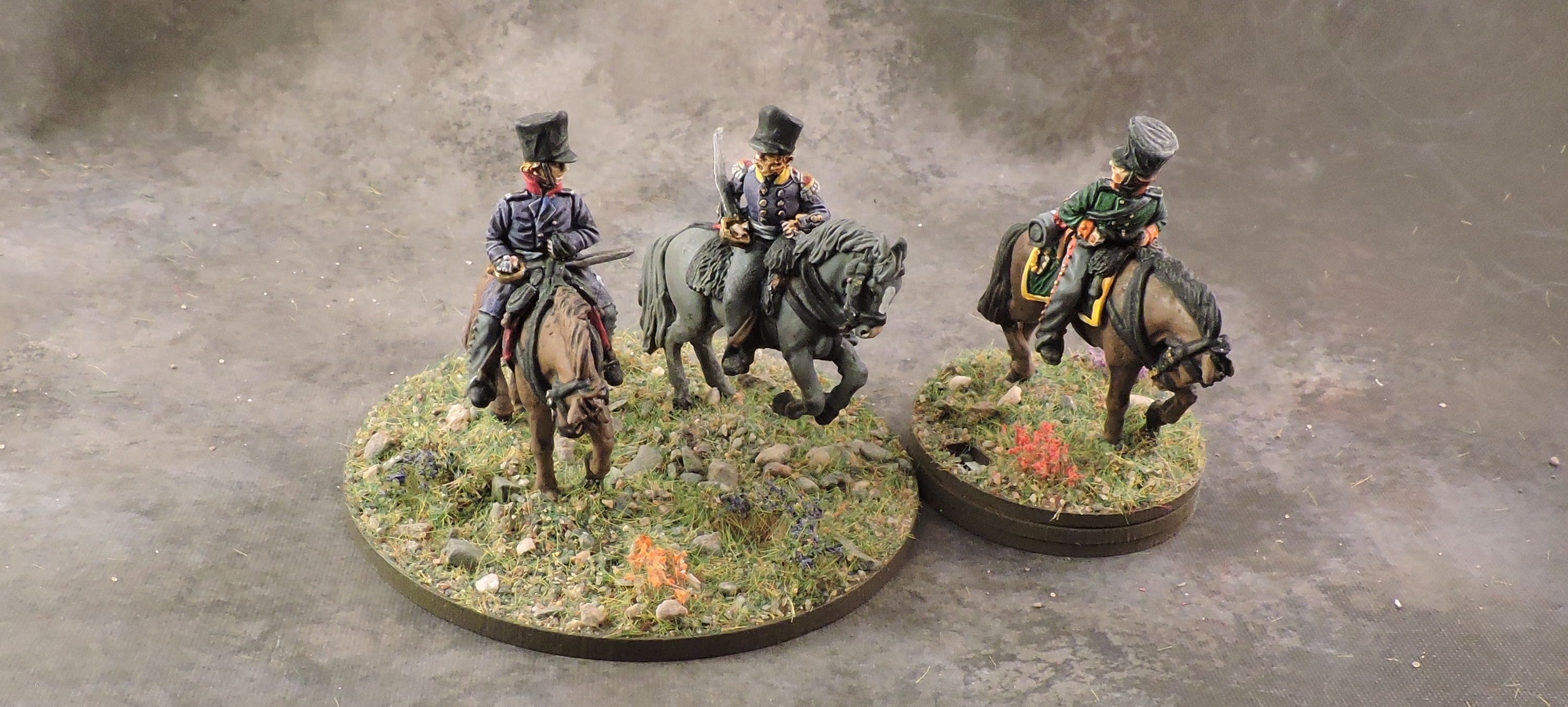
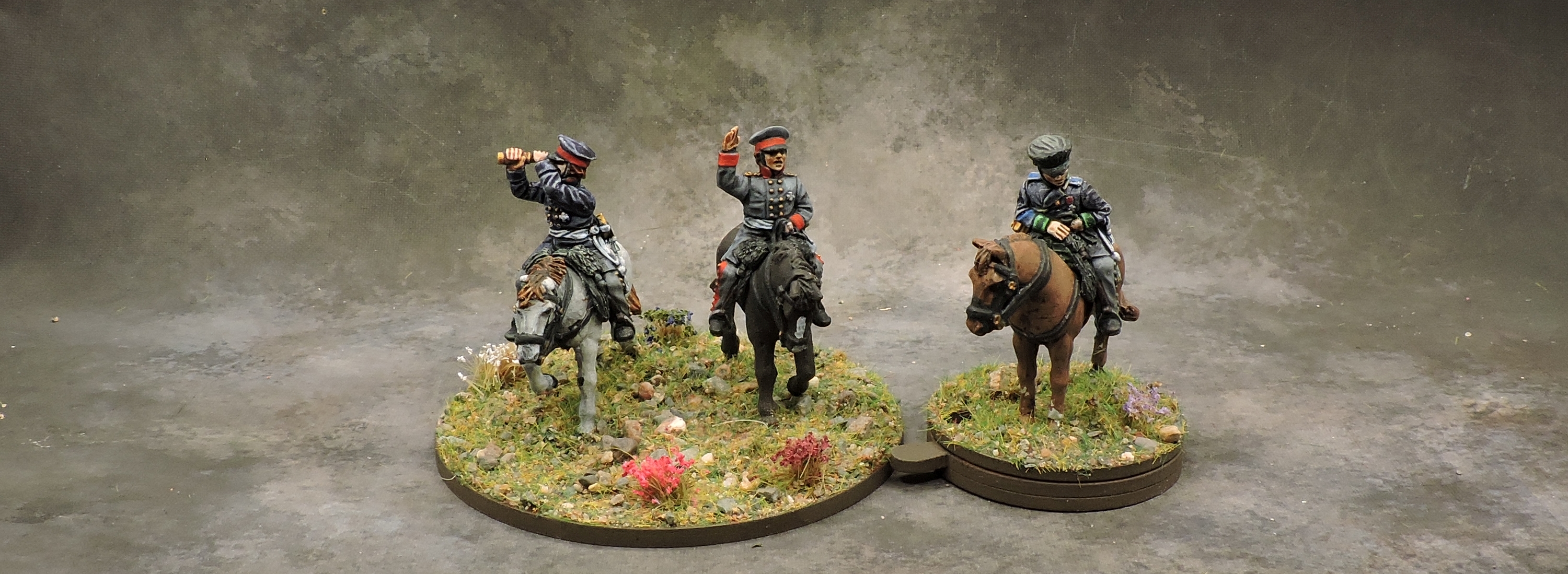
- Army and Korps commanders have three figures on a 100mm base. One of those is the commanding General wearing either the blue dress uniform or a grey Überrock (long coat) and field cap. Also included on the base is a figure representing the General Staff with dark red facings. Each command base has an attached ADC with green facings.
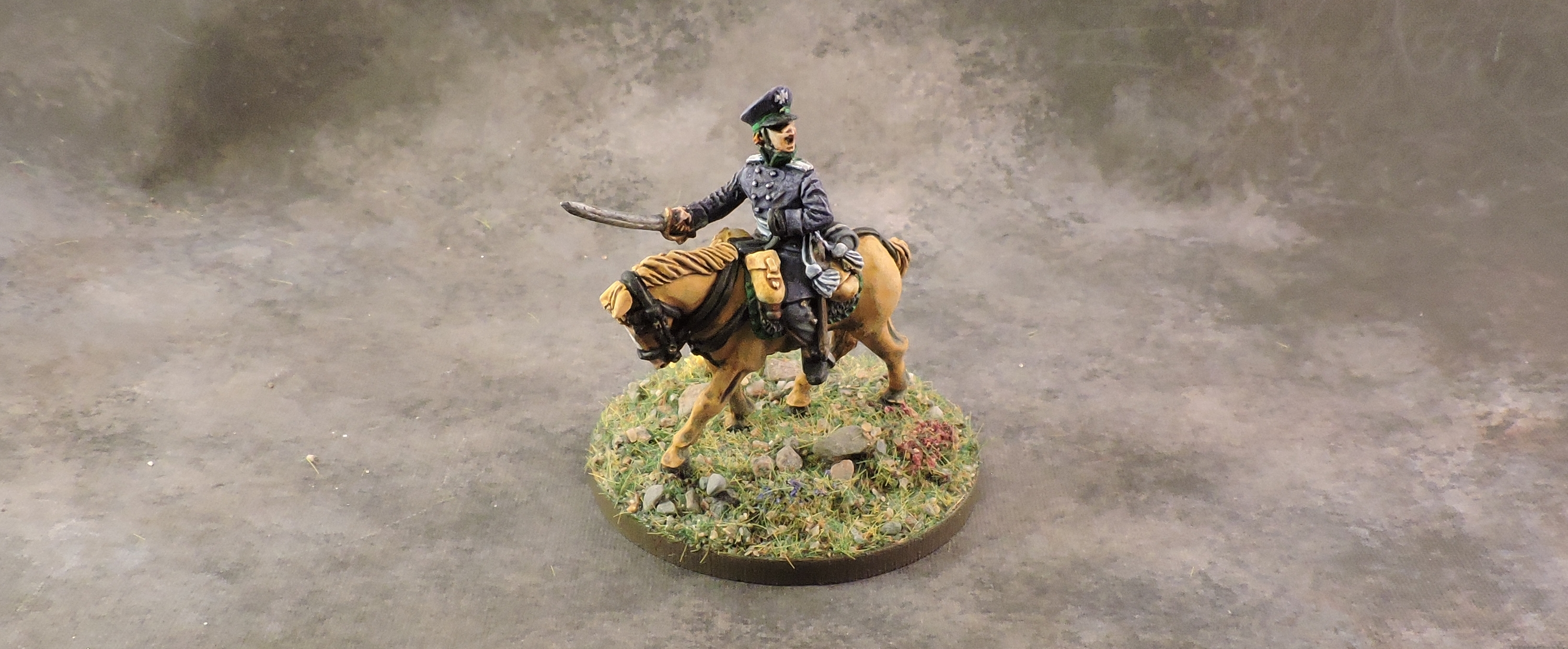
- Brigade commanders are represented by two figures on a 75mm base – the General and a member of the General Staff – which reflects the larger size of Prussian Brigades comparable to Divisions in other armies. Generals of the infantry brigades wear either the same grey long coat and cap as the Korps commanders or are without coat in blue uniforms (“kleine uniform”), while Generals of the cavalry brigades wear blue coats and bicorne hats. Infantry commanders have a Feldjäger as ADC while cavalry generals have an Adjutant in white coat.
- Regimental commanders are alone on a 50mm base as field-grade officers with hand-sculpted epaulette fringes. Historically, all battalions in a regiment were under the direct control of the Brigade commander but having regimental leaders will be useful for certain game systems.
Finally a note on spelling: All unit names and designations in the following are in German. The descriptive text references on the other hand are in English for simplicity. So a unit designated by the Prussians as a “batallion” (German spelling) in the heading would be described as a “battalion” (English spelling) in the text. Similarly, the number scheme is in the German style (“1. Regiment” versus “1st Regiment”). Commander ranks should be easy to translate given the similarity between German and English. The exception is the “Oberst” (Colonel) and “Oberstleutnant” (Lieutenant-Colonel).
Army of the Lower Rhine
The Army is commanded by Generalfeldmarschall Gebhard Leberecht von Blücher, Fürst (Prince) von Wahlstatt. Affectionately called Alter Vorwärts (Old Forwards) by his men, Blücher was an aggressive field commander who relied on a unit General Staff system to handle the minutia of operations. Generalleutnant von Gneisenau served as parallel commander as head of the General Staff. He is represented on a separate base as a nod to this profoundly Prussian concept that would later become the norm in all modern armies. Finally, we have a Generalmajor von Grolman who was Blücher’s Chief of Staff. He is accompanied by members of the staff organisation including an ADC delivering a message and a Feldjäger waiting for instructions.


I Korps
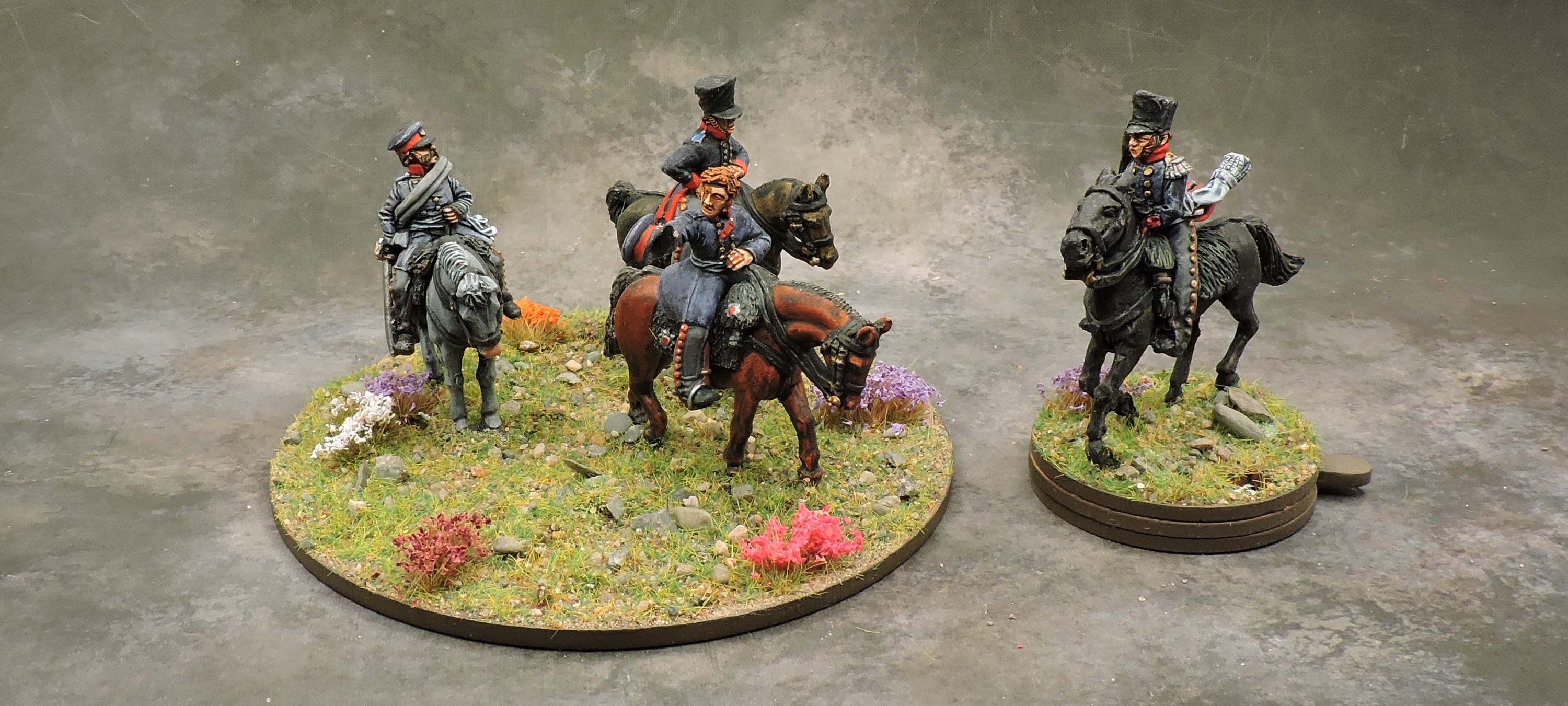
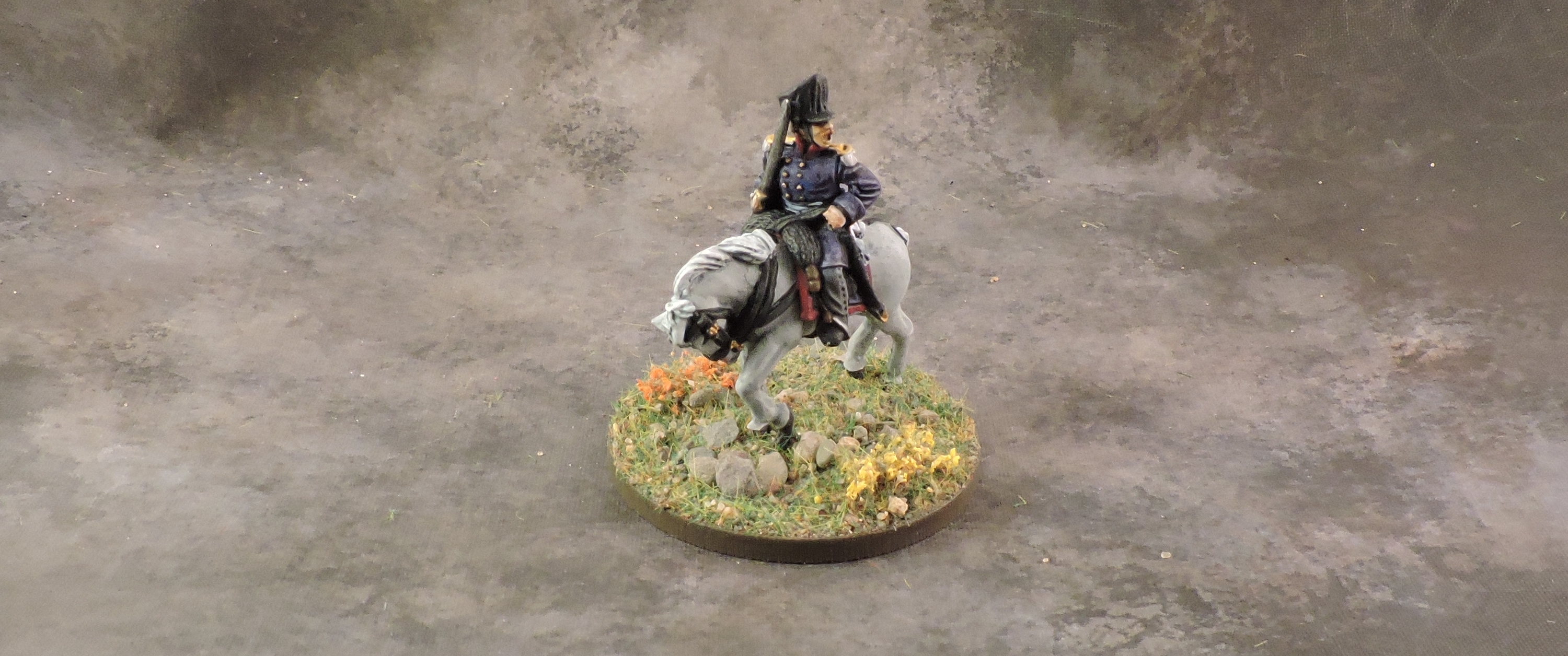
First Corps was commanded by Generalleutnant Hans Ernst Karl Graf von Zieten II, shown below with his staff organisation. Urged on by Generalmajor Müffling – Wellington’s liaison officer – Zieten’s Korps marched on the right (northern) flank of the Prussian advance and thus came up behind the forces of the Netherlands on the Eastern wing of Wellington’s Allied Army. His arrival led to a cascade of visual confusion due to the abundance of blue uniforms in that sector. First, Napoleon appears to have mistaken them for Grouchy’s French forces coming against the rear of the Allied army due to the Prussian’s blue uniforms. Second, the Prussians themselves mistook the equally blue-uniformed Netherlands troops guarding Papelotte as French and fired open them. This friendly fire incident only stopped when Prinz Saxe-Weimar intervened by angrily shouting in German to cease fire – the blue-coated “Netherlands” forces being actually the 28th Nassau regiment of German troops in Dutch service. In all that confusion, only Zieten’s first brigade and some cavalry actually made it onto the field.
Generalleutnant Hans Ernst Karl Graf von Zieten II, commanding I Korps, with his Chief of Staff Oberstleutnant Ludwig von Reiche, a General Staff officer, and ADC based separately.
1. Brigade
Generalmajor von Steinmetz led 1. Brigade composed of two line regiments and one Landwehr regiment, with their attached artillery left behind. His ADC, like all Brigade-level ADC in this force, as is a unique Prussian Feldjäger.
Generalmajor Karl Friedrich Franciskus von Steinmetz, commanding 1. Brigade, with Feldjäger.
1. Brigade – 12. Infanterie Regiment [est. 2,000 men]
Commanded by Oberstleutnant Friedrich August von Othegraven, this regiment was formed from Leib (Lifeguard) reserve formation of the Brandenburg regiment in 1813. The Fusilier battalion came from the West Prussian reserve regiment. Their transformation wasn’t fully completed so the battalions used a mix of line and reserve uniforms to varying degree. Attached is a company of Westfälische (Westphalia) Landwehr Jäger in their distinct green uniforms. All figures from Calpe Miniatures which produces a custom range for the 12. Regiment to capture their unique equipment blend. I am using the flags of the old 1. Brandenburg regiment, though the unit likely didn’t use flags at Waterloo.
Oberstleutnant Karl Thomas von Othegraven, commanding 12. Infanterie Regiment previously known as 2. Brandenburgisches Regiment.
I/12. Infanterie Regiment, predominantly dark grey reserve uniforms and red facings.
II/12. Infanterie Regiment, line uniforms with red facings.
F/12. Infanterie Regiment, mix of uniforms with red facings.
Westfälische Landwehr Jäger
1. Brigade – 24. Infanterie Regiment [est. 2,100 men]
Major von Laurens commanded this reserve regiment built around the cadre of the old Brandenburg 4. and 5. Leib regiments. Like the 12. Regiment, these were still mostly in reserve uniforms with new uniforms limited to officers and NCO. All figures from Calpe Miniatures. The flags are from the Brandenburg reserve regiment, though again unlikely to be carried at Waterloo. The regiment is accompanied by two companies (2. and 3.) of Schlesische Schützen (“Silesian Hunters”) with 375 men.
Major Ernst Ludwig von Laurens, commanding 24. Infanterie Regiment, previously known as 4. Brandenburgisches Regiment.
I/24. Infanterie Regiment, reserve uniforms with red facing and line officers.
II/24. Infanterie Regiment, reserve uniforms with red facing and line officers.
F/24. Infanterie Regiment, reserve uniforms with red facing and line officers.
2. and 3. Kompanie Schlesische Schützen.
1. Brigade – 1. Westfälische Landwehr Regiment [est. 2,200 men]
This is a typical Landwehr regiment of three battalions under the command of Oberstleutnant von Rüchel-Kleist, all hailing from Westphalia. They wore short jackets and stovepipe shakos supplied by the British. Figures are a conversion of Wargames Atlantic Reserve bodies – to get the short jackets – and Speira Miniatures 3D printed heads. A small group of Landwehr Jäger is attached as skirmishers. The flags display the Westfalian emblem.
Oberstleutnant Jakob Friedrich von Rüchel-Kleist, commanding 1. Westfälische Landwehr Regiment.
I/1. Westfälische Landwehr Regiment, green facings.
II/1. Westfälische Landwehr Regiment, green facings.
III/1. Westfälische Landwehr Regiment, green facings.
Westfälische Landwehr Jäger.
Reserve-Kavallerie
The cavalry contingent of I Korps was commanded by Generalleutnant Friedrich Erhard Leopold von Röder. These units were only part of the general pursuit after the French defeat, but I included them nevertheless to capture the variety of Prussian cavalry (and as an excuse to include all the beautiful Perry plastic figures!). The cavalry is split into two brigades which – in this case – actually means a fairly typical cavalry formation of 2-3 regiments similar to Allied or French cavalry brigades. Some of the cavalry regiments were typically attached to the infantry brigades by squadrons as noted below.

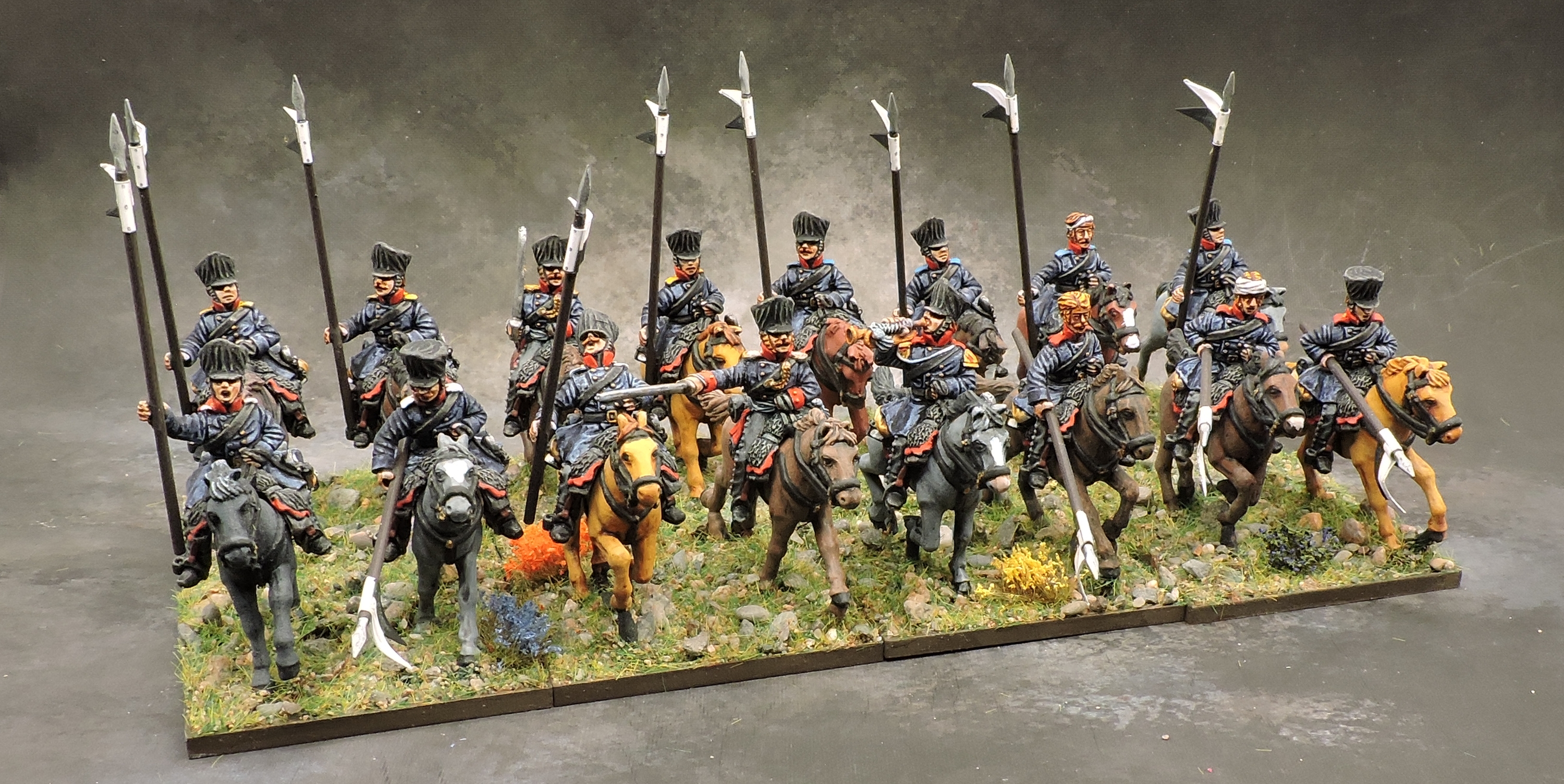
The first cavalry brigade is led by Generalmajor von Treskow and composed of 3. Ulanen (Uhlan) as well as 2. and 5. Dragoner (Dragoon) regiments. Nominally included is the 4. Husaren Regiment which was attached to 1. Brigade during the battle. The cavalry is supported Nr. 2 artillery battery. Dragoons are from Perry, Uhlans from Warlord Games.


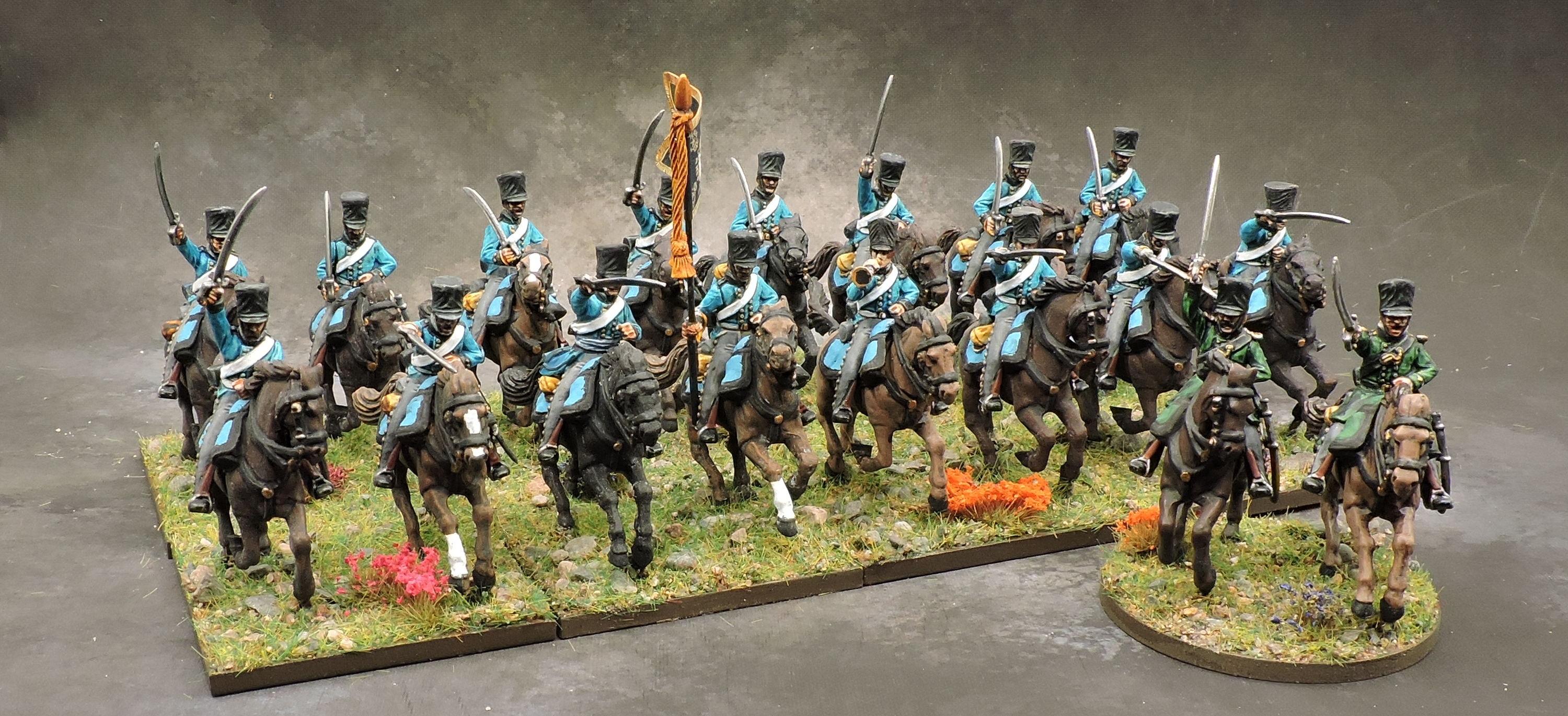

4. Husaren Regiment with three squadrons and Major von Engelhardt commanding, previously known as “1. Schlesiches Husaren Regiment” and attached to the infantry of 1. Brigade.
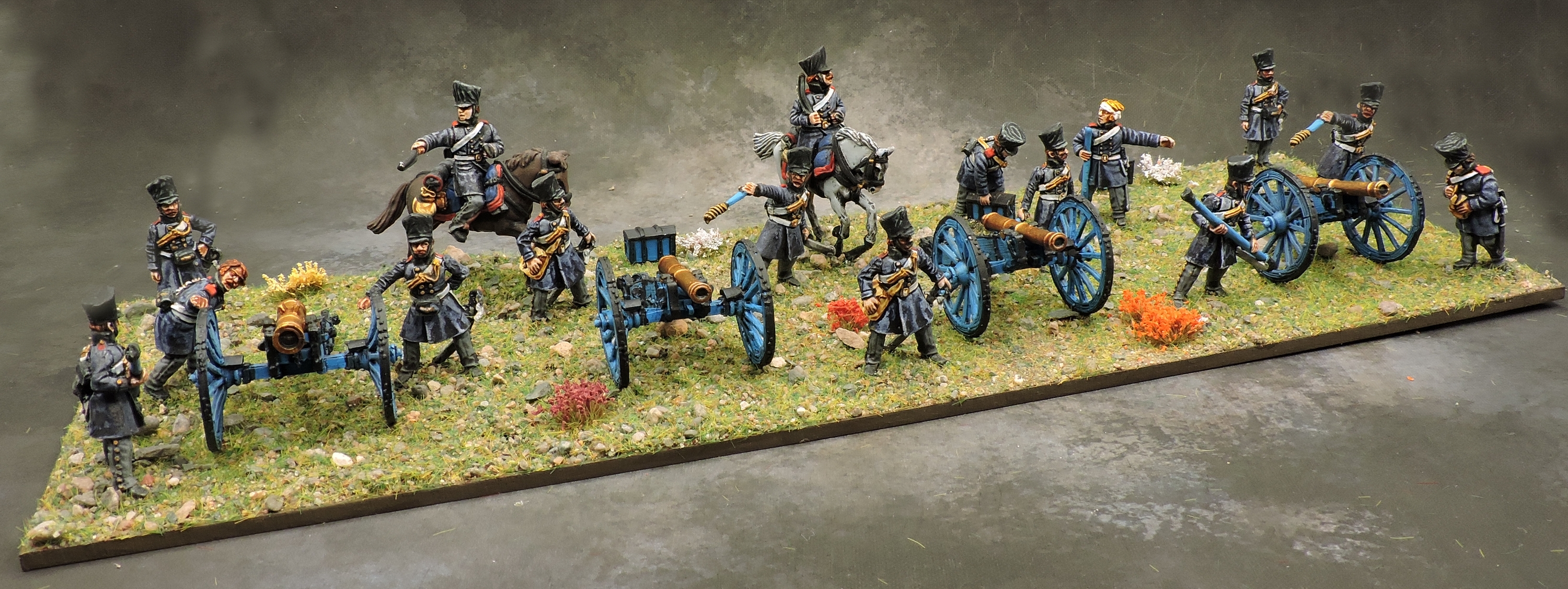
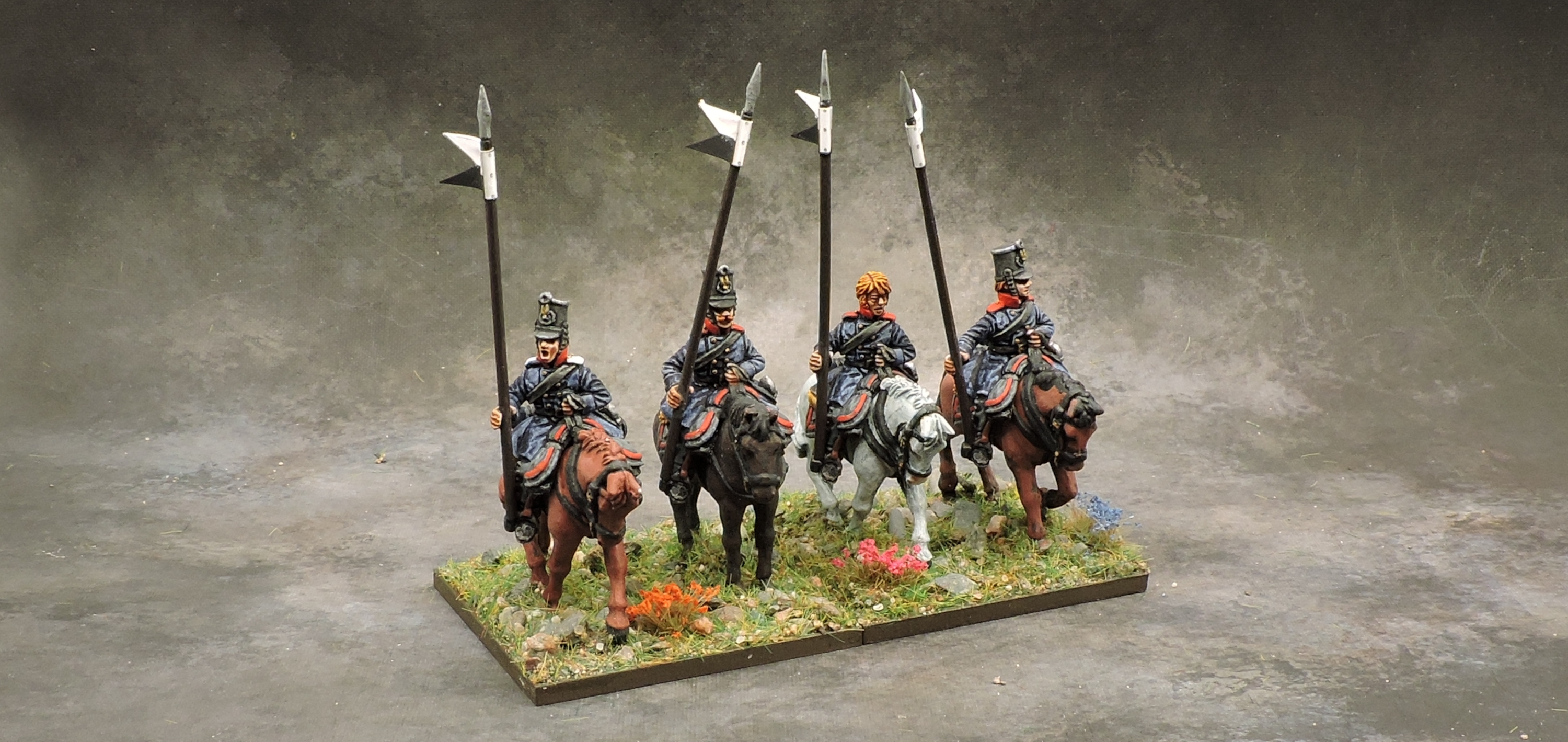
The second cavalry brigade includes 6. Ulanen as well as 1. and 2. Kurmärkische (Courmark) Landwehr Kavallerie. The Landwehr units had suffered heavily at Ligny with only 125 left to serve in the 1. and 220 in the second. I represented them as being amalgamated into a single and two squadrons respectively, while using a mix of shoulder taps for all three squadrons as a nod to the amalgamation. The 6. Ulanen are even more unique as they represented a composite of squadrons of the old Lützow Legion (first and second squadron), the former Hussars of the Legion still in their Hussar dress, and a group of volunteers from Bremen wearing shakos in the style of Polish lancers. The brigade is commanded by commanded by Oberstleutnant von Lützow – founder of the Legion bearing his name – whom I have included despite being captured at Ligny. The attach Nr. 7 battery of horse artillery uniquely has four sections of 6pdr guns rather than the typical howitzer section. I used figures from Perry and Warlord with heads converted from spare parts for the eclectic 6. Ulanen.




II Korps
Generalmajor Georg Dubislav Ludwig von Pirch I commanded II Korps which advanced behind IV Korps on the left (southern) wing of the Prussian forces. Only his first two brigades made contact with the enemy as they reinforces the attack on Plancenoit and ultimately carried the town.

5. Brigade
Generalmajor Ernst-Ludwig Graf von Tippelskirch led 5. Brigade which made the successful assault on Plancenoit and sealed the fate of Napoleon’s army.

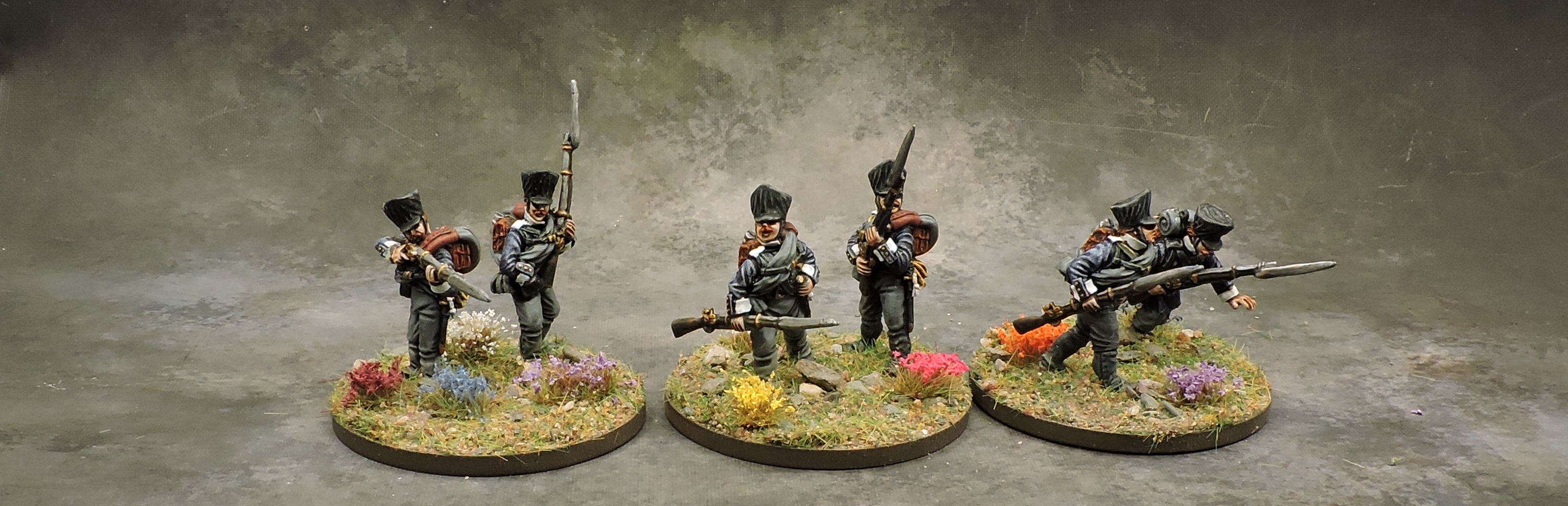
5. Brigade – 2. Infanterie Regiment [est. 2,200 men]
Major von Cardell commanded one of the few fully formed line regiments in standard kit. The regiment arrived late on the field and didn’t seem to have been part of final assault. These are Calpe Miniatures figures. The regiment carries the flags actually used at Waterloo for once!


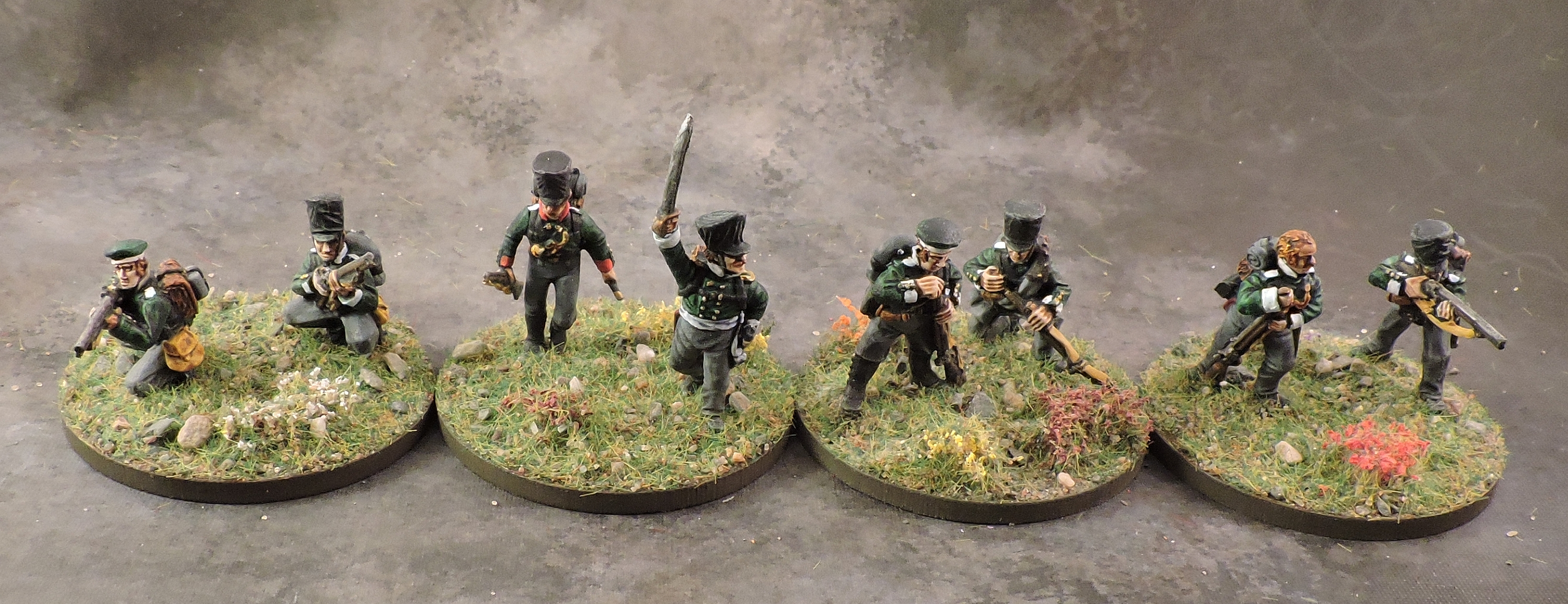
5. Brigade – 25. Infanterie Regiment [est. 1,500 men]
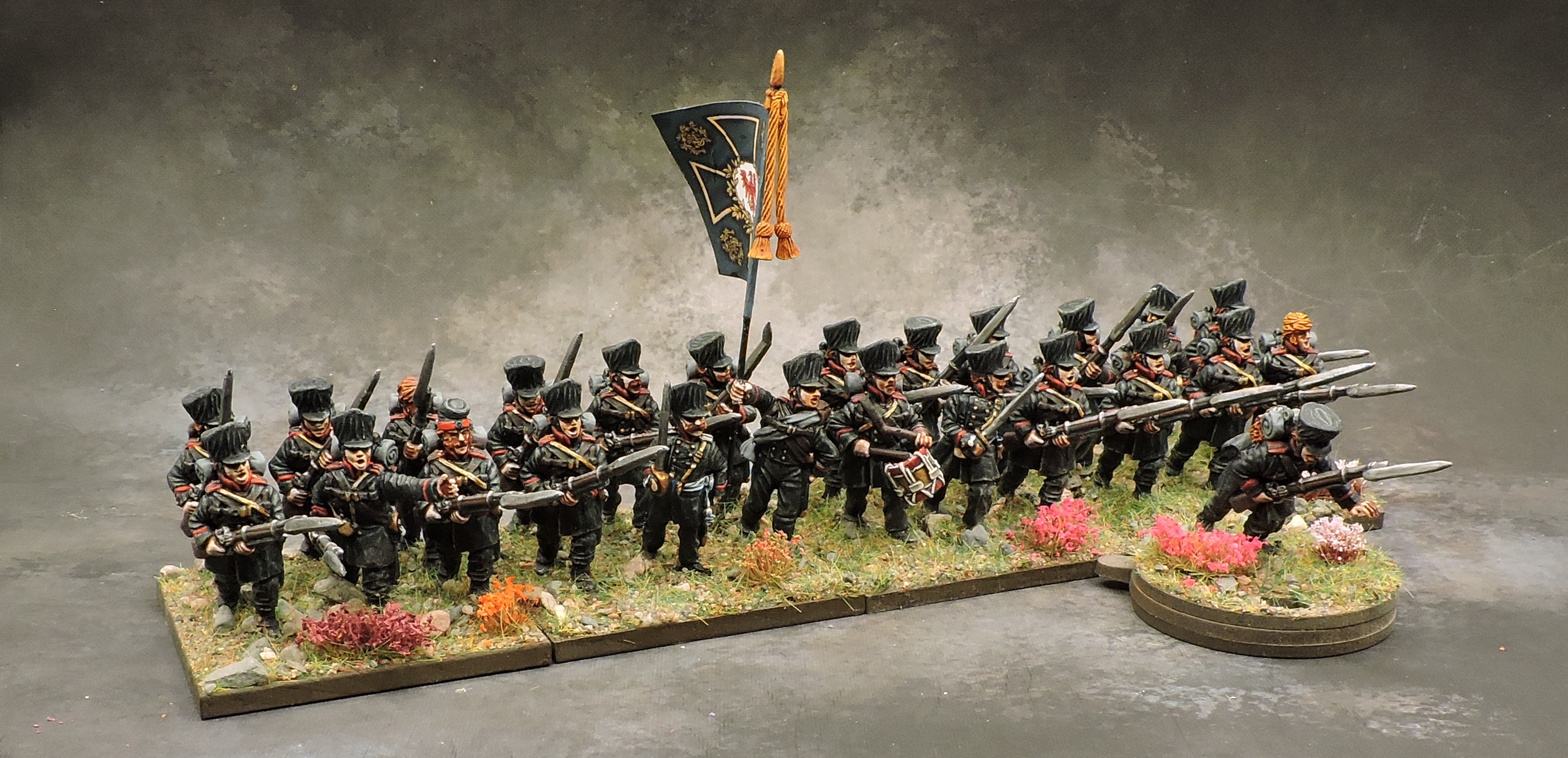
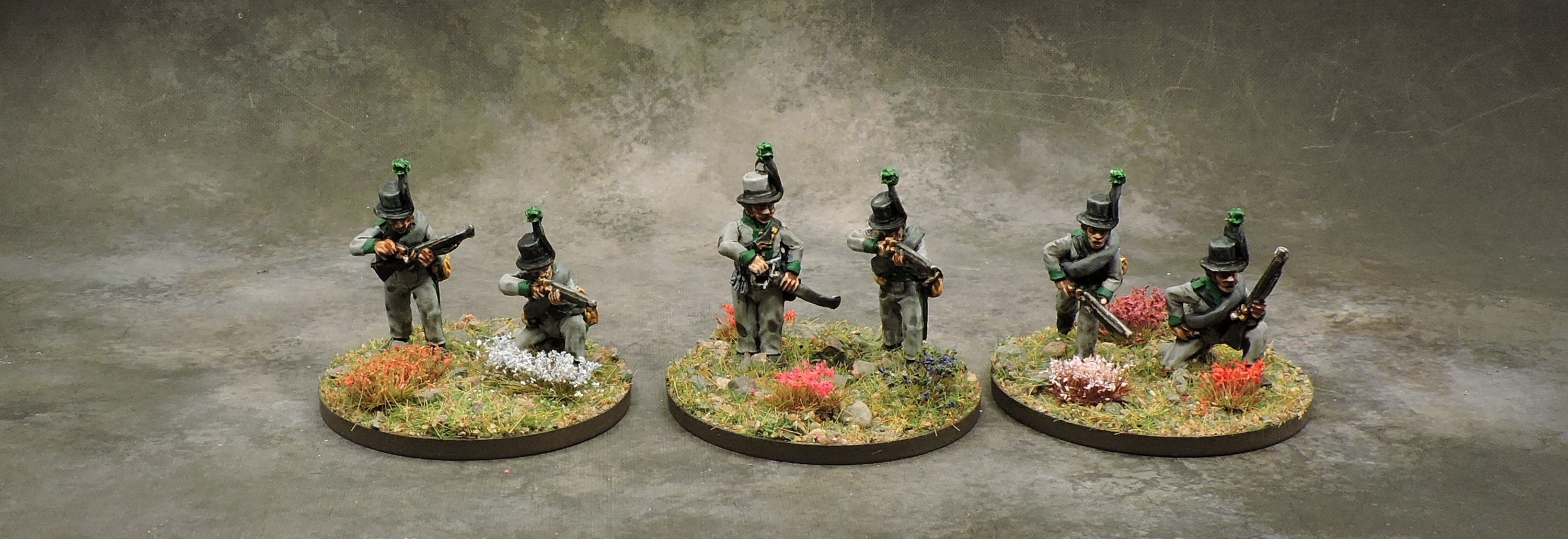
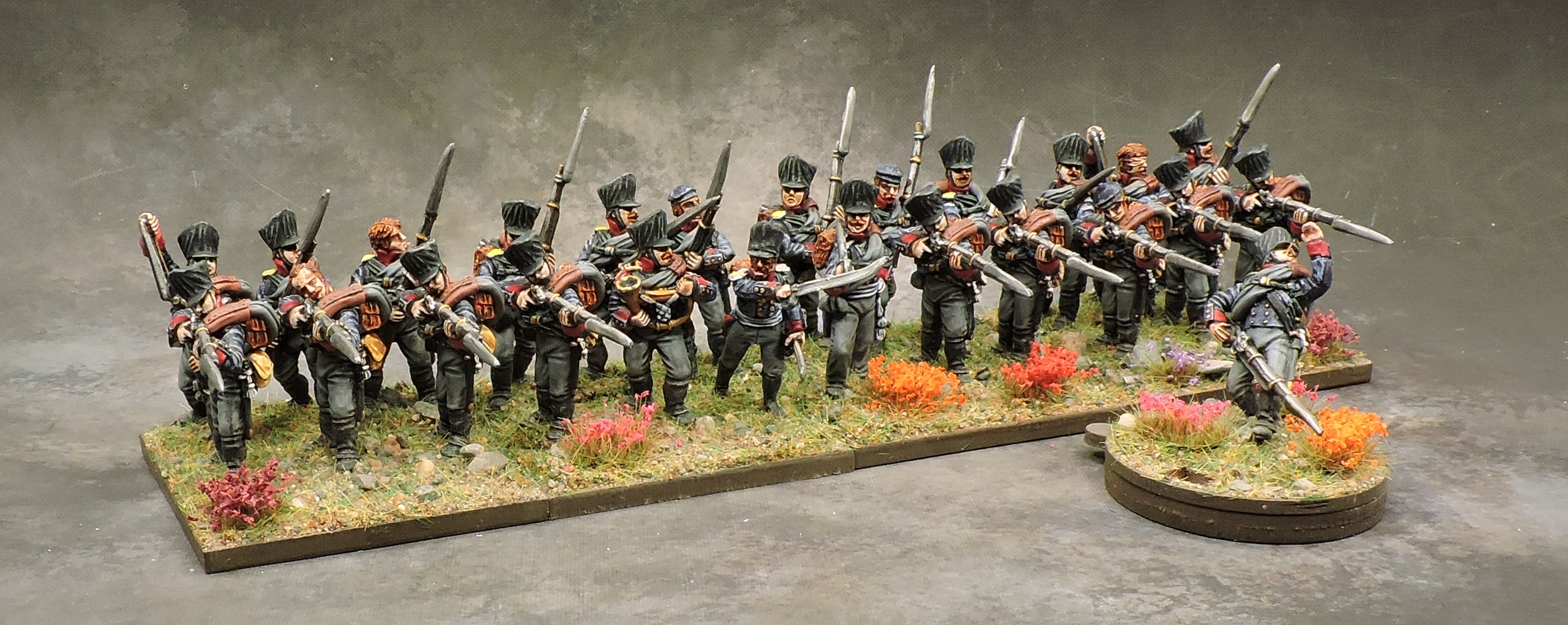
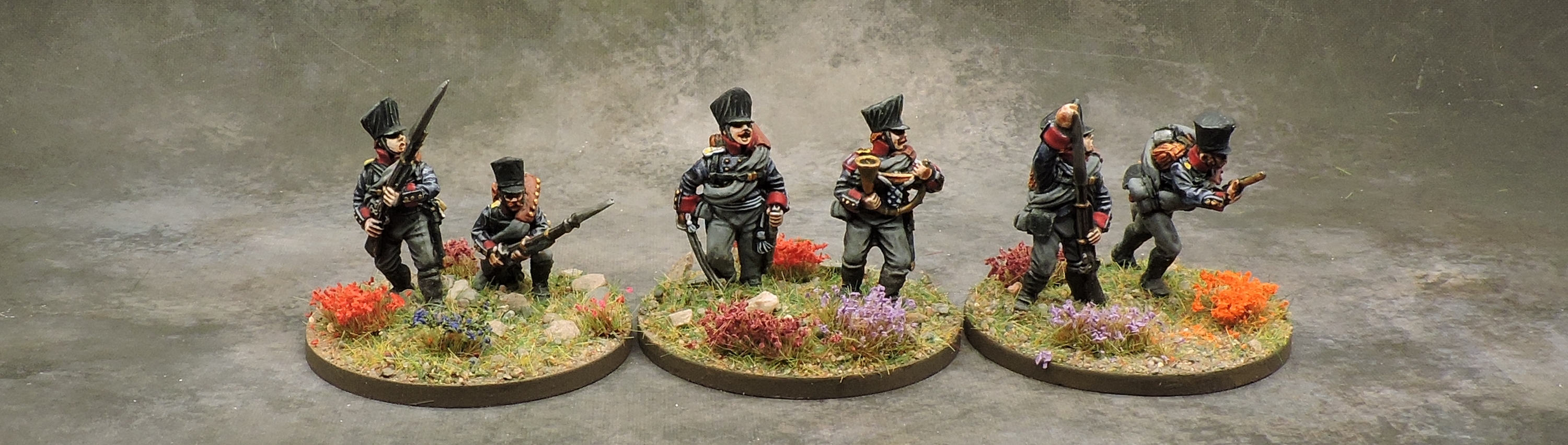
This regiment, led by Major von Petersdorff, was the reformed Lützow Legion in their unique black uniforms. Despite being under-equipped, badly trained, and frankly a rag-tag formation, the regiment stormed Plancenoit with elan and ejected the Imperial Guard. The Fusiliers battalions was the first Prussian unit to reach the highway behind Plancenoit, sealing the victory. Calpe Miniatures makes a custom range for these. The Legion didn’t carry a flag, but the black cross and eagle seemed appropriate enough to include.
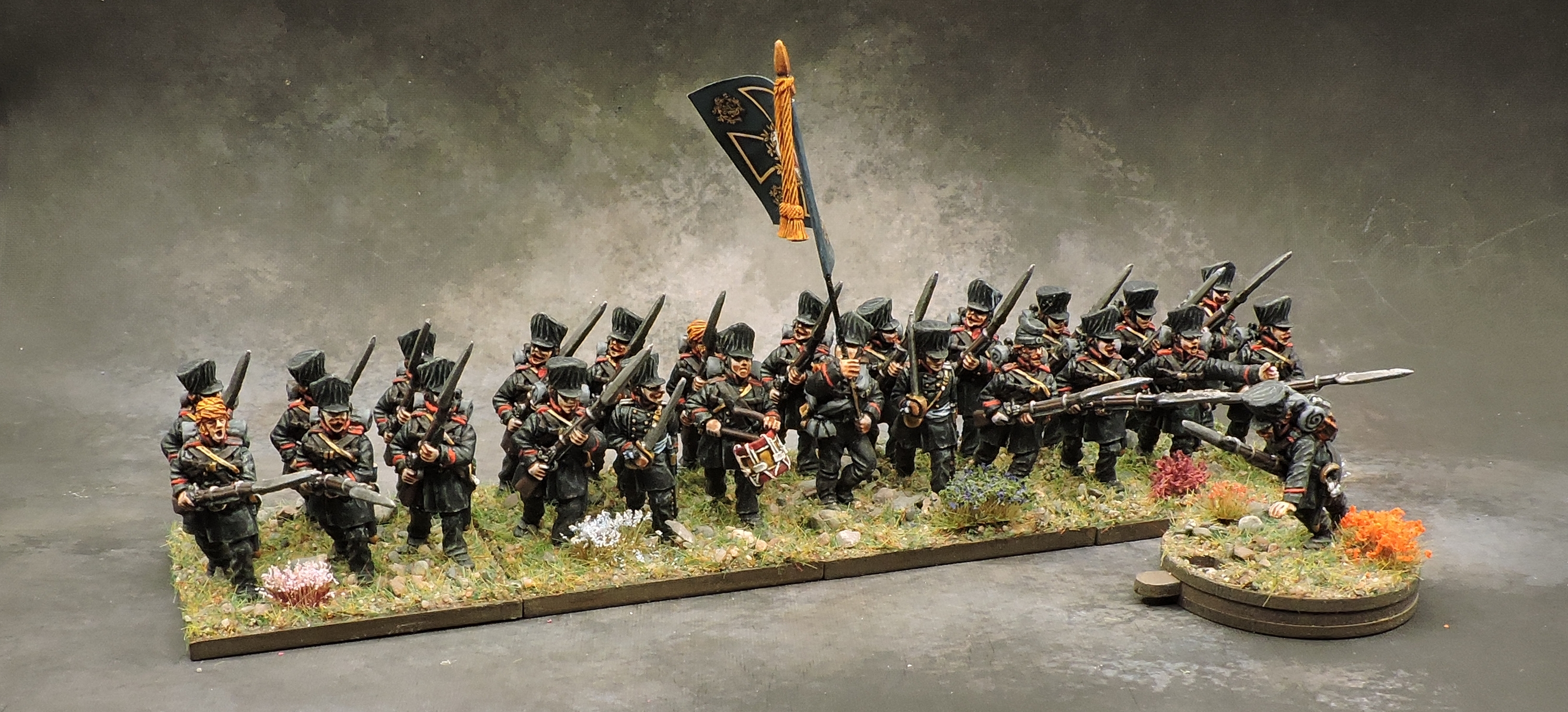
5. Brigade – 5. Westfälische Landwehr Regiment [est. 1,700 men]
Oberstleutnant von Röbel commands this landwehr regiment with standard uniforms, which was raised in Paderborn. Figures from Calpe. All flags have a suitable Westfalian design.
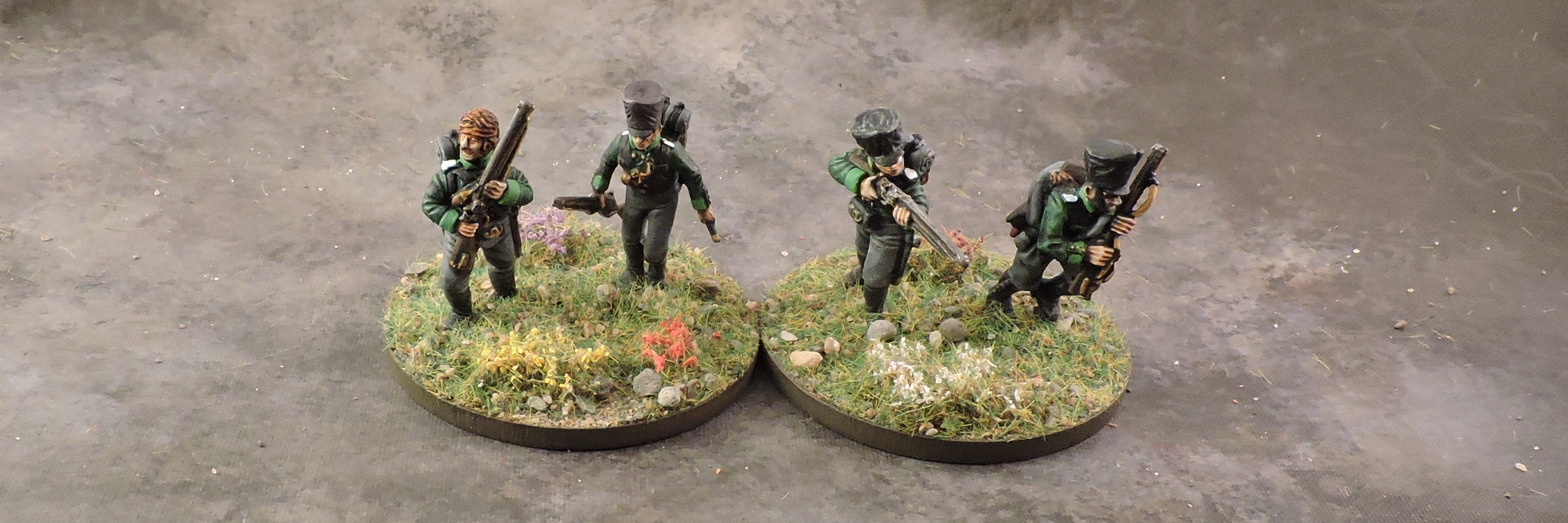
6. Brigade
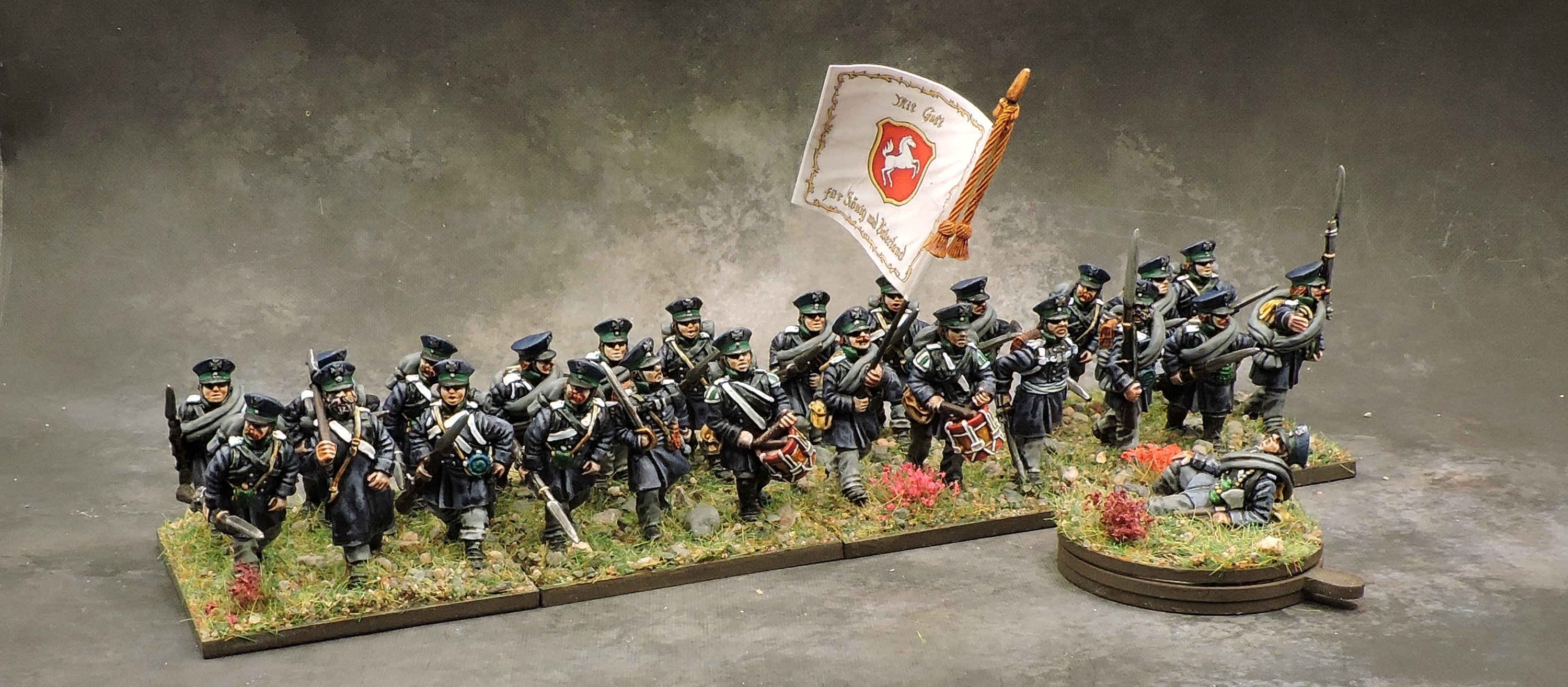
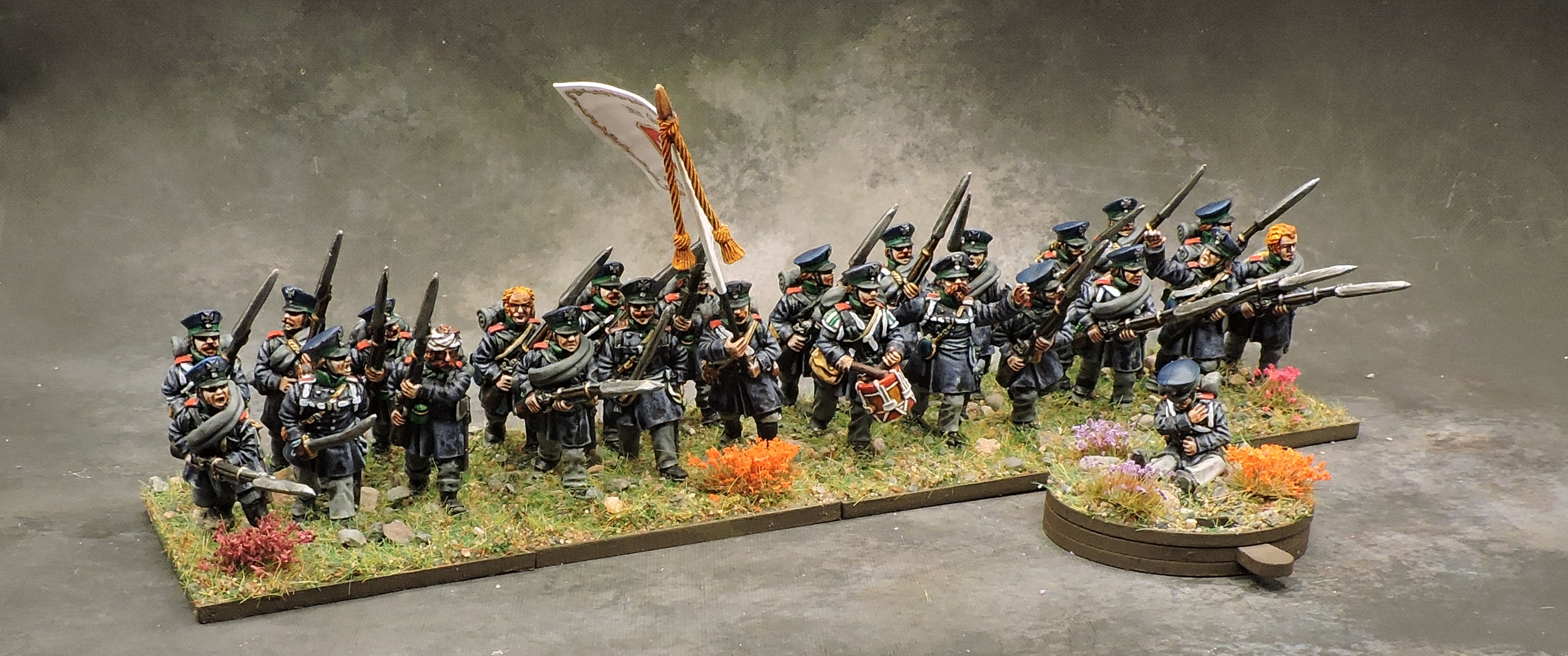
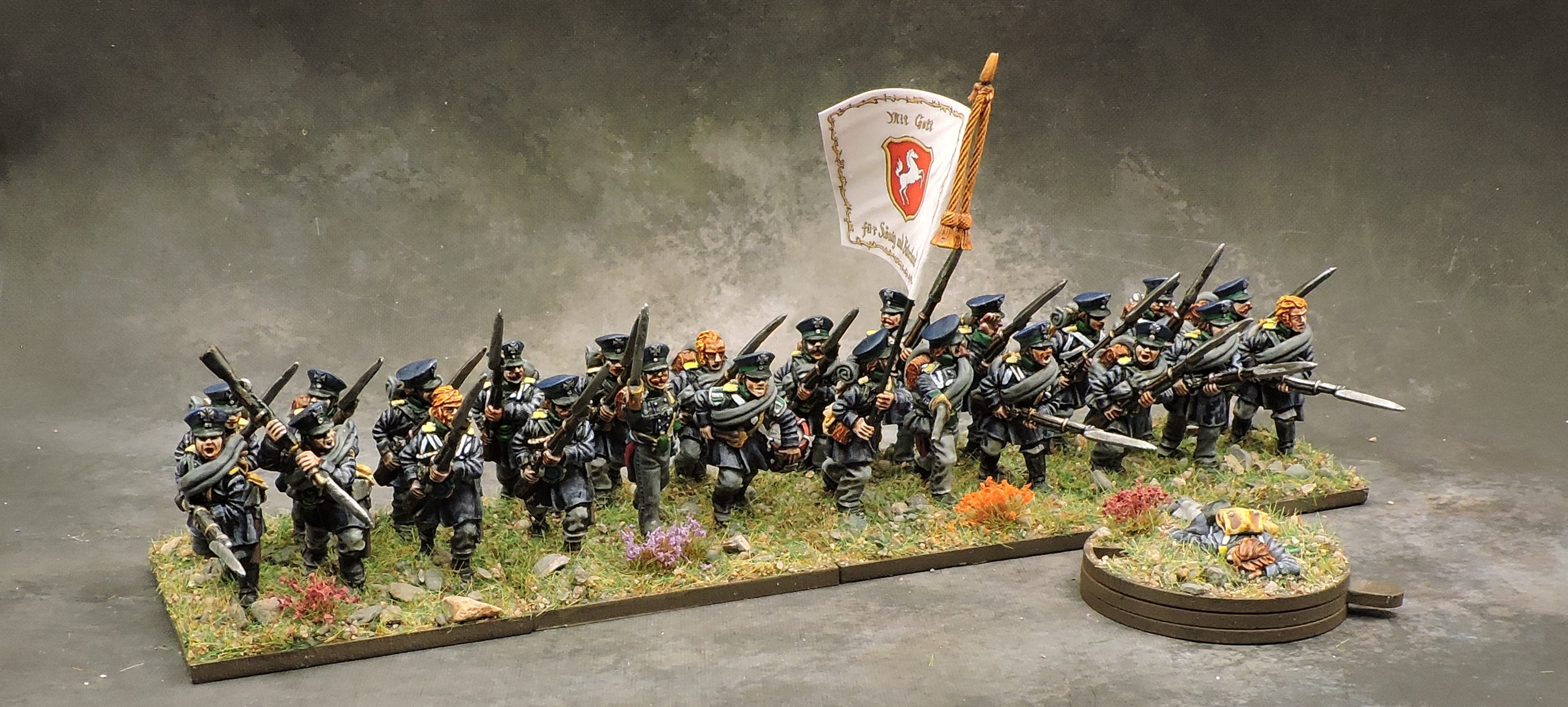
Generalmajor von Krafft’s 6. Brigade joined the final assault on Plancenoit with all three regiments engaged, though their artillery appears to have remained behind in the line of march.
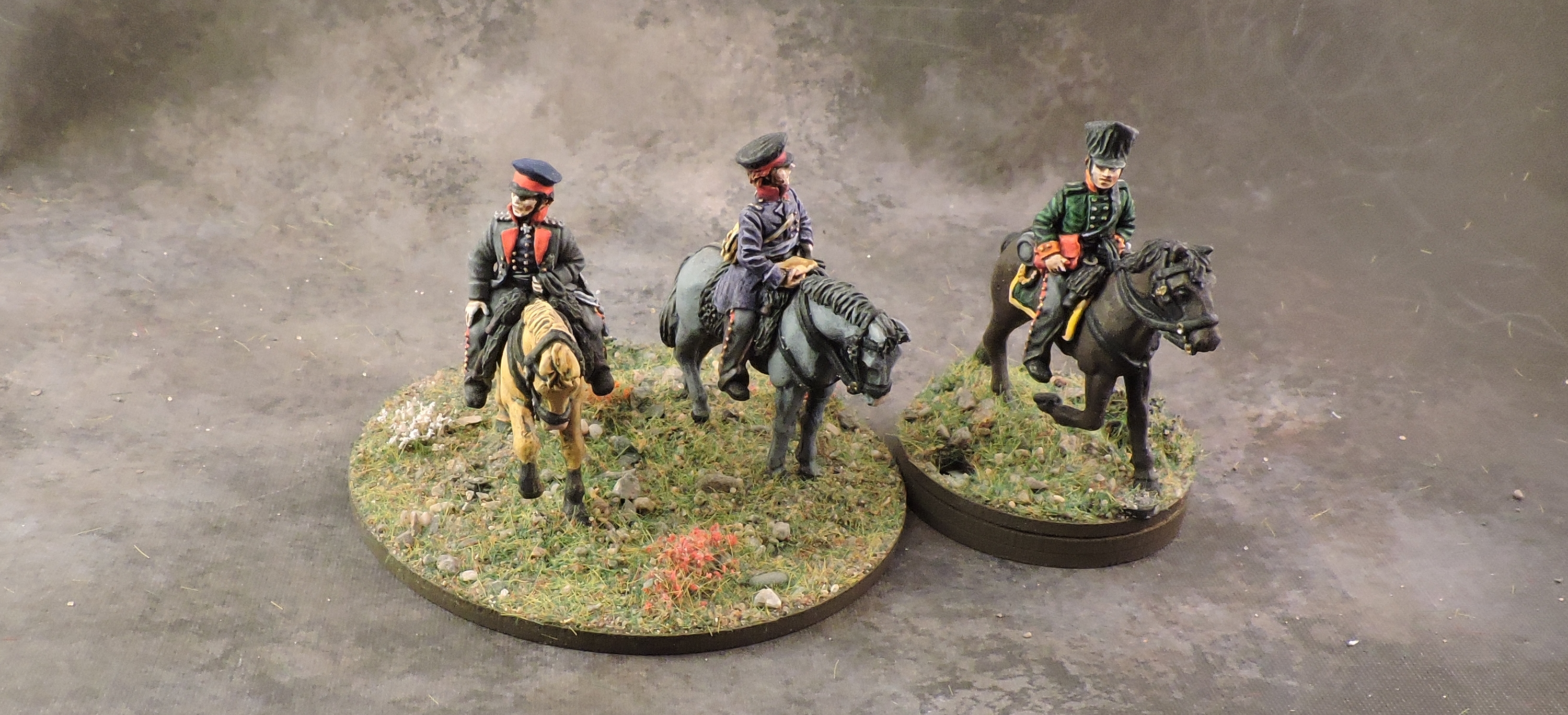
6. Brigade – 9. Infanterie Regiment [est. 1,900 men]
Major von Schmidt commanded the former Kolberg regiment which was refitted with regulation uniforms and carried British-made Brown Bess muskets. I am using Calpe figures for the Musketeers and Front Rank for the Fusiliers. The flag is authentic for the unit at Waterloo.
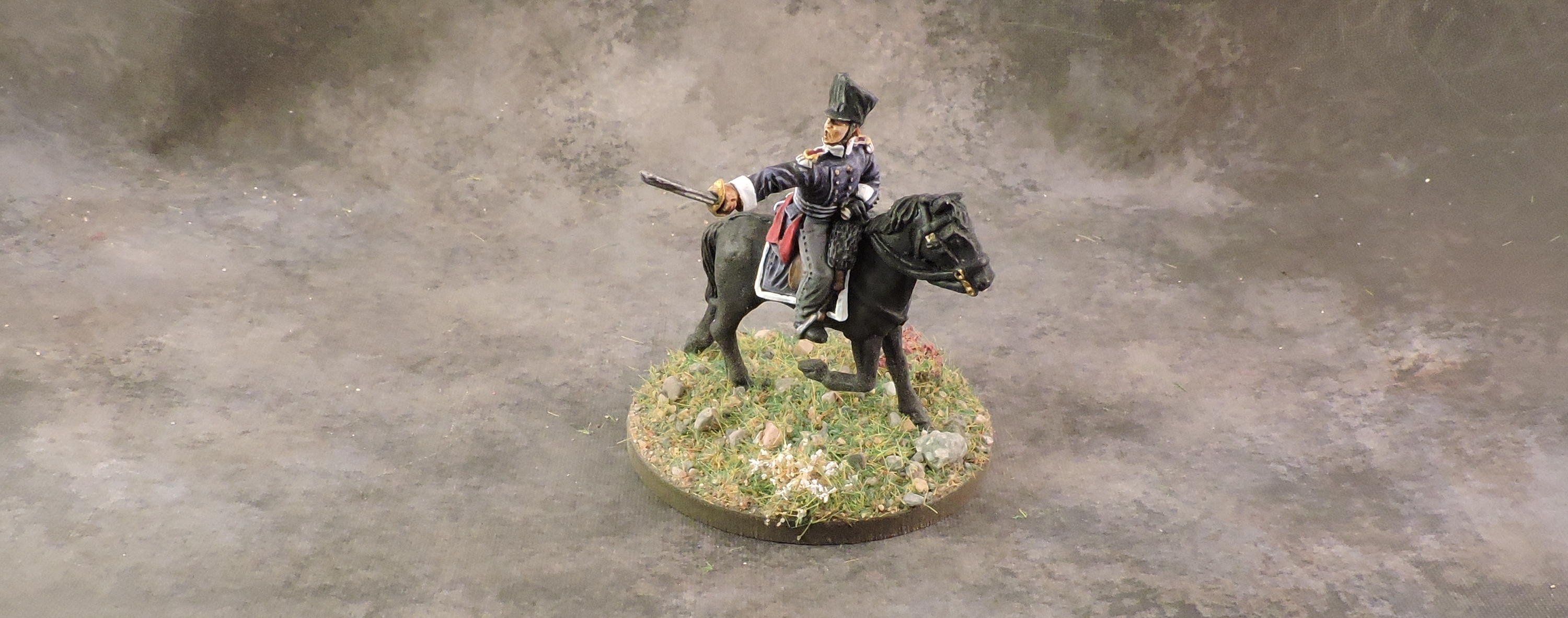
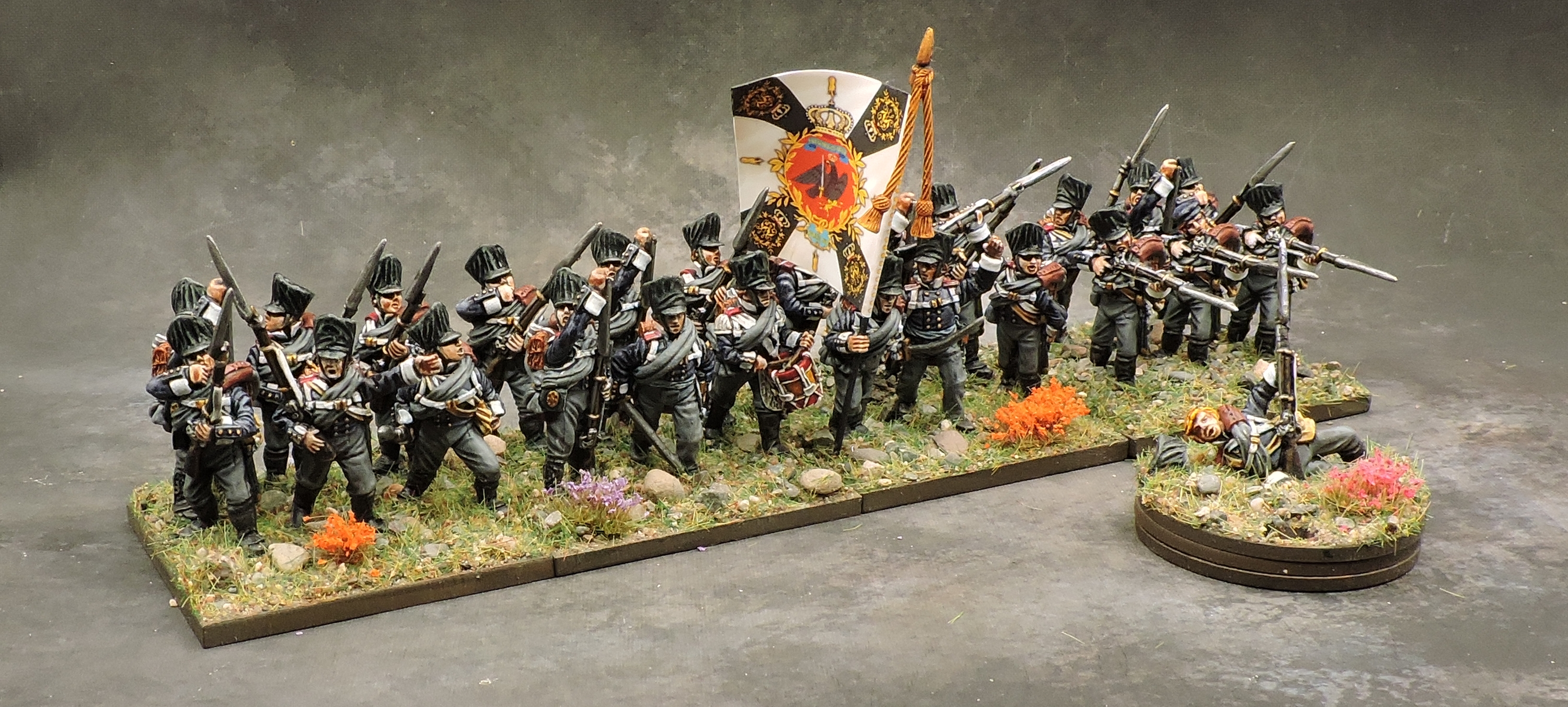
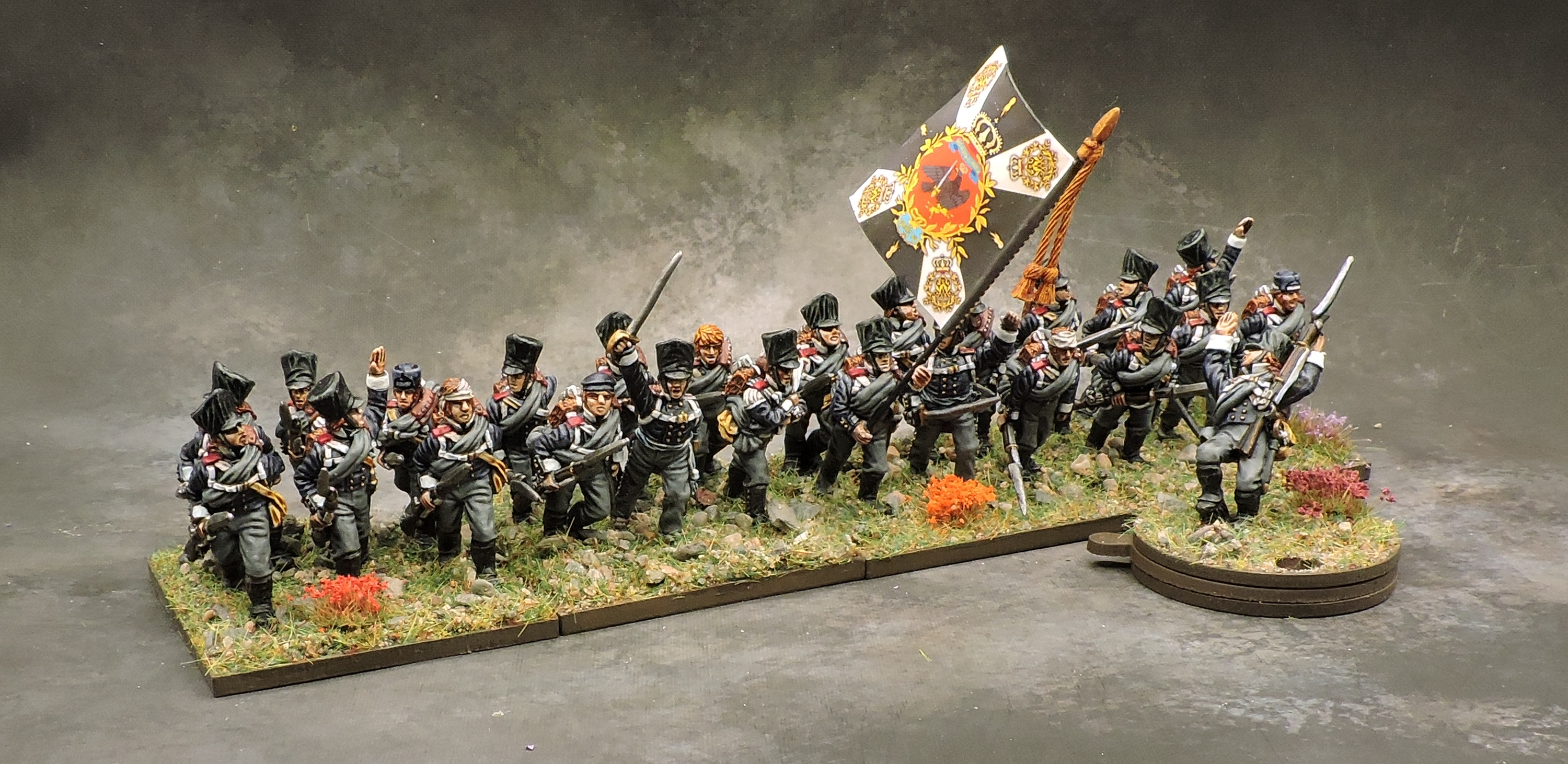
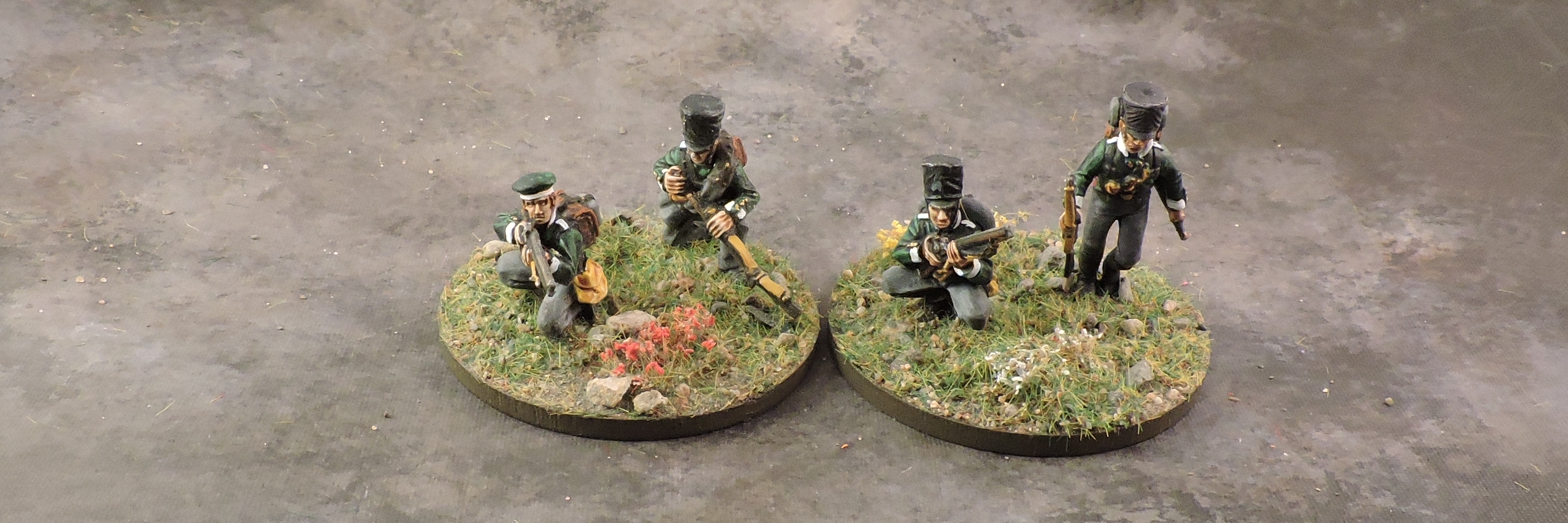


6. Brigade – 26. Infanterie Regiment [est. 1,600 men]
The former Elbe Regiment, commanded by Oberst von Reuss, had a tortured history of mixed equipment and recurring shortages, but received an influx of new recruits and new equipment just three weeks before the battle of Waterloo. These are Front Rank figures. The regiment wouldn’t have had flags, but I used the utterly inauthentic flag of an old West Prussian regiment just because the orange adds a bit more colour to the army.
Oberst Heinrich von Reuss, commanding 26. Infanterie Regiment formerly known as Elbe Regiment.
I/26. Infanterie Regiment, red colours and light blue sleeves.
II/26. Infanterie Regiment, red colours and light blue sleeves.
F/26. Infanterie Regiment, red colours and light blue sleeves.
Freiwillige Jäger.
6. Brigade – 1. Elbe Landwehr Regiment [est. 1,700 men]
Oberstleutnant von Bismark – distant cousin to the future chancellor of a united Germany who was born just three months before the battle of Waterloo – commanded this Landwehr Regiment which sported a mix of Landwehr caps and stovepipe shako. All Calpe figures with generic Landwehr flags.
Oberstleutnant Ernst Ludwig von Bismark, commanding 1. Elbe Landwehr Regiment.
I/1. Elb Landwehr Regiment, light blue facings.
II/1. Elb Landwehr Regiment, light blue facings.
III/1. Elb Landwehr Regiment, light blue facings.
Westfälische Landwehr Jäger.
Reserve-Kavallerie
Generalmajor von Wahlen-Jürgass led II Korps reserve cavalry which mostly just joined the general pursuit after the collapse of the Imperial Guard. The Generalmajor himself was wounded at Ligny but appears to have been in command at Waterloo.

The first brigade was commanded by Oberstleutnant von Schmiedeberg who stepped up after Oberst von Thümen was killed at Ligny. Figures are Perry metals and plastics.


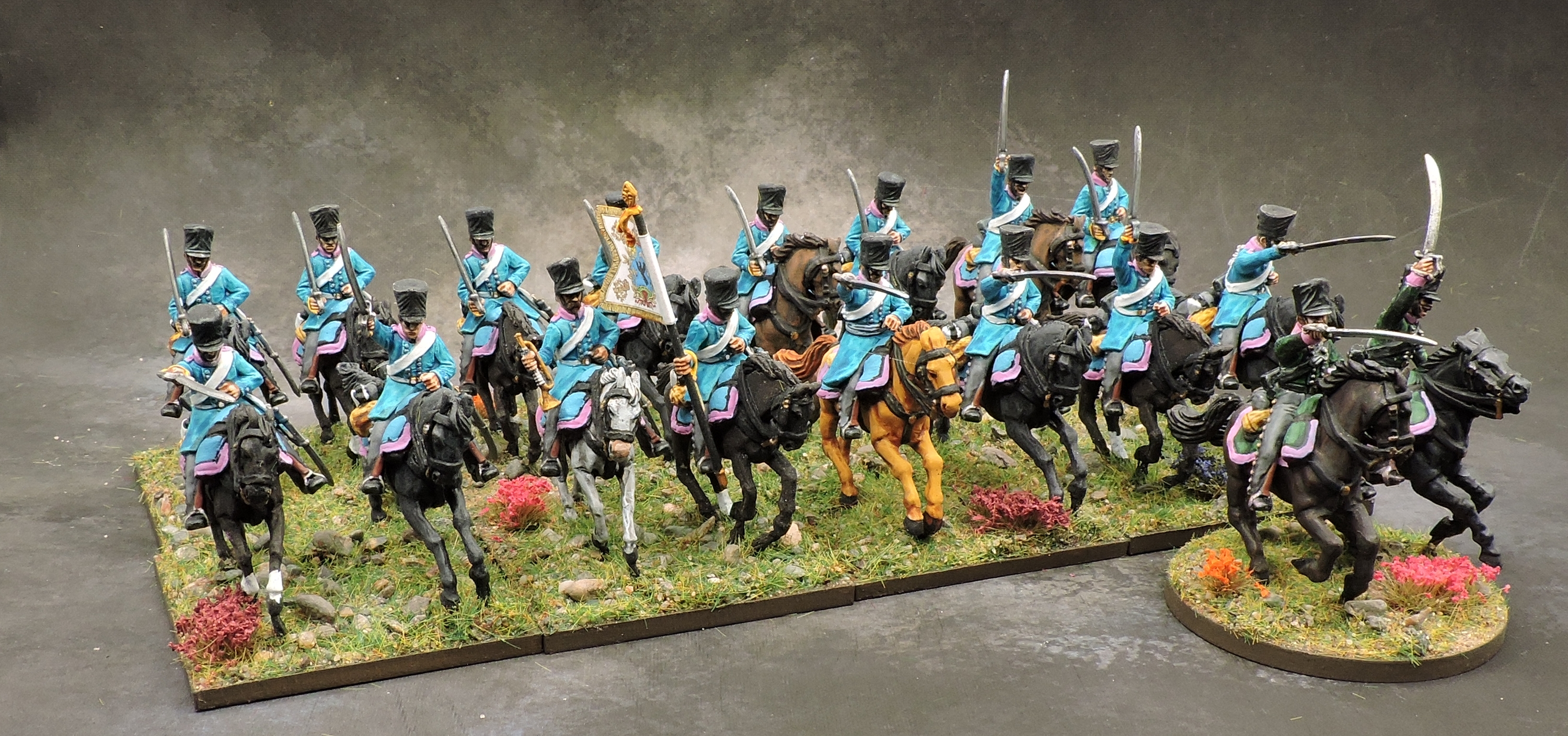
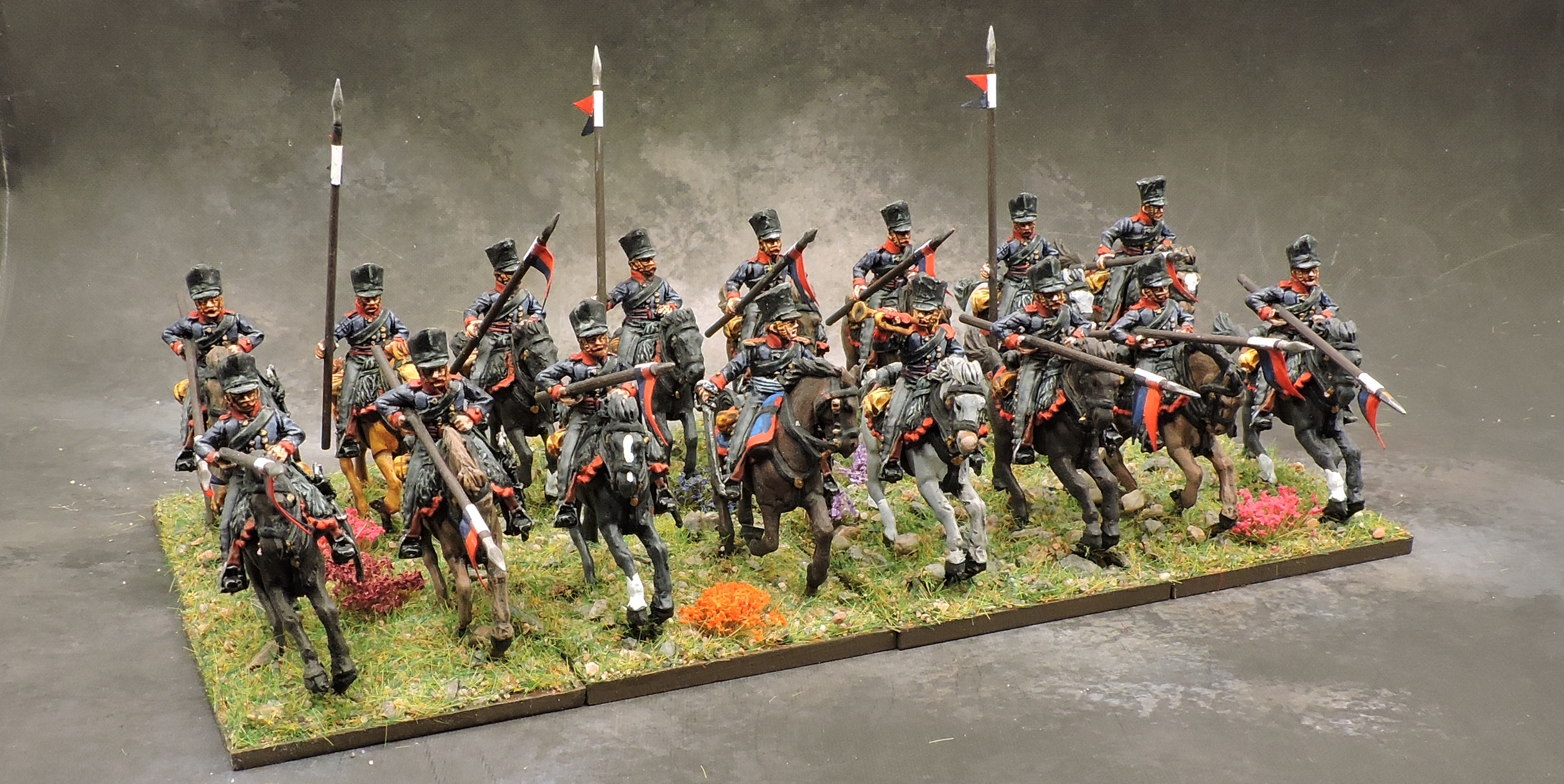
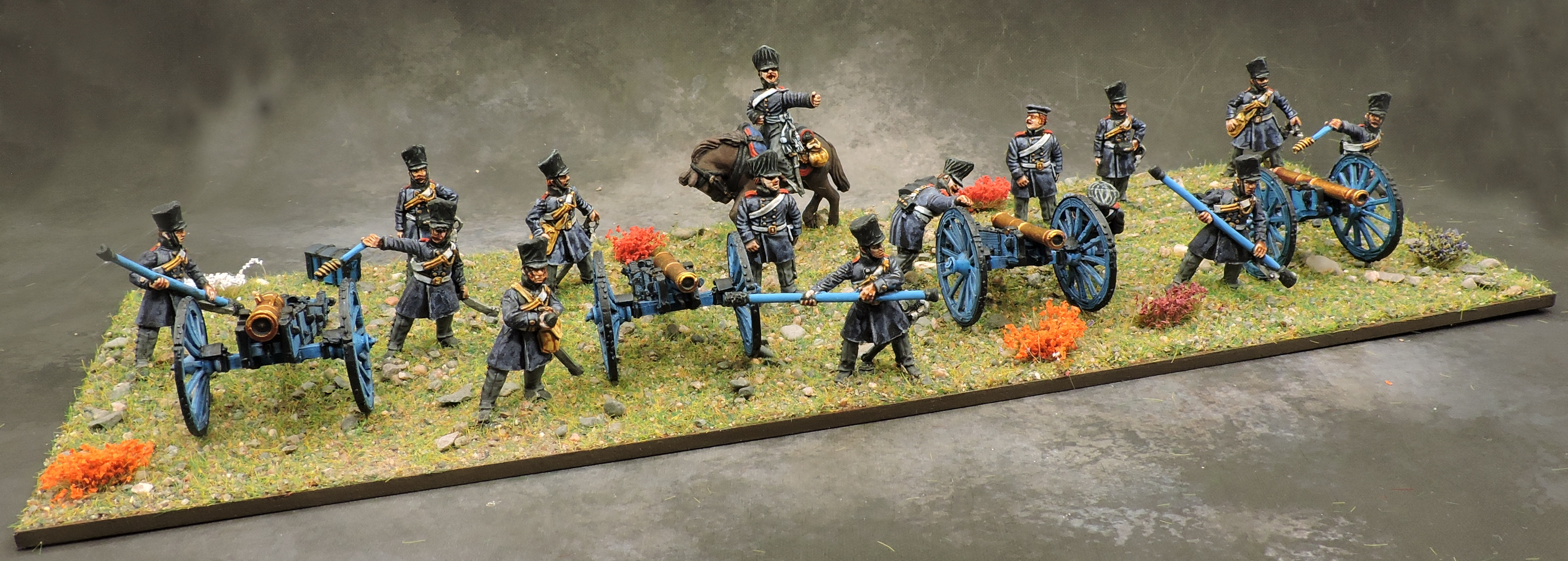
Second brigade arrived on the field with three regiments of Hussars which only marginally engaged in the final pursuit. The 11. Husaren Regiment was split between 5. and 6. Brigade to support the infantry. Figures are mostly from Warlord. The attached horse artillery was part of the Lützow Legion and still wears the corresponding black uniforms.
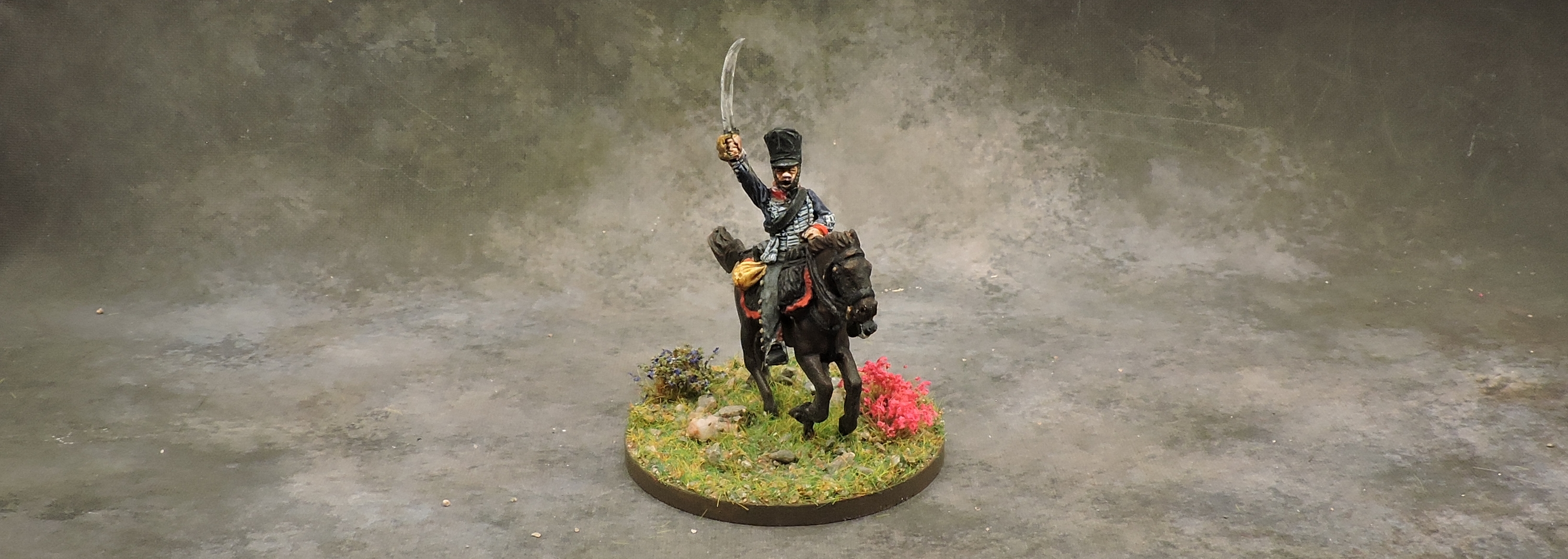
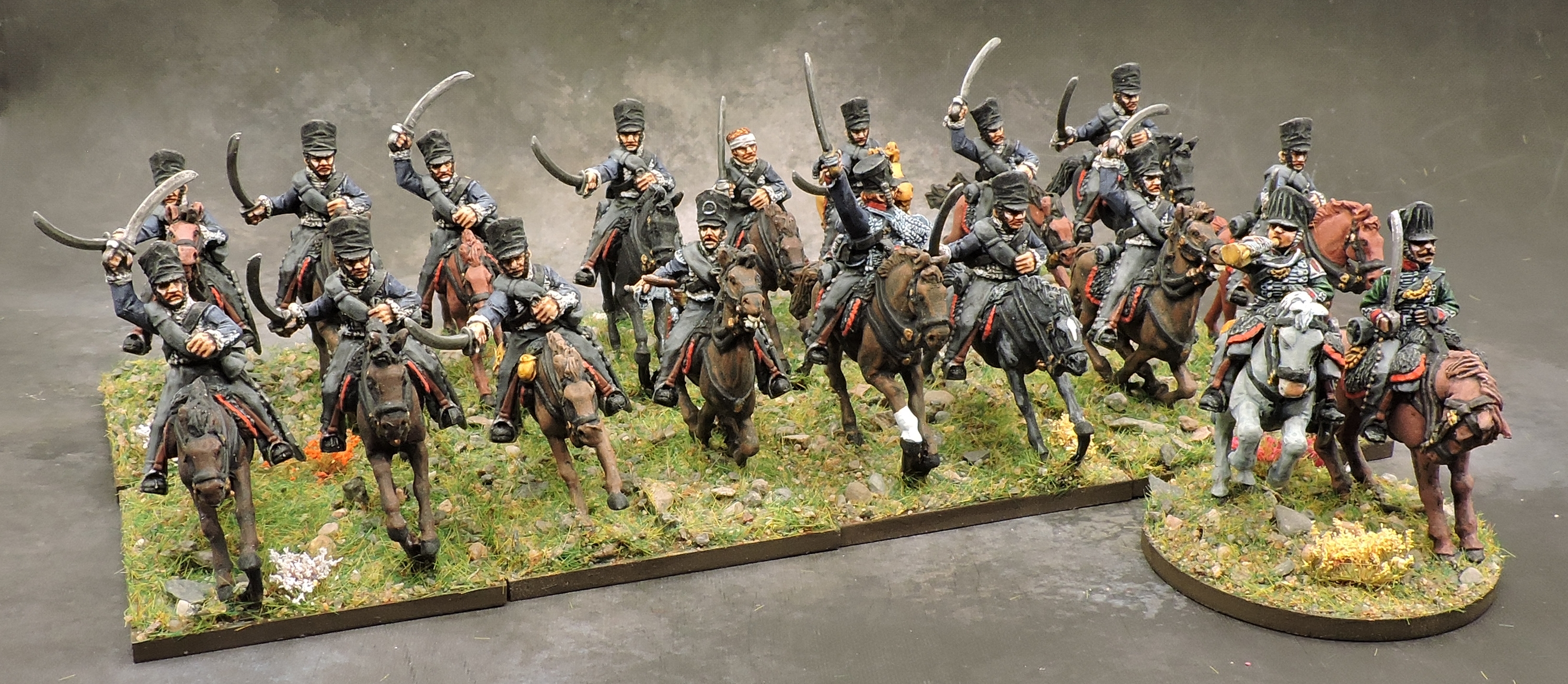

11. Husaren Regiment with four squadrons split two each to 5. and 6. Brigade, and Major Wilhelm Heinrich Konrad von Romberg commanding, formerly known as Berg und Saxen Husaren with a detachment of mounted Jäger.

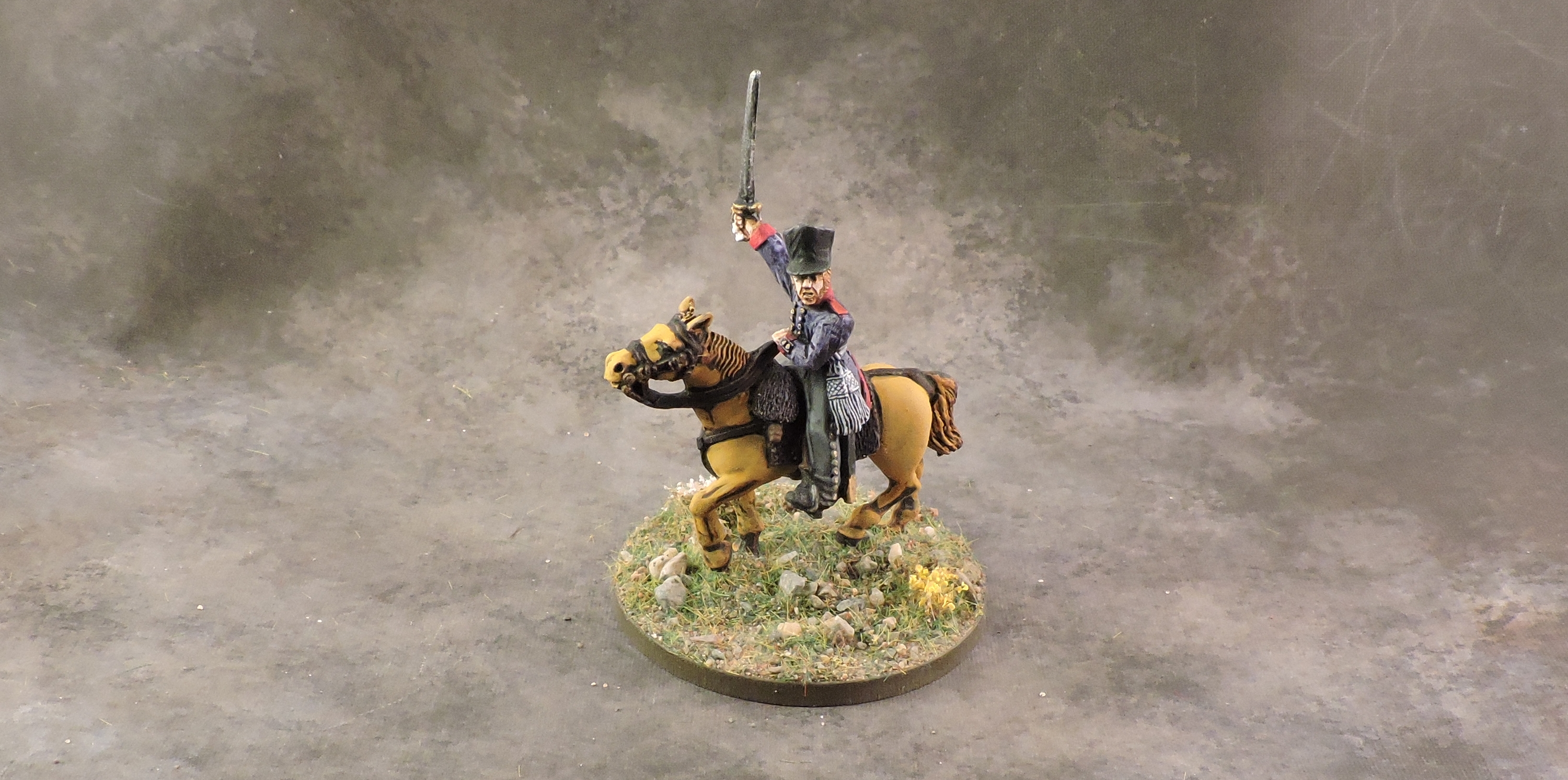
The third brigade was composed of Landwehr Kavallerie as is typical. Figures are from Calpe.

IV Korps
General der Infanterie Friedrich Wilhelm Freiherr von Bülow, Graf von Dennewitz, commands IV Korps which bore the bulk of the Prussian fighting at Waterloo. His Korps was last in the line of march but led the reinforcement of Wellington’s army as it had not been engaged during the earlier battle at Ligny. Meant as a reserve formation, IV Korps had a higher contingent of Landwehr regiments with two such regiments per brigade. Nevertheless, they fought with valour and ultimately carried the day at Plancenoit.

13. Brigade
Generalleutnant Albrecht Georg Ernst Karl von Hacke led 13. Brigade which reinforced the initial attack on Plancenoit in parallel march with 14. Brigade.

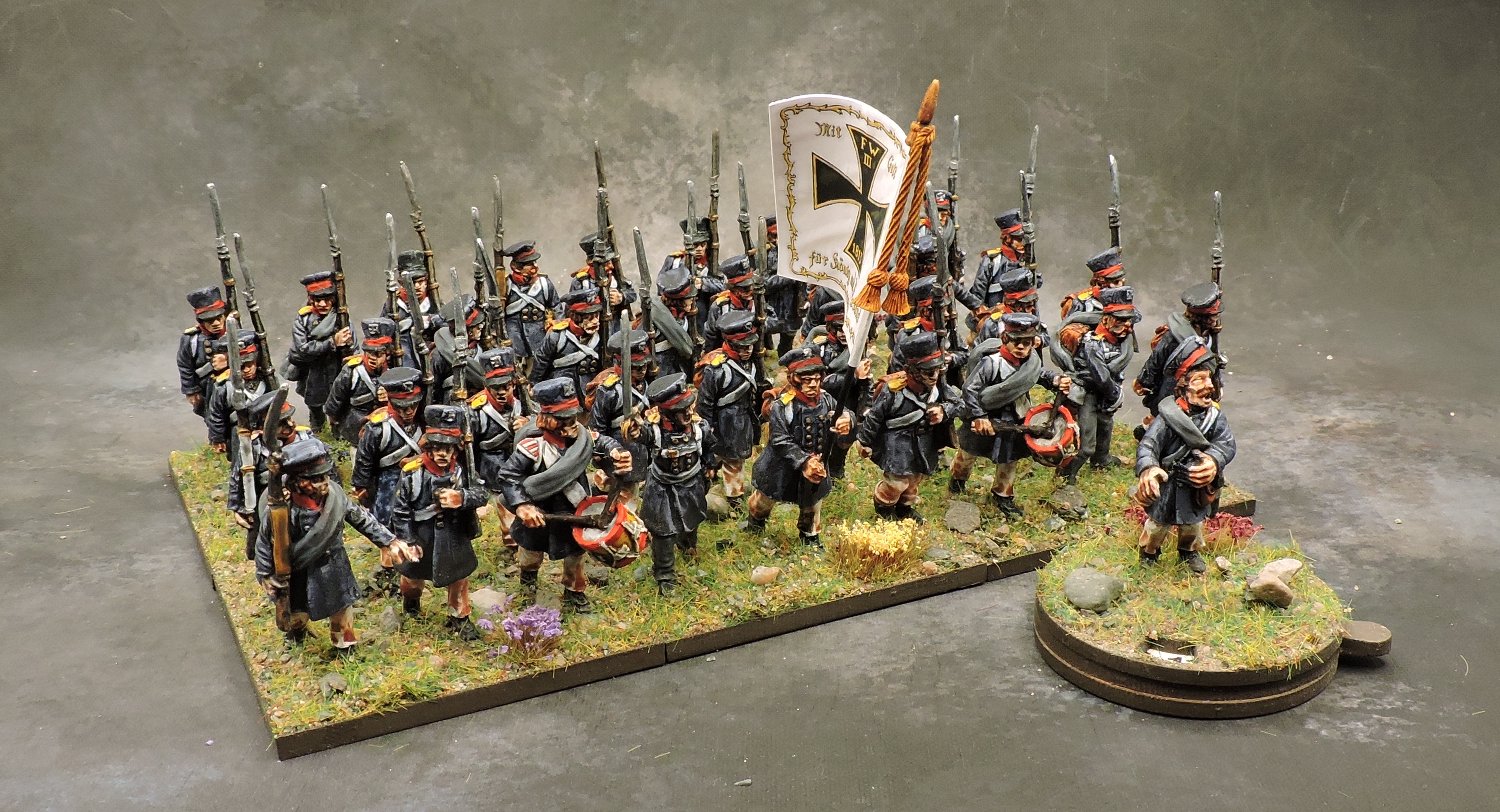
13. Brigade – 10. Infanterie Regiment (1. Schlesien) [est. 2,400 men]
Led by Oberst von Lettow, the 10. Regiment was well equipped in regulation uniforms with yellow facings. This is a large regiment in attack column formation, using Perry plastic figures. The flags are correct for the regiment.


13. Brigade – 2. Neumärkische Landwehr Regiment [est. 2,100 men]
Major von Braunschweig commands this Landwehr regiment in standard uniforms. These are Foundry metal figures. Both this and the following Landwehr regiment in the brigade carry generic flags.


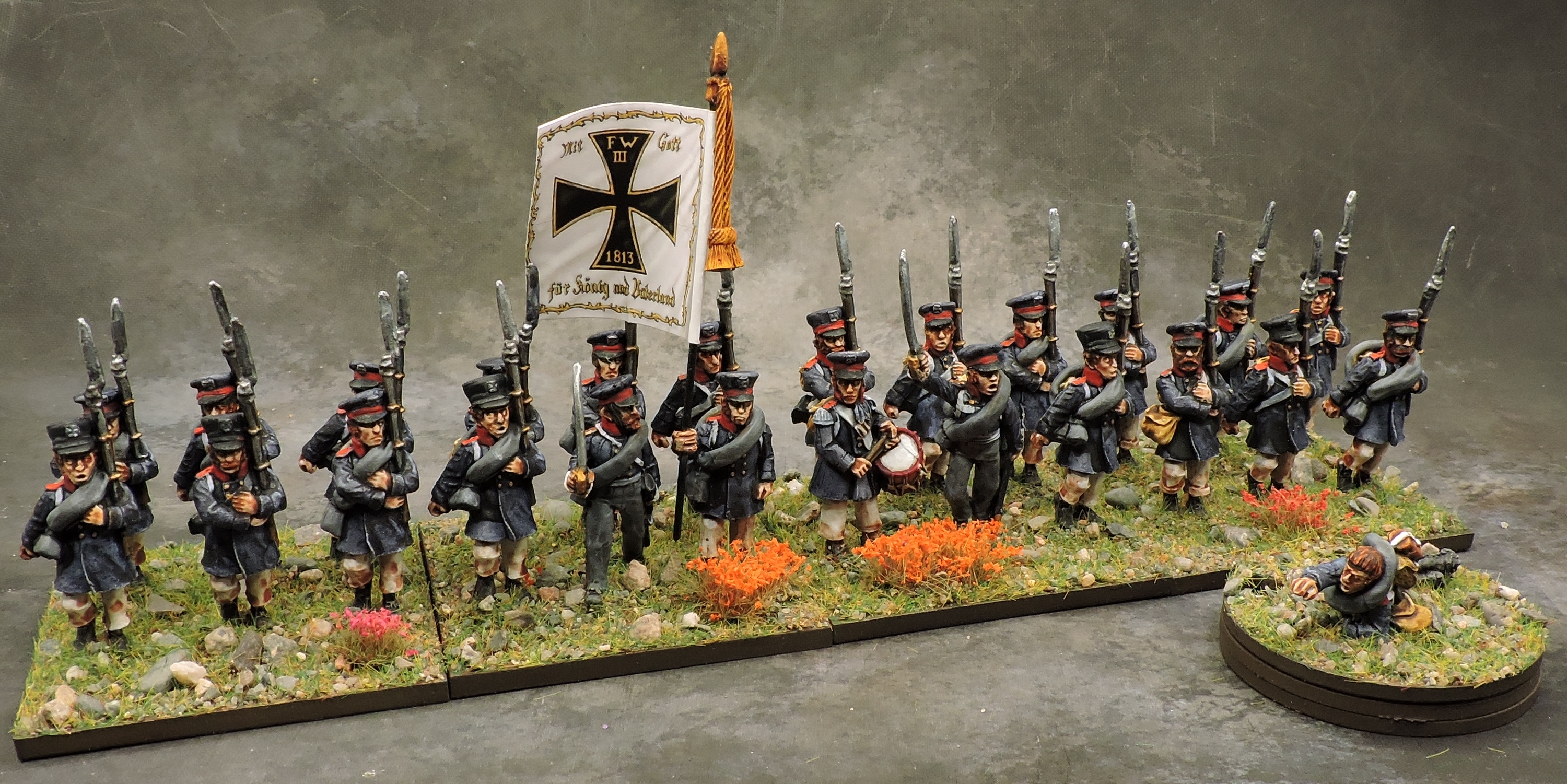

13. Brigade – 3. Neumärkische Landwehr Regiment [est. 2,400 men]
Led by Major von Schmalensee, the regiment features some stiffened caps which are mentioned in contemporary descriptions. Figures are Perry metals.


13. Brigade – Artillery
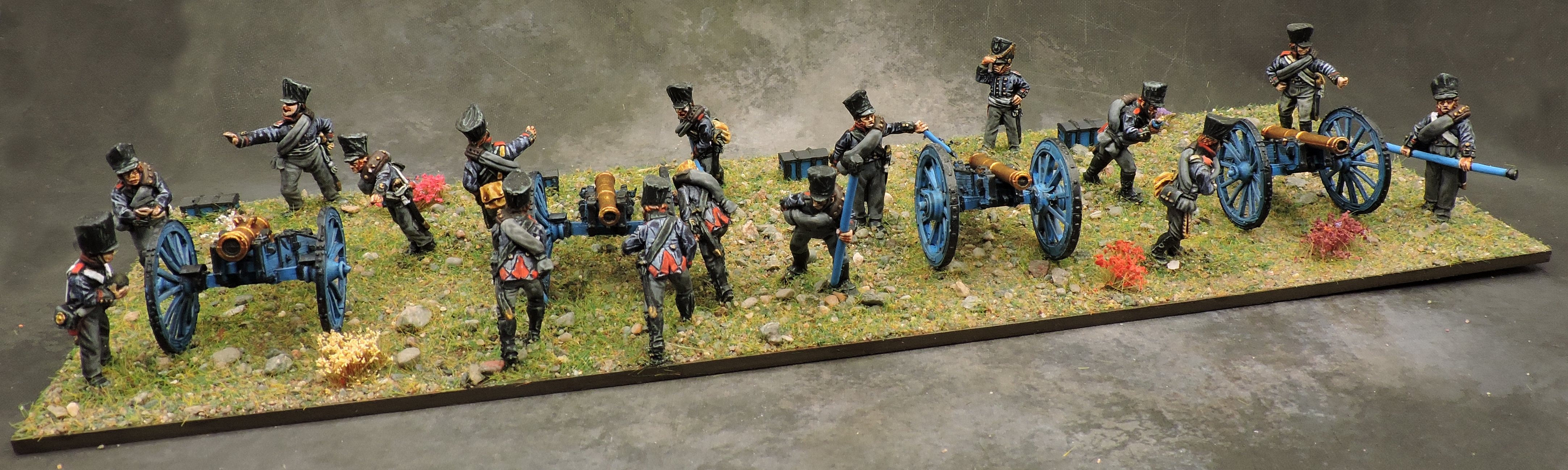
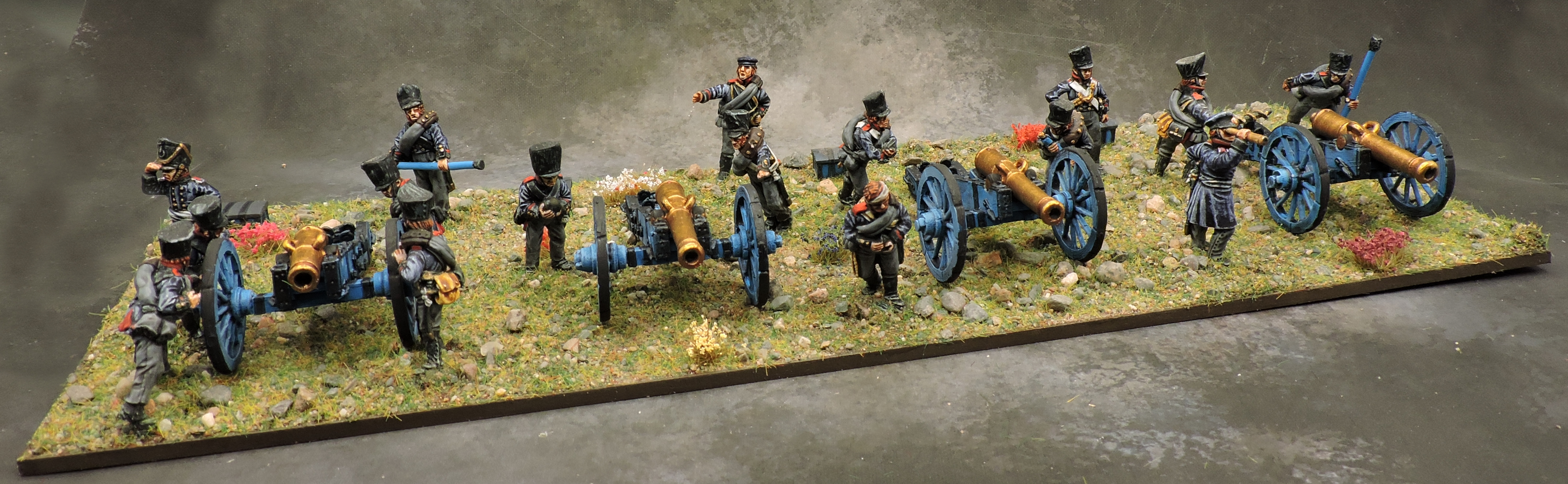
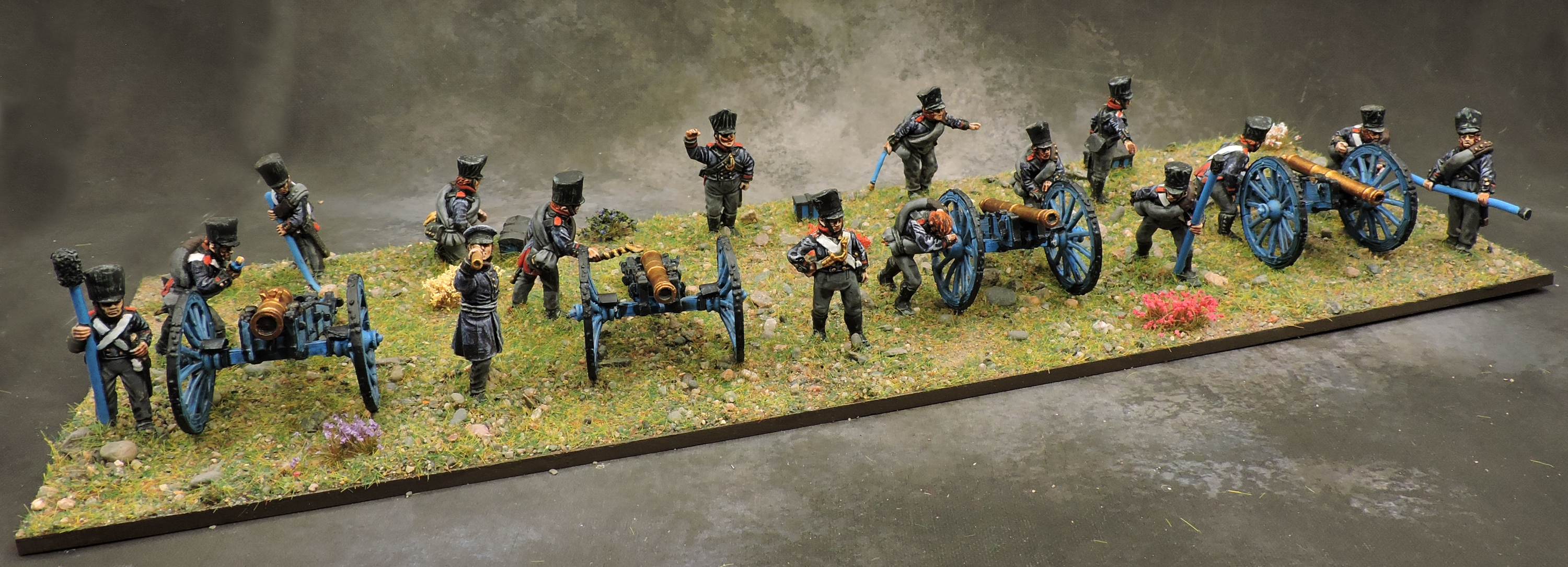
Batterie Nr. 21 supported the brigade. I am using Perry Miniatures guns with a mix of crew from Perry and Calpe Miniatures. All Prussian field batteries use three sections of 6pdr cannons and one section of 7pdr howitzers.

14. Brigade
Oberst von Funck, of 11. IR, replaced Generalmajor von Ryssel as the field commander of 14. Brigade as it moves up to support the assault on Plancenoit.
14. Brigade – 11. Infanterie Regiment [est. 2,100 men]
Led by Major Graf von Reichenbach, 11. Infanterie Regiment was in the field with only its two musketeer battalions as its Fusiliers were detached to guard the flank of the Prussian advance. The regiment was formed from the old 2. Schlesisches Regiment and thus wore yellow facings like all the Silesian regiments. I am using Foundry figures for these to add variety and cover for the omission of fusilier figures in the Foundry range. Another unit with authentic flags as carried at Waterloo.


14. Brigade – 1. Pommersche Landwehr Regiment [est. 2,500 men]
Major von Brandenstein commands another partial regiment, the 1. Pommersche (Pommeranian) Landwehr which had its third battalions detached to cover the flank of the Prussian advance. Front Rank Miniatures provided the figures. Both Pommeranian Landwehr regiments in the brigade carry generic flags.
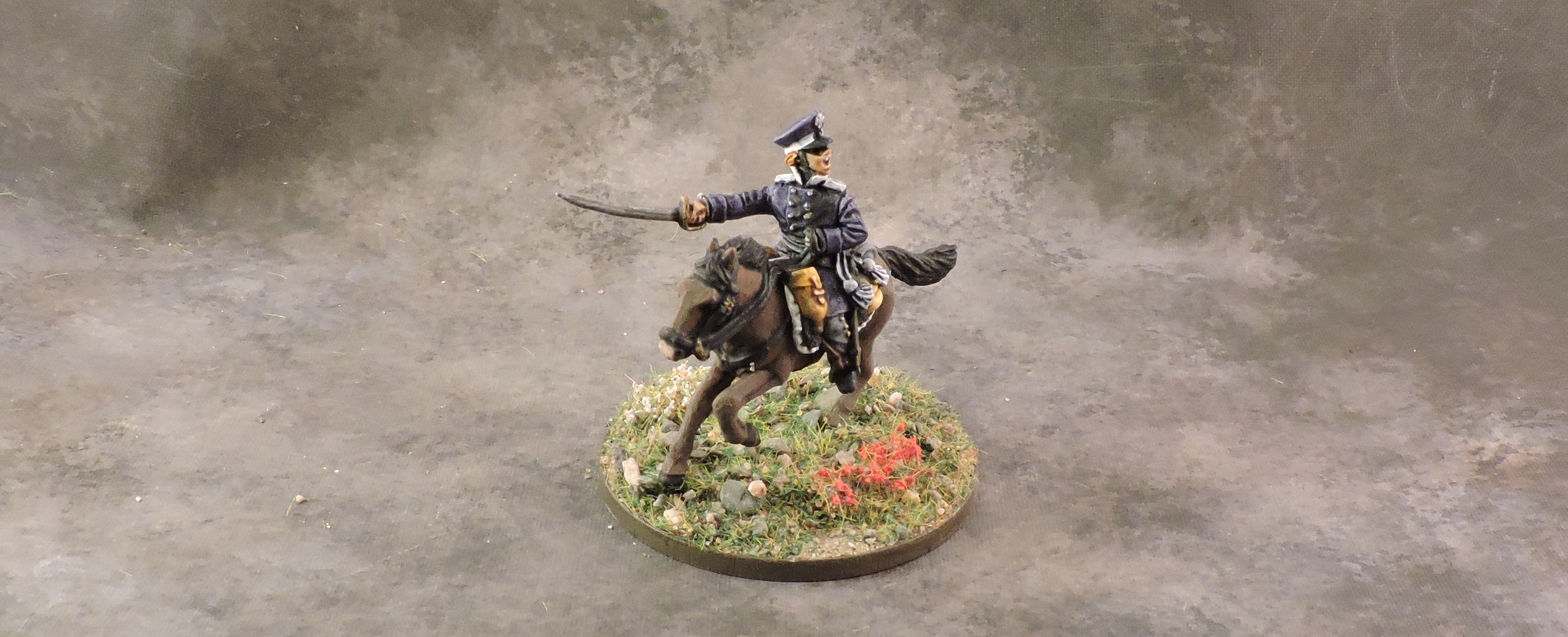


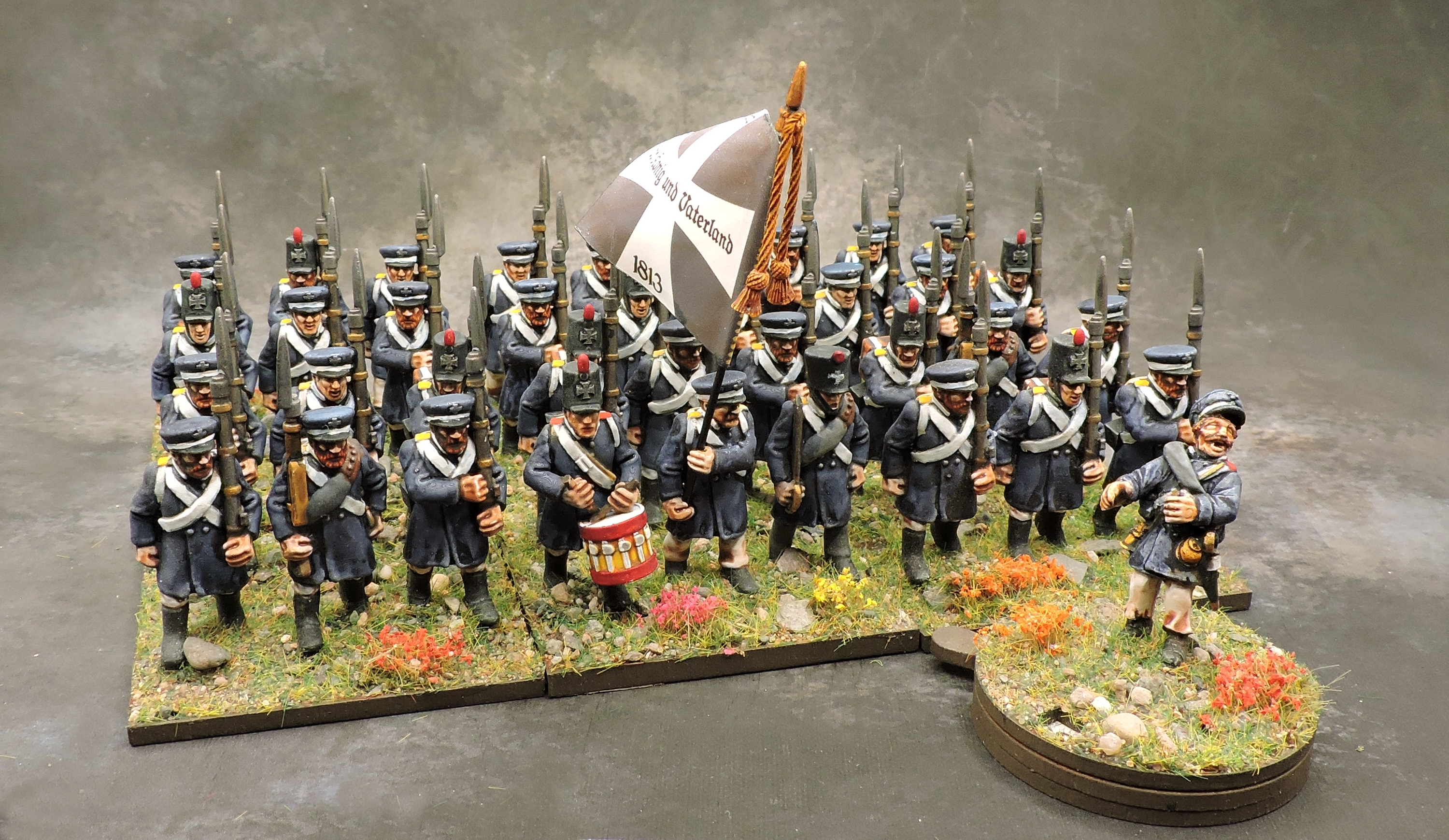
14. Brigade – 2. Pommersche Landwehr Regiment [est. 2,400 men]
Led by Oberst von Pawels, 2. Pommersche Landwehr Regiment was in the second wave of reinforcing attacks on Plancenoit. All three battalions use 3D printed figures for variety.
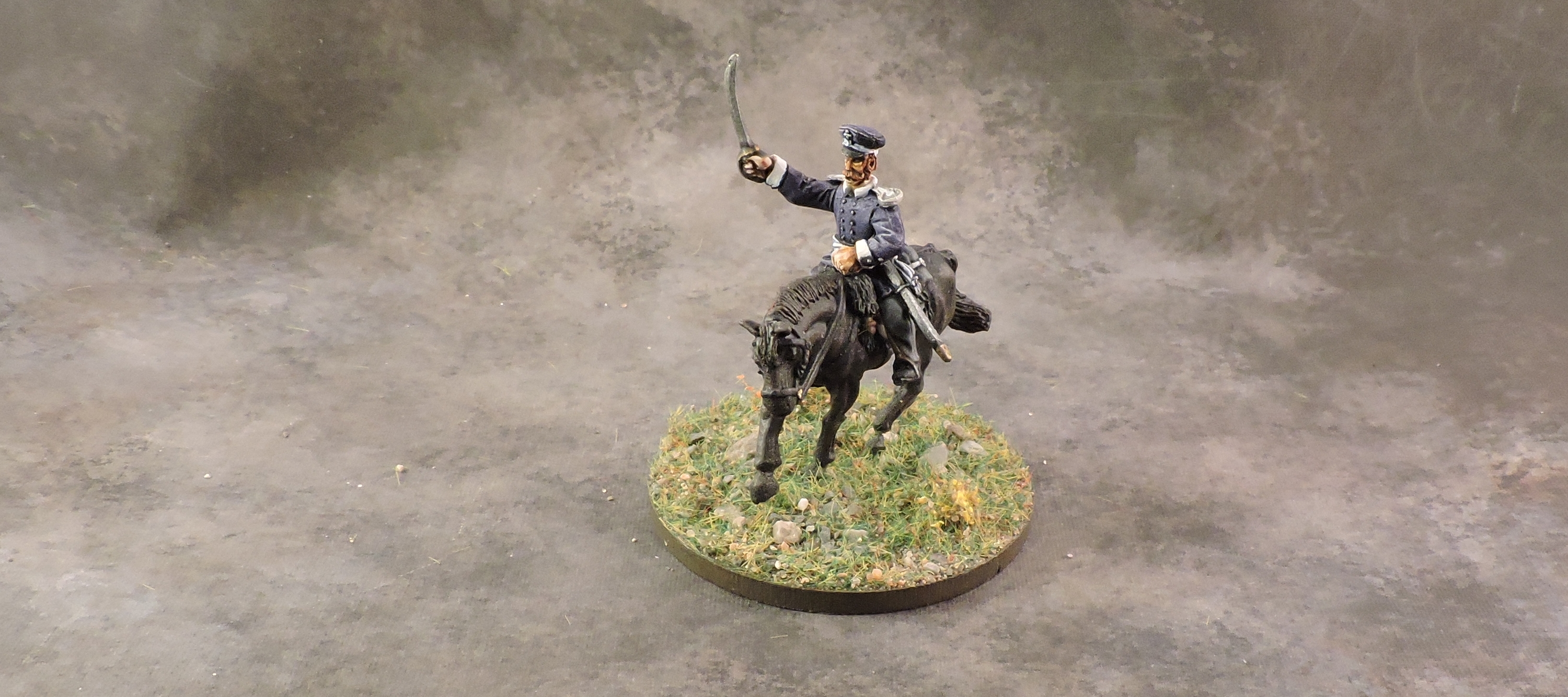


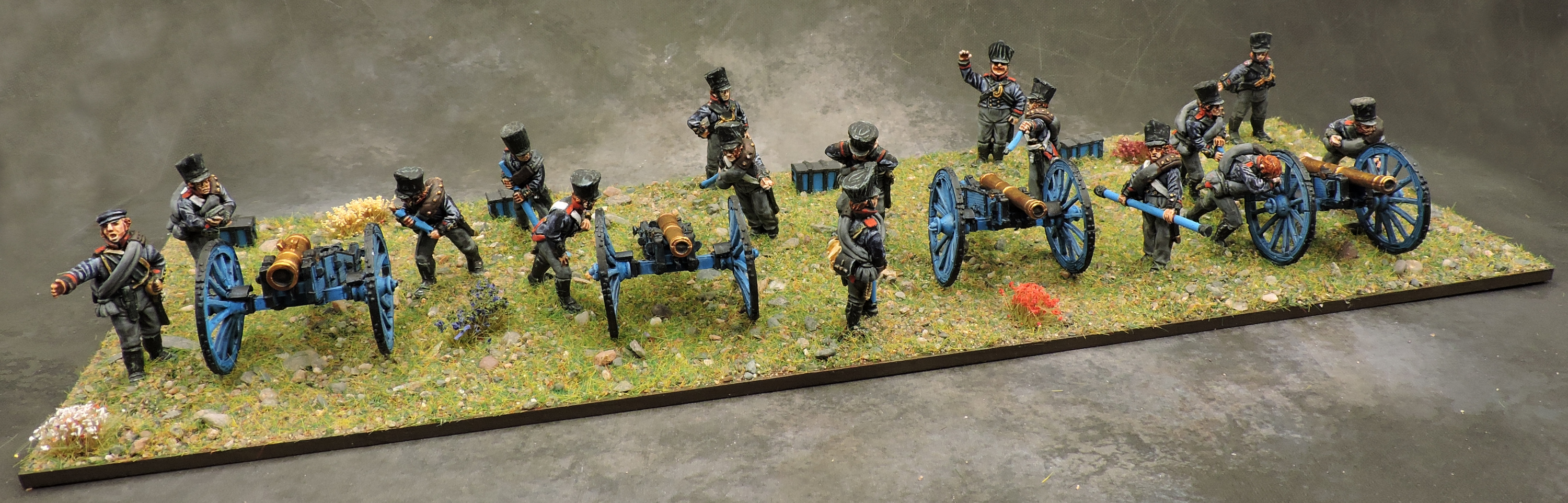
14. Brigade – Artillery
Batterie Nr. 13 supported the brigade.
15. Brigade
Generalmajor von Losthin had the honour of making first contact with the French with his 15. Brigade. He initially engaged allied Nassau troops and ejected those from Frischermont before the misunderstanding could be cleared up. His brigade then stormed Plancenoit, though it would take reinforcements from first 13. Brigade and then 5. Brigade to finally carry the day.

15. Brigade – 18. Infanterie Regiment [est. 2,400 men]
The 18. Infanterie Regiment, led by Oberst von Löbell, suffered over 700 casualties during the bitter fight with the Imperial Guard regiments in Plancenoit. The regiment was formed in 1813 as the 6. Reserve Regiment with its battalions drawn from I/1st West Prussian, II/1st Silesian, and II/2nd West Prussian respectively. In early June 1815 they were designated at the 18th Infantry Regiment and received a first issue of regular uniforms with pink facings. The regiment was still refitting during the battle so I have modelled them in a mix of uniforms. Officers and NCOs wear the new uniforms while most of the rankers are still in their old reserve outfits with red (I and Fusilier Battalion) or yellow (II Battallion) facings. The regiment didn’t carry a flag at Waterloo but I added a West Prussian reserve flag nevertheless.


15. Brigade – 3. Schlesisches Landwehr Regiment [est. 1,900 men]
Oberstleutnant von Thile commanded the 3rd Silesian Landwehr Regiment in – for once – very standard uniforms. There are a total of four regiments from Silesia in IV Korps so I used Warlord plastic figures for all to achieve bulk quickly. For variety, I mixed in some metal figures from warlord including some converted pike carrying NCOs. All regiments have suitable Silesian flags.
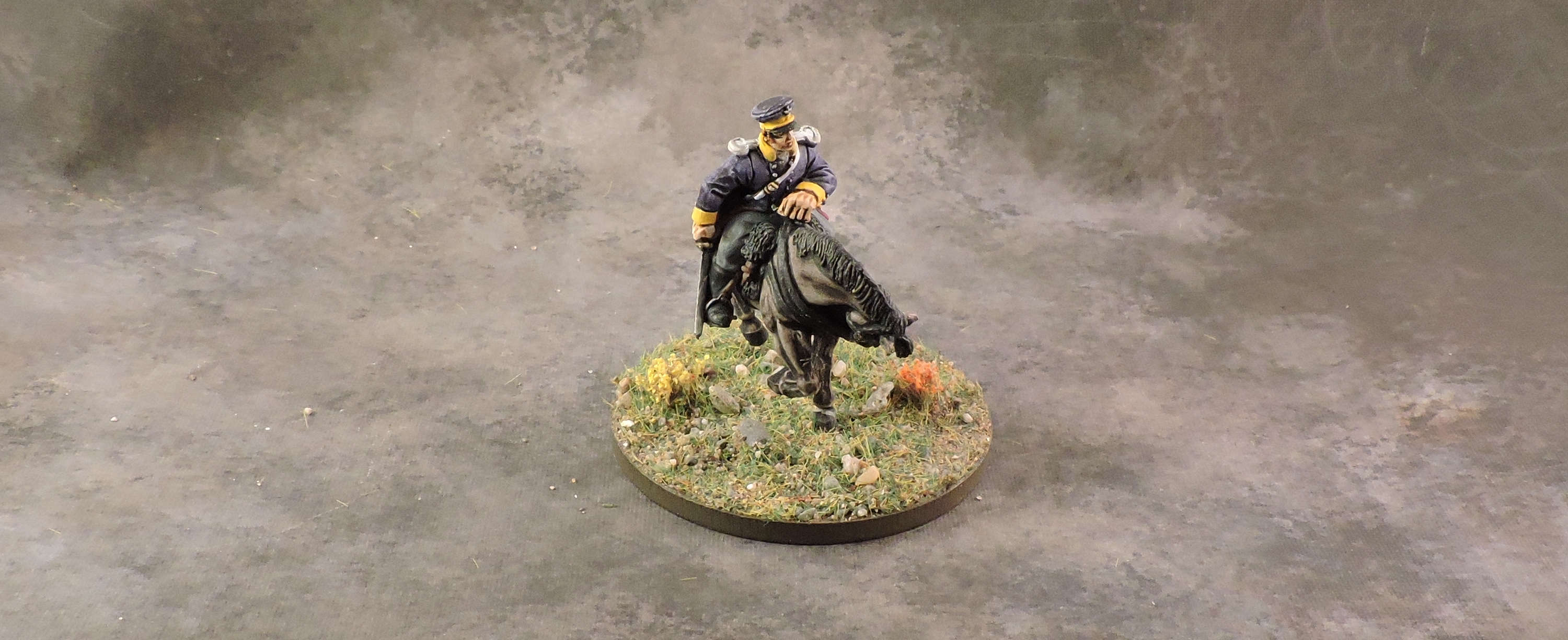
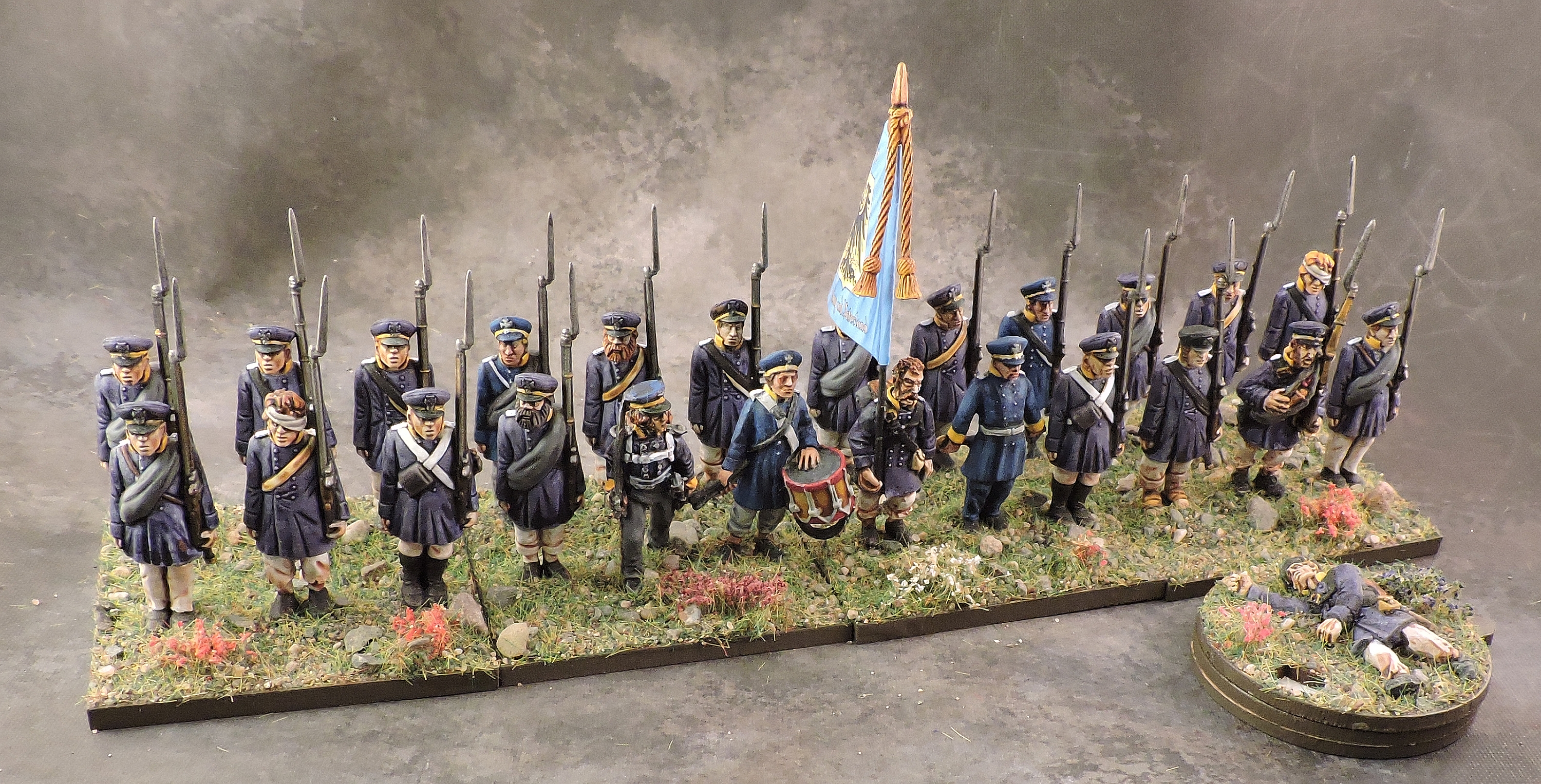

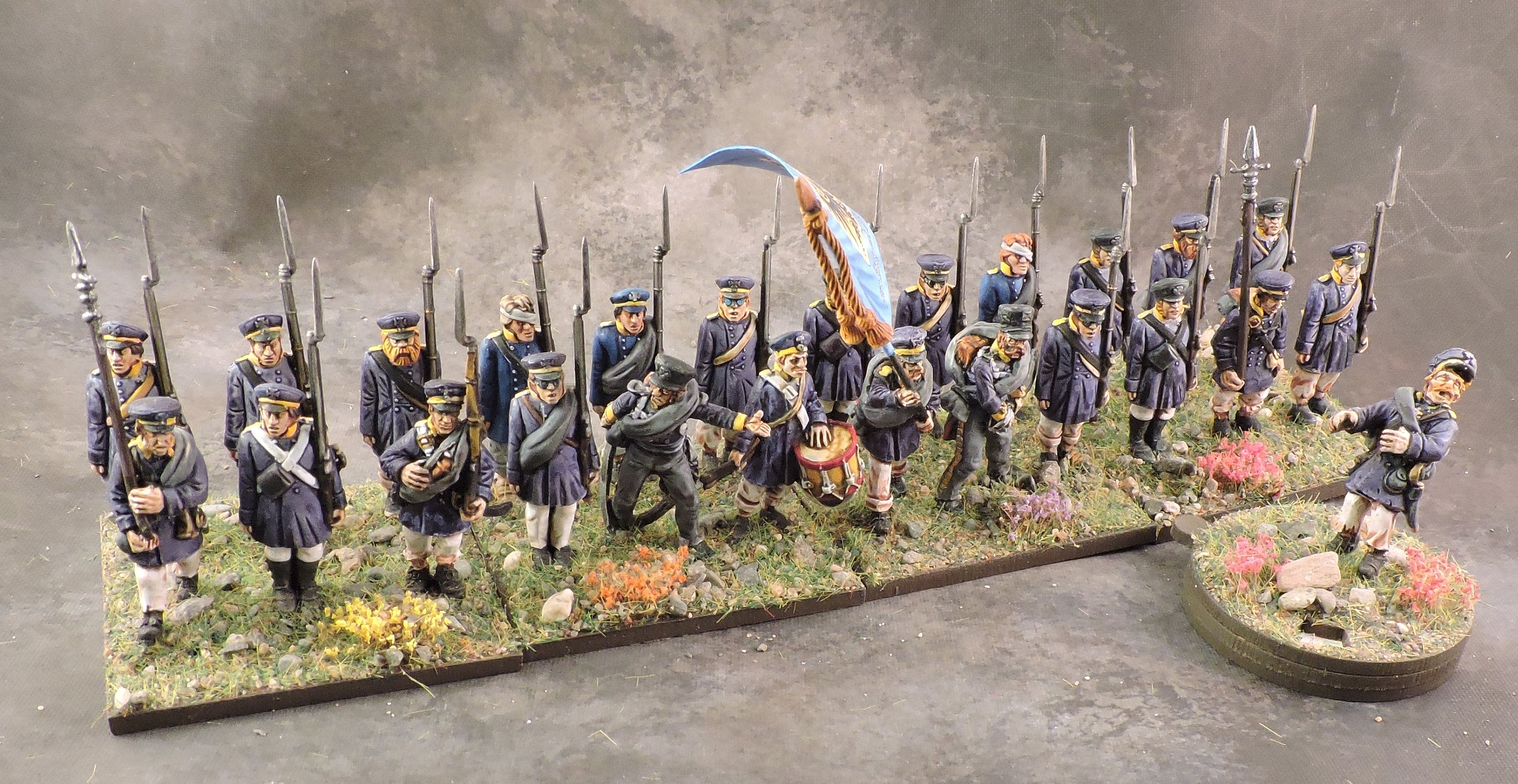
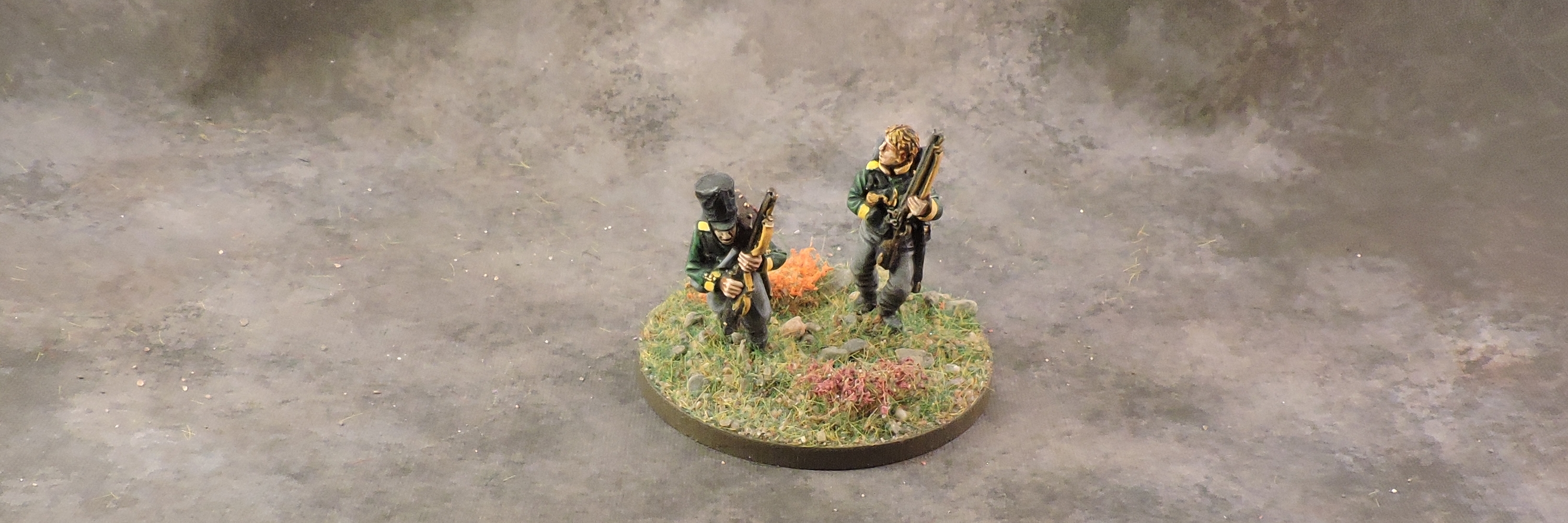
15. Brigade – 4. Schlesisches Landwehr Regiment [est. 1,800 men]
Another well-equipped Landwehr regiment, led by Oberstleutnant von Massow, formed the rear line for the initial assault on Plancenot. All Warlord plastic figures except the third battalion which uses the Warlord metal figures advancing at trail.


15. Brigade – Artillery
Batterie Nr. 14 supports the brigade.
16. Brigade
Oberst Freiherr Hiller von Gärtringen commands 16. Brigade which is a close copy of 15. Brigade: A reformed reserve regiment and two Silesian Landwehr regiments. They formed on the left (south) of 15. Brigade for the initial assault on Plancenoit.
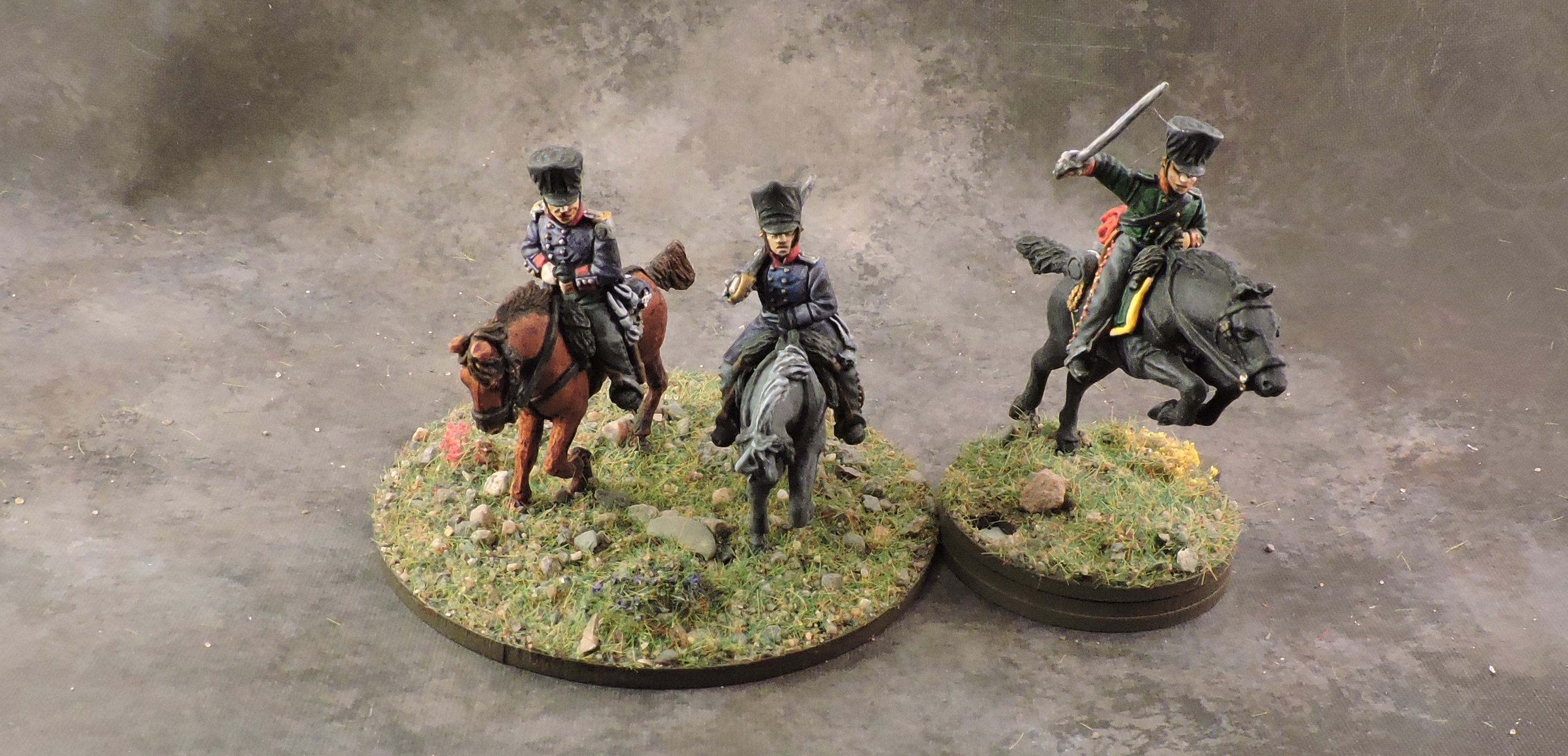
16. Brigade – 15. Infanterie Regiment [est. 2,400 men]
Commanded by Oberst von Crailsheim, 15. Infanterie Regiment is another reserve formation – formely the 3. Reserve Regiment – but has been fully refitted already in new uniforms with red-brown facings. This is a large regiment formed into attack column. Perry figures are used for all three battalions. The regiment wouldn’t have carried flags at Waterloo, but I added generic East Prussian reserve flags for visual appeal.


16. Brigade – 1. Schlesisches Landwehr Regiment [est. 1,800 men]
Major von Fischer leads another well-refitted Silesian Landwehr regiment.


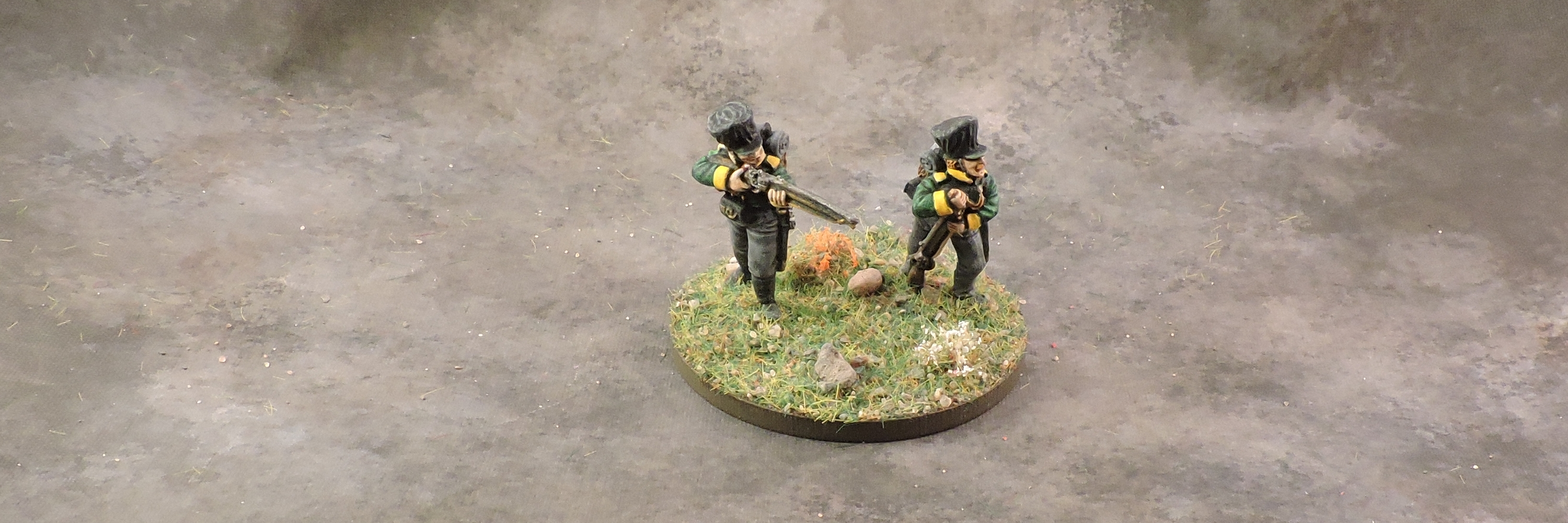
16. Brigade – 2. Schlesisches Landwehr Regiment [est. 1,700 men]
Led by Oberstleutnant von Blandowski, the 2. Schlesisches Landwehr Regiment covered the rear line of 16. Brigade. The formation wears British-made shako instead of caps, which made them a good fit for Warlord figures which come with alternate heads.

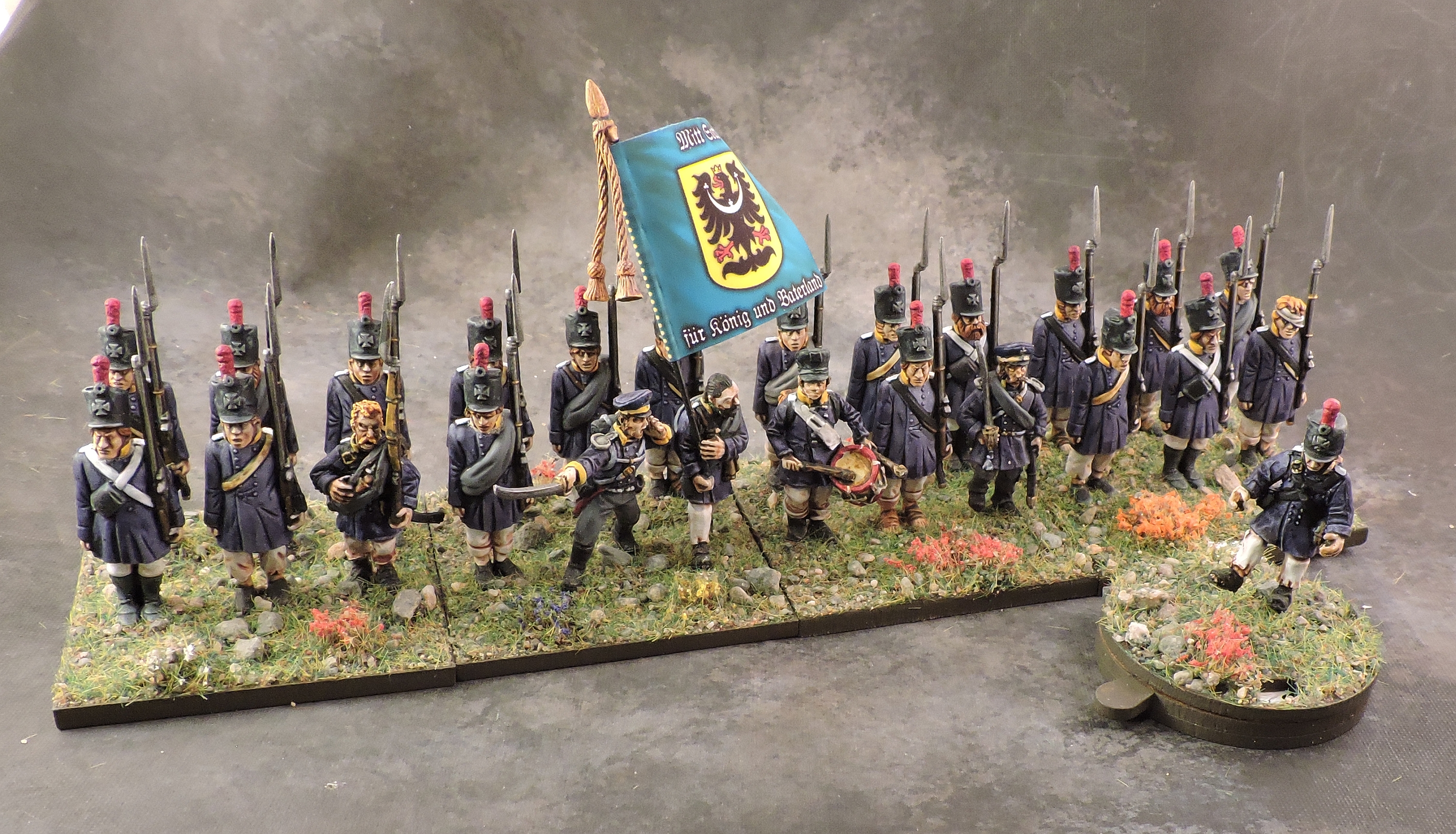


16. Brigade – Artillery
Batterie Nr. 2 supports the brigade.

Reserve-Kavallerie
Prinz Wilhelm von Preussen, brother of the King, commands the reserve cavalry of IV Korps which was significantly engaged during the battle. The cavalry was formed into three brigades, though a few regiments were detached for flank or rear guard duties.

First brigade was led by Oberst von Schwerin – at least until he was killed by French howitzer fire during the first charge – and composed of 6. Husaren, 1. Ulanen, and artillery from Reitende Batterie Nr. 1 (Horse Artillery). The 10. Husaren regiment and a single squadron of 6. Husaren were detached to cover the flank. The hussars are from Warlord and the Uhlans converted from Perry’s dragoon box.


The second brigade was commanded by Oberstleutnant von Watzdorff, killed during the battle, and included 8. Dragoner, 8. Husaren, and Reitende Batterie Nr. 11 as embedded artillery. The hussars were a composite unit drawn from three different regiments, including one wearing colpacks! Dragoons from Warlord, Hussars from Calpe. The Reitende Batterie Nr. 11 (Horse Battery) used British-made 6pdr guns and no howitzers.
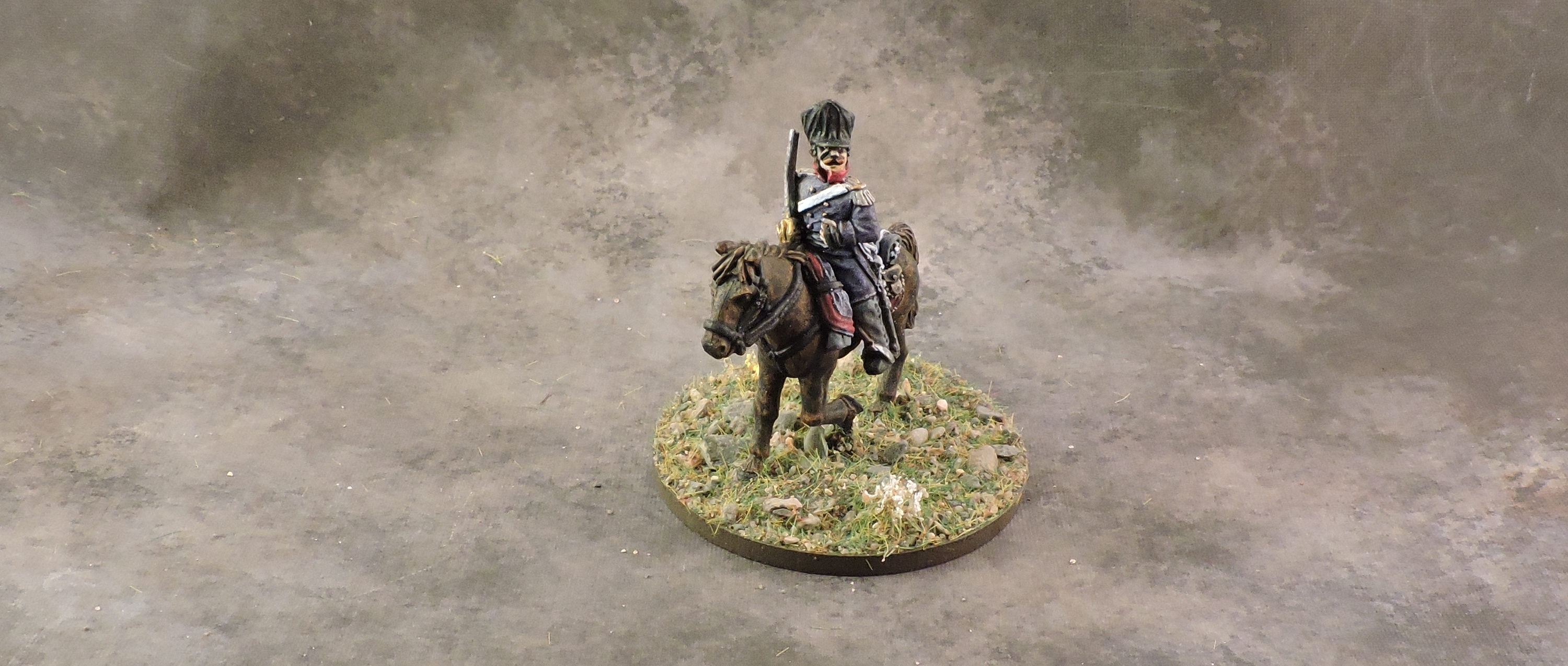


Generalmajor von Sydow led the third brigade of Landwehr cavalry. A couple of his regiments drove of Exelman’s cavalry from the Prussian baggage train and didn’t return in time for the battle at Waterloo. Still, the brigade is formidable with five Landwehr Kavallerie Regiments. The 2. and 3. Schlesische Landwehr Kavallerie Regiment were attached to the infantry brigades of IV Korps, with two squadrons per brigade. The latter must have had a rich benefactor as they wore the fancy uniforms of Polish lancer. I converted these from Perry plastic kits. Two other regiments wore shortened shakos for which I used Warlord figures cut down to size (easily done due to their soft plastic). The last regiment is from Perry.


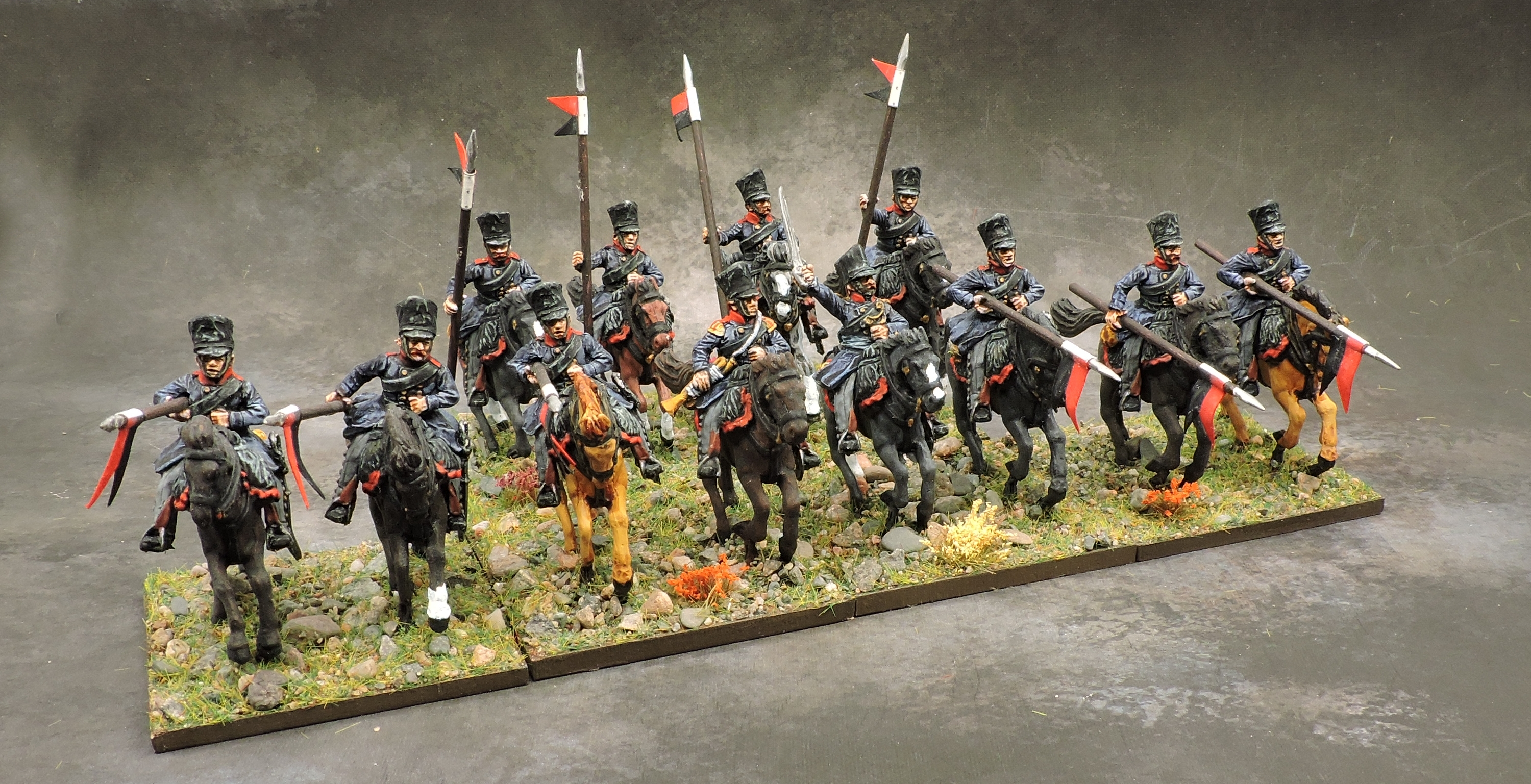
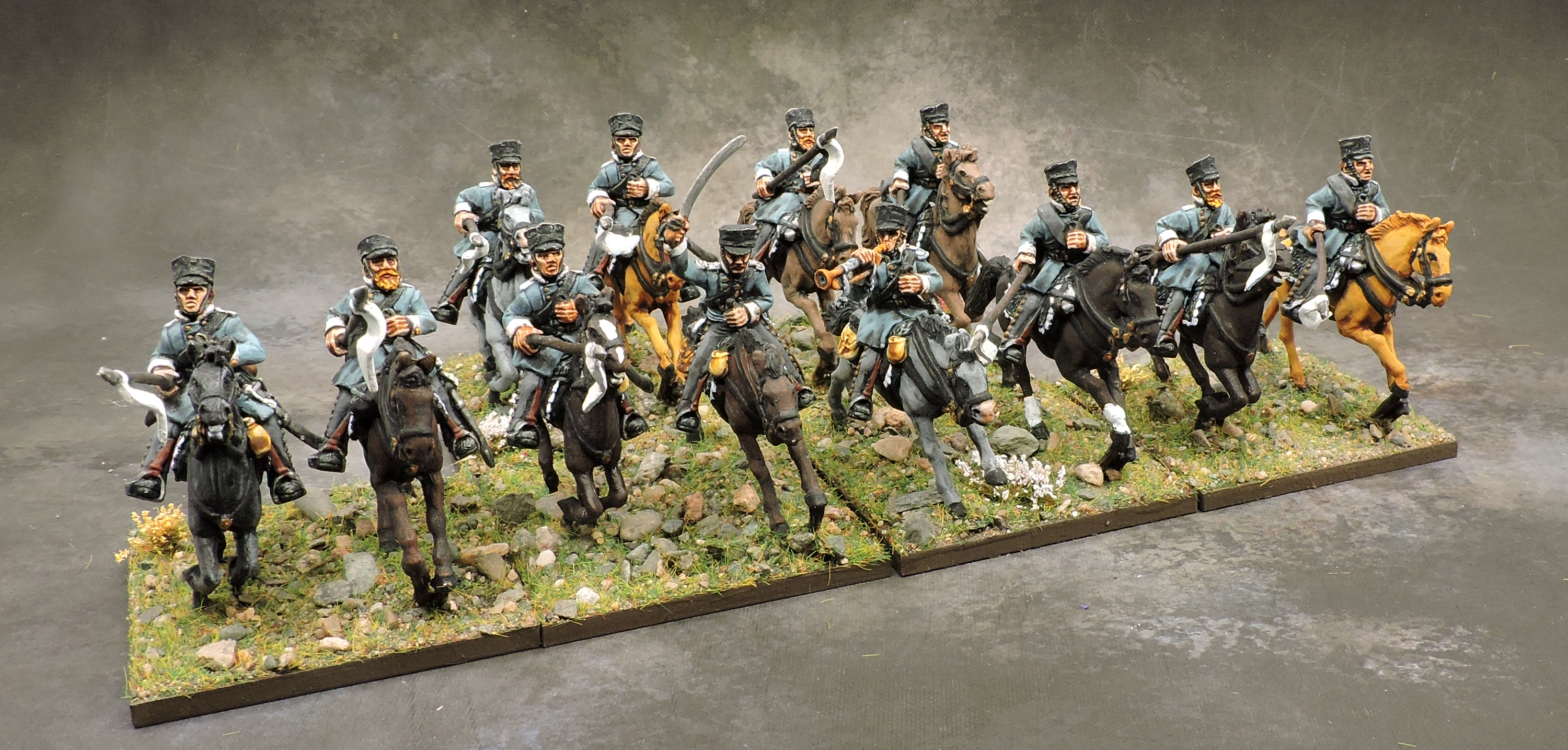
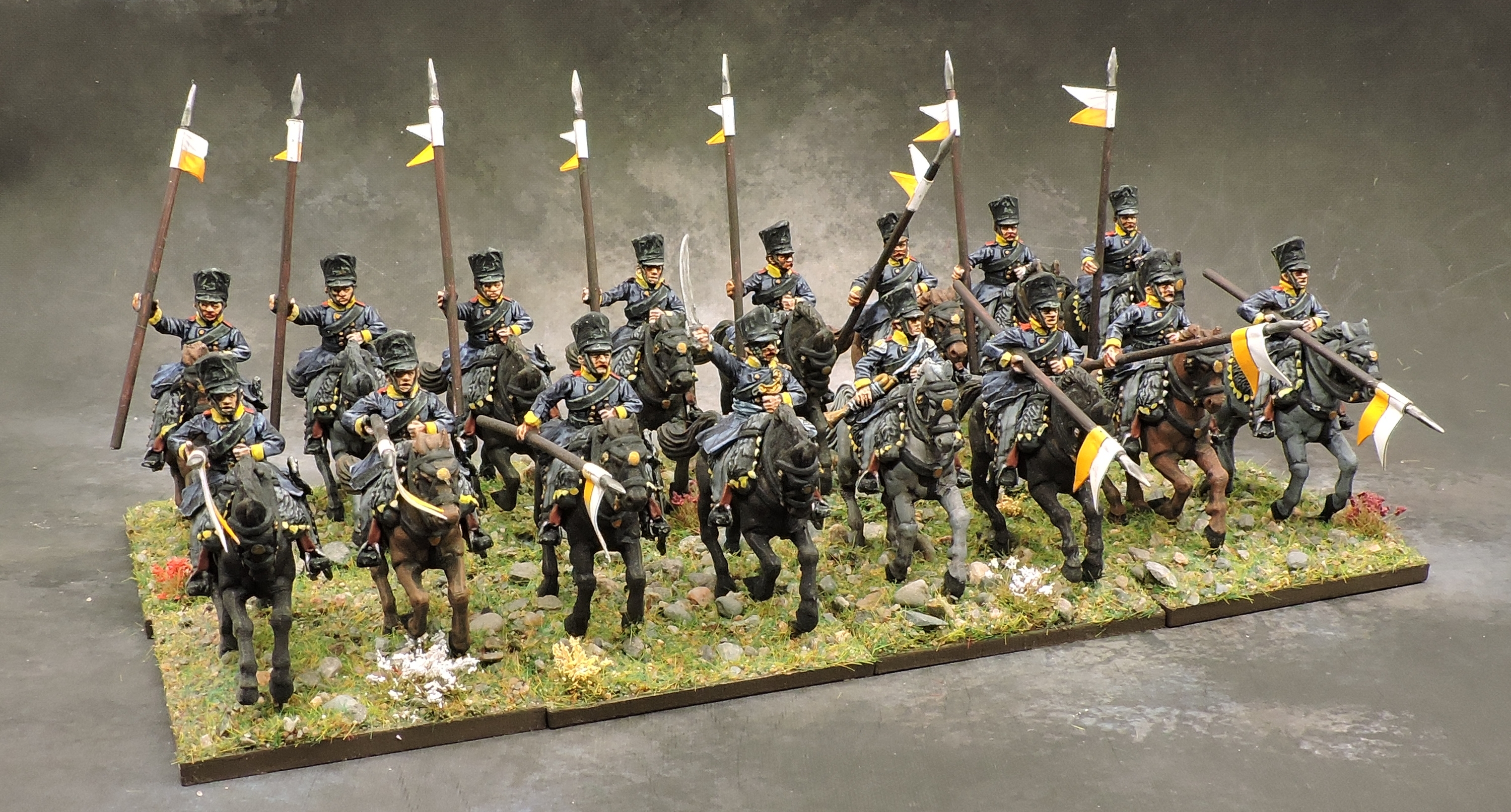
3. Schlesische Landwehr Kavallerie Regiment with three squadrons split to 15. and 16. Brigade, and Major von Falckenhausen commanding.

Reserve-Artillerie
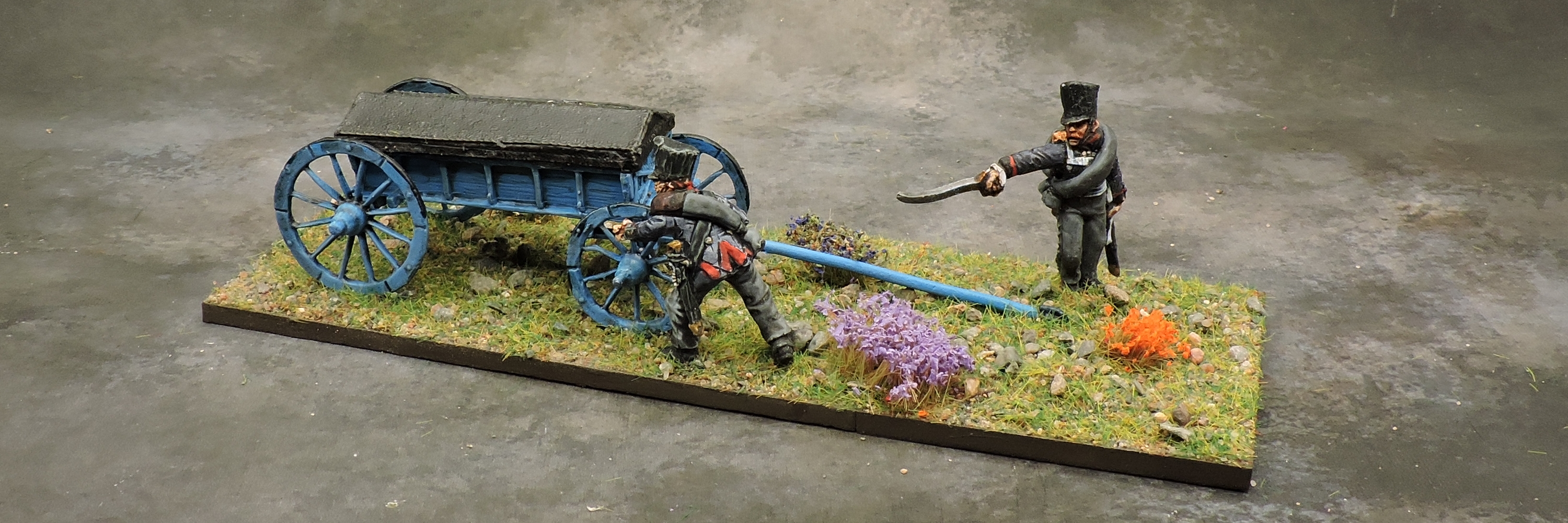
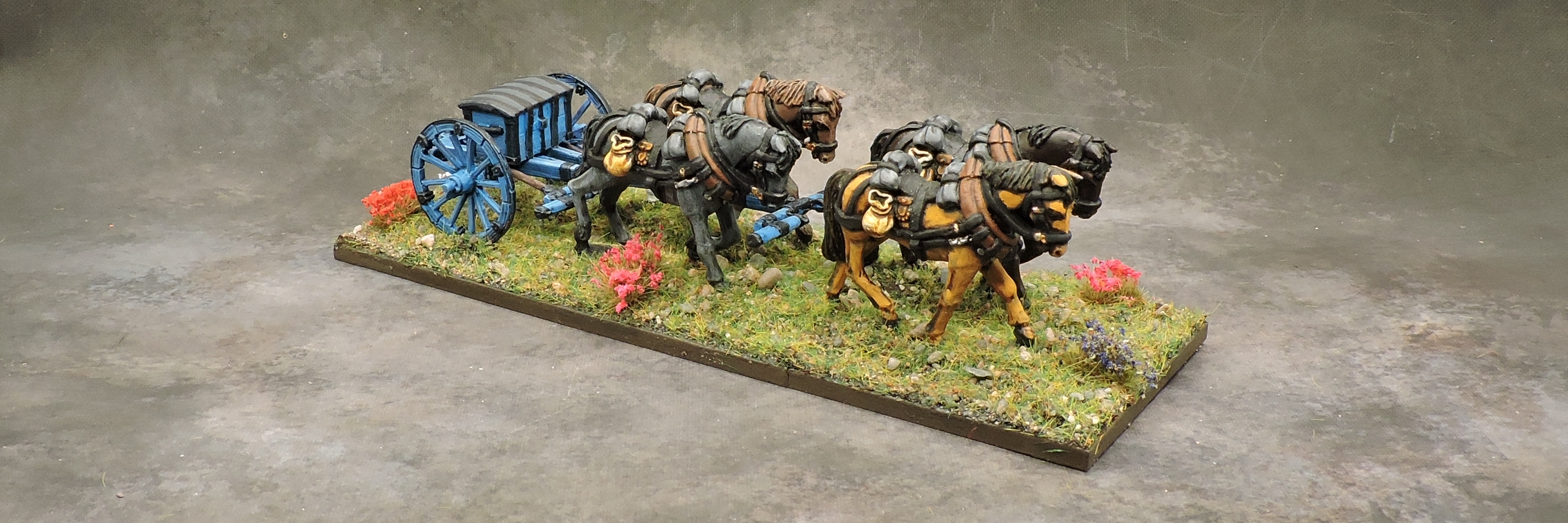
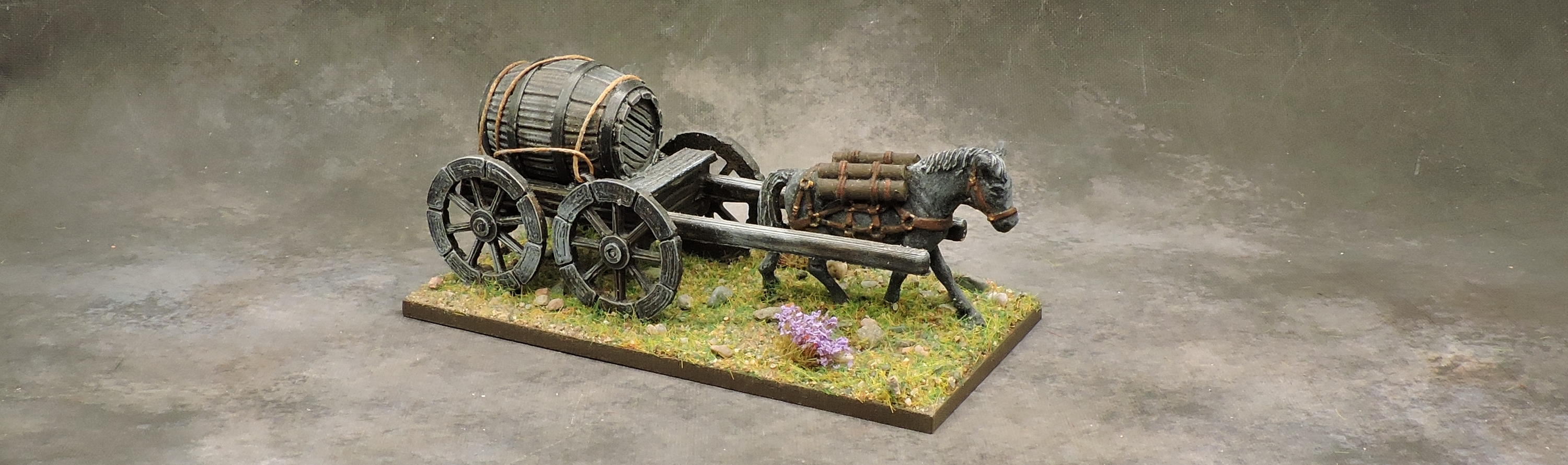
IV Korps reserve artillery is the only heavy artillery formation reaching the battlefield. It is composed of three heavy batteries (“Schwere Batterie”), a regular foot battery, and a howitzer battery. I have used Perry gun figures for the regular artillery batteries but switched to Calpe for the heavy batteries. Crew is a mix of Perry and Calpe as with all other artillery units. Generalmajor Braun had been tasked with reorganizing the Saxony forces, returning only after the battle of Waterloo, so Generalmajor von Holzendorf commands the reserve artillery of IV Korps in his stead. He is represented as the usual intermediate command base with two figures and a separate ADC. Finally, we have a number of wagons, caissons and limber representing the artillery train.




 Wargaming Workshop