Warmaster is the Kriegspiel counterpart to Warhammer. It uses partially abstracted units on common bases in a 10mm scale. The rules are fairly straightforward and very fast moving rule. At the same time, they capture the main features of different troop types very nicely and encourage tactical gameplay. The core mechanics are a simplified version of the Warhammer I-go-You-go system including dynamics with the major addition of a random command and control aspect. As expected of a Kriegspiel, Warmaster also forces units into a tactical roles rather than simple destruction of enemy figures (e.g. Warmaster missile troops rarely cause significant figure casualties but rather serve to disrupt enemy formations; assaults are resolved instantly within a single turn; etc.).
The game setting is entirely copied from Warhammer and units/factions behave consistently with their larger Warhammer equivalents (within the abstractions mentioned above).
History: Warmaster was the last major specialty game released by Games Workshop in 2000. Shortly thereafter the specialty game series converted to free online “living rulebooks”. As a result only one edition was ever issued in print. Current versions are available in print but have not gone through significant revisions beyond clarification (especially of the movement and charging sequences). The figure range launches with six iconic core races (Empire humans, Orcs & Goblins, Dwarves, High Elves, Undead, and Chaos). Many of the other major races of the Warhammer World were released later, including some less common factions such as Kislev and Araby. Warmaster also has a very common historical sister game in Warmaster Ancient which is based on largely similar core rule dynamics.
Personally, I fell in love with the strategic scope of this true “general’s game” right around release time and quickly build up the core armies. Since then it has been a consistent “sideline” gaming option though I have never managed to motivate myself to build up additional armies.
Scale: Warmaster uses 10mm scale figures with a fairly consistent ground scale. Three stands of about 10 infantry or 4 cavalry each form the primary units. The figure scale is therefore somewhat abstracted as each unit is supposed to represent a slightly larger number of troops then shown by the actual figures.
Basing & Painting: Warmaster figures are mounted on 40x20mm bases. Infantry units are usually two strips of figures (~10 per strip) facing the long side of the base while cavalry are usually four figures facing the short side in two rows. The beauty of this basing convention is that the impact benefit of cavalry is almost entirely contained in the basing mode and does not require a lot of special rules. Engaging to their front, two cavalry stands can attack a single infantry stand. On the other hand, if attacked in the flank, the cavalry fights at a much worse 1:1 ratio against infantry.
I cover bases with black pumice followed by successive drybrushing with Bestial Brown and Bleached Bone. Static grass finishes off the units. The figures are painted with the scale in mind so that usually means basic block painting followed by a wash and some spot highlights where appropriate.
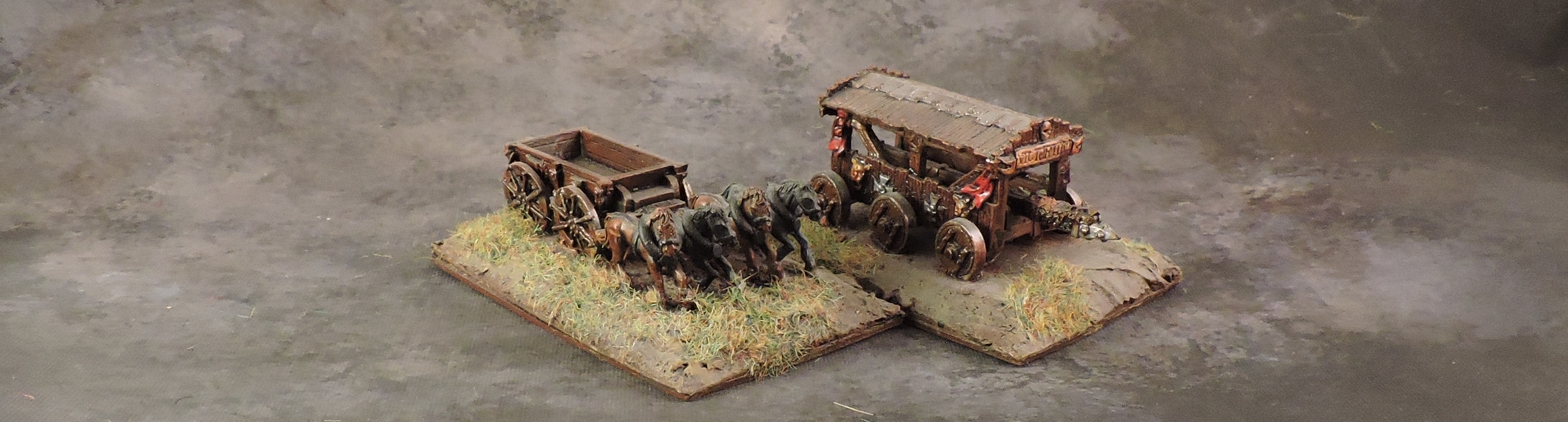
Accessories: Unlike most Games Workshop games, Warmaster doesn’t really require any in-game markers, counters or other accessories. Everything is pretty much resolved immediately and no effect lingers. As a result my only “accessories” are a bunch of figures used during Siege scenario games: Some supply wagons (more such wagons are with individual armies), siege artillery, and some field fortification markers.



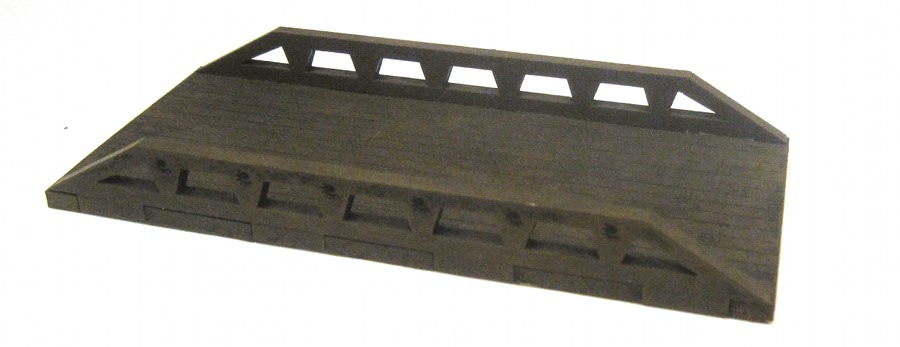
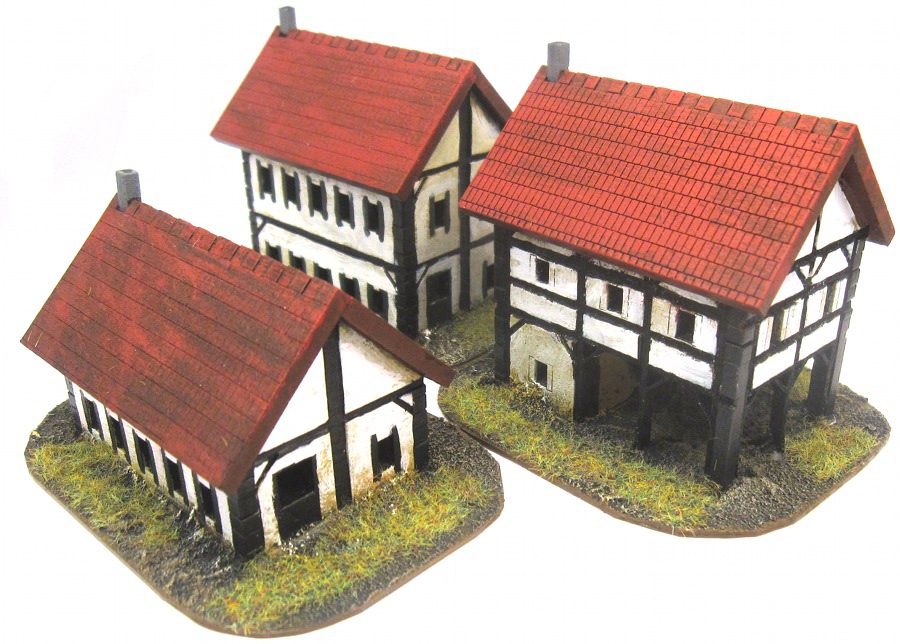
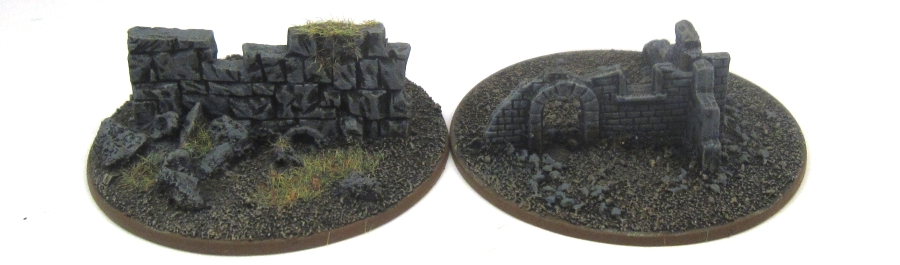
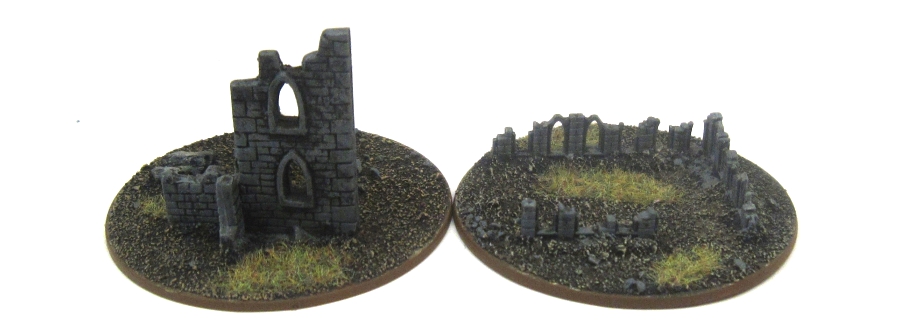
Terrain: Warmaster is an odd scale for me at 10mm. Most of my collection is either 28mm (Warhammer, Warhammer 40k, Mordheim, Necromunda, etc.), 15mm (Flames of War, DBA/DBM, etc.) or 6mm (Epic Armageddon). Most of the generic terrain such as hills and woods can easily be used for the Warmaster scale but I needed some “human-made” features that would blend in with the 10mm scale. Below is a small collection of such items. I tend to scatter these little pieces throughout the battlefield in order to “anchor” the scale to the Warmaster world. The figures are a mix of plastic ruins from the Battle of Five Armies set, Hirst Art mini structures (from left-over small bricks) and assorted other hobby parts.





 Wargaming Workshop